Key Takeaways: How to Get Rid of Turkey Neck
Turkey neck refers to loose, sagging skin and muscle changes in the neck that create a wrinkled, drooping appearance beneath the chin.
It can be treated – options range from skincare and exercises for mild cases to non-surgical treatments and neck lift surgery for more severe laxity.
The right approach depends on skin laxity, muscle condition, fat deposits, age, weight loss history, and individual goals.
Mild cases often improve with skincare and non-surgical treatments such as Botox, Morpheus8, or Ultherapy.
Significant loose skin or platysmal banding typically requires neck lift surgery (platysmaplasty) for lasting results.
Specialists at CosmeSurge develop personalized neck rejuvenation plans tailored to each patient’s anatomy and goals.
Few cosmetic concerns attract as many questions as turkey neck. For some people it appears gradually over years; for others it seems to develop almost overnight – particularly after significant weight loss or a period of rapid aging. Whatever the trigger, the concern is real: loose, sagging skin beneath the chin and along the neck that affects confidence and comfort.
The good news is that turkey neck treatment has never been more effective or more varied. Whether you are dealing with mild early laxity or significant skin excess after major weight loss, there is a clinically proven option that addresses your specific anatomy and goals.
This guide covers everything: what turkey neck is, what causes it, how to treat it at every severity level – from natural approaches and targeted exercises to advanced non-surgical treatments and neck lift surgery – and how to prevent it from progressing further.
What Is Turkey Neck?
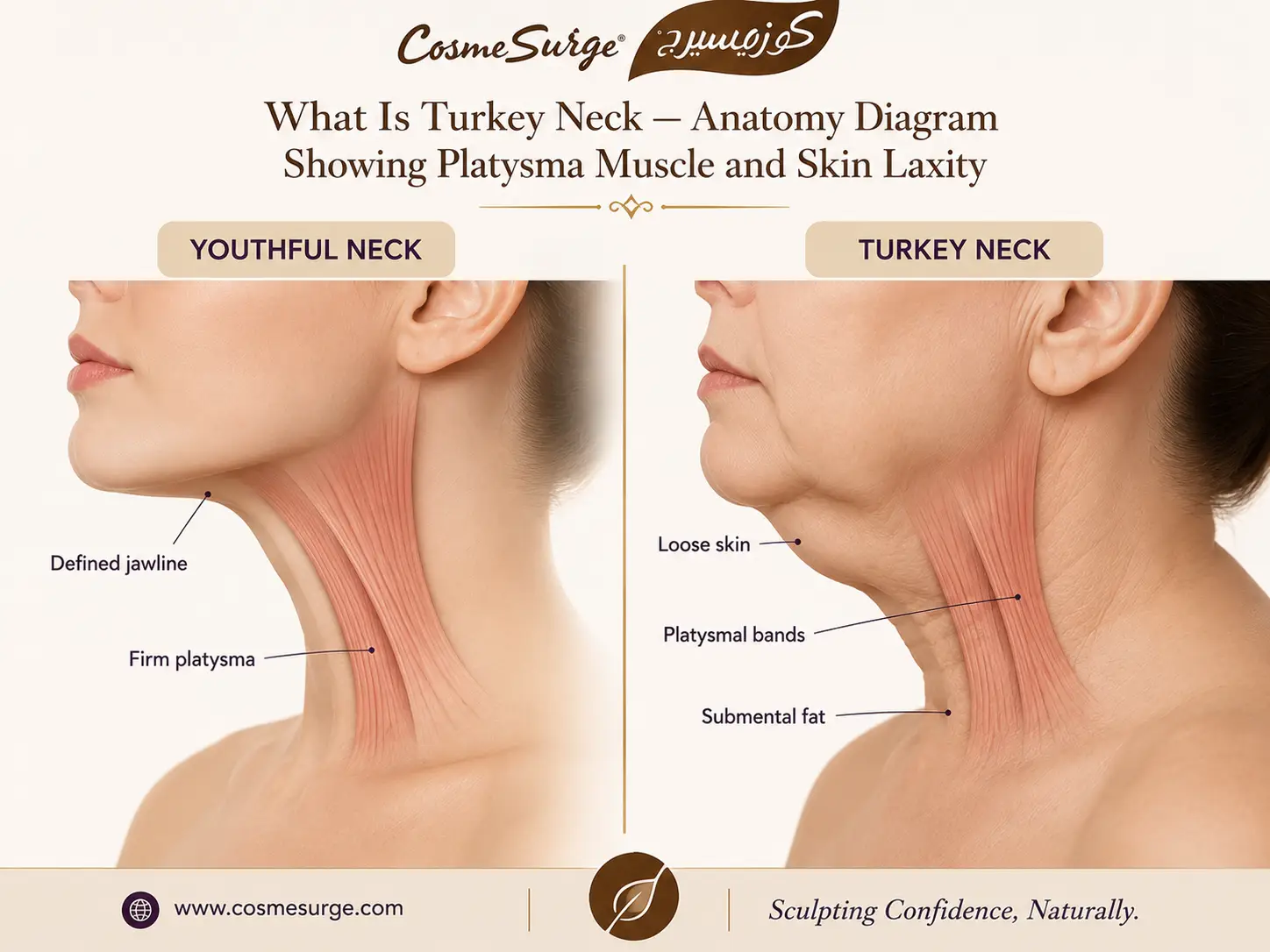
Turkey neck is the informal term for the loose, sagging skin and underlying structural changes that affect the neck with advancing age. Also called neck waddle, turkey gobbler neck, or turkey chin in casual conversation, the condition is characterized by a combination of distinct but related features:
Loose, crepey skin under the chin and along the central neck
Horizontal neck wrinkles and ‘necklace lines’ that deepen with age and tech neck posture
Visible vertical banding caused by the platysma muscle becoming prominent beneath thinning skin
Soft tissue descent – fat and glandular tissue moving downward and forward
Fullness beneath the chin (submental fullness or double chin) that can persist or worsen after weight loss
The Role of the Platysma Muscle
The platysma is a broad, flat muscle that runs from the jawline and lower face down the front of the neck to the collarbone. In youth, it lies smooth and flat beneath the skin, contributing to a defined neck-to-chin angle. With age, the platysma weakens, separates at the midline (a process called platysmal dehiscence), and begins to show as two prominent vertical bands beneath the skin – one of the most distinctive visual features of turkey neck.
The downward pull of the weakening platysma also drags overlying facial and neck tissue downward, accelerating jowl formation and loss of jawline definition alongside the visible neck changes.
What Does Turkey Neck Look Like?
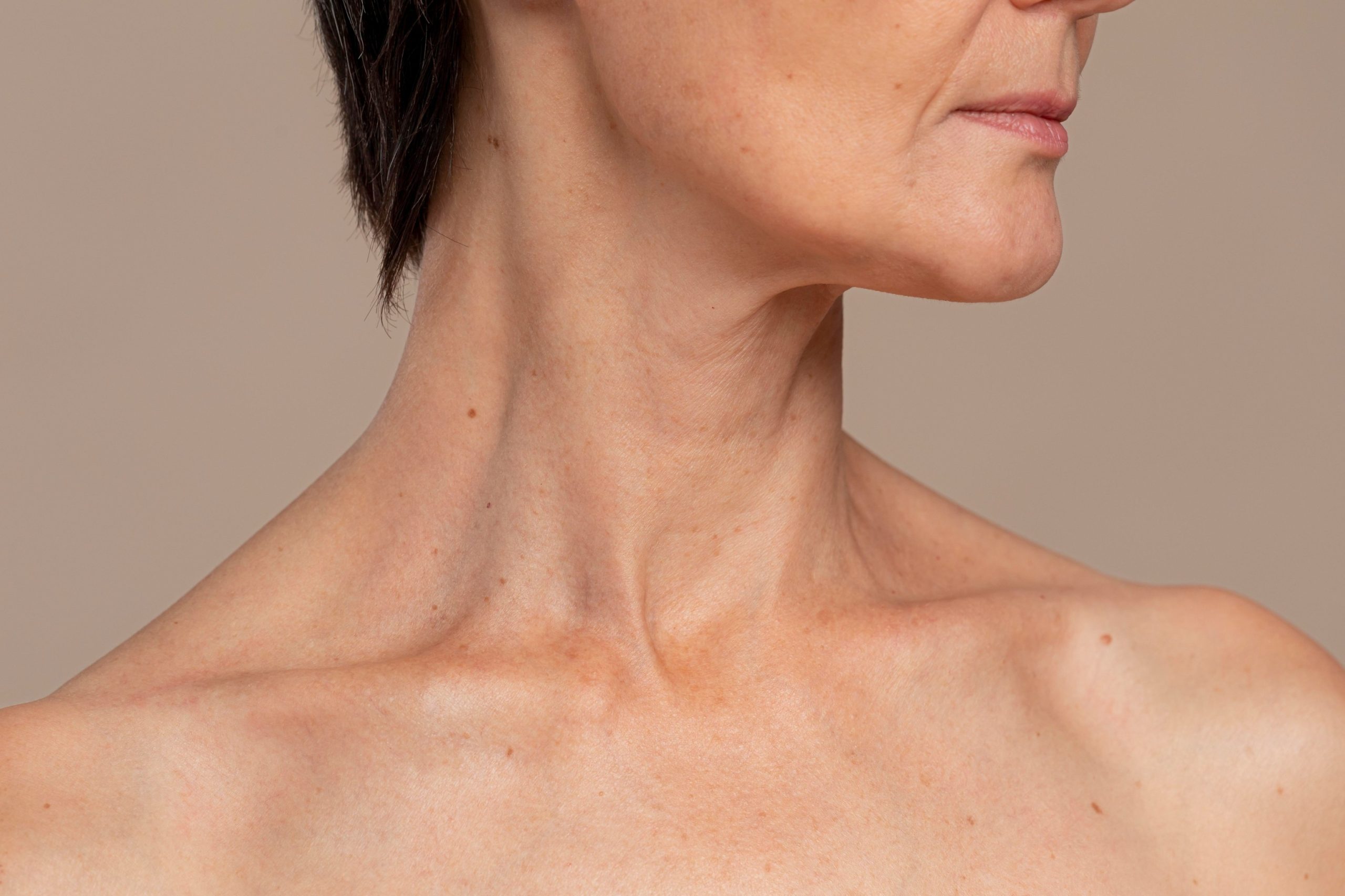
Turkey neck develops progressively. Loose skin under the chin appears first, followed by deepening horizontal lines, then visible platysmal banding at rest or during facial movements. In more advanced cases, there may be a significant overhang of skin beneath the chin, loose skin on the neck along its sides, and extra skin that creates visible folds when the head moves. The combination of all these features gives the neck the appearance that gives the condition its name.
What Causes Turkey Neck?
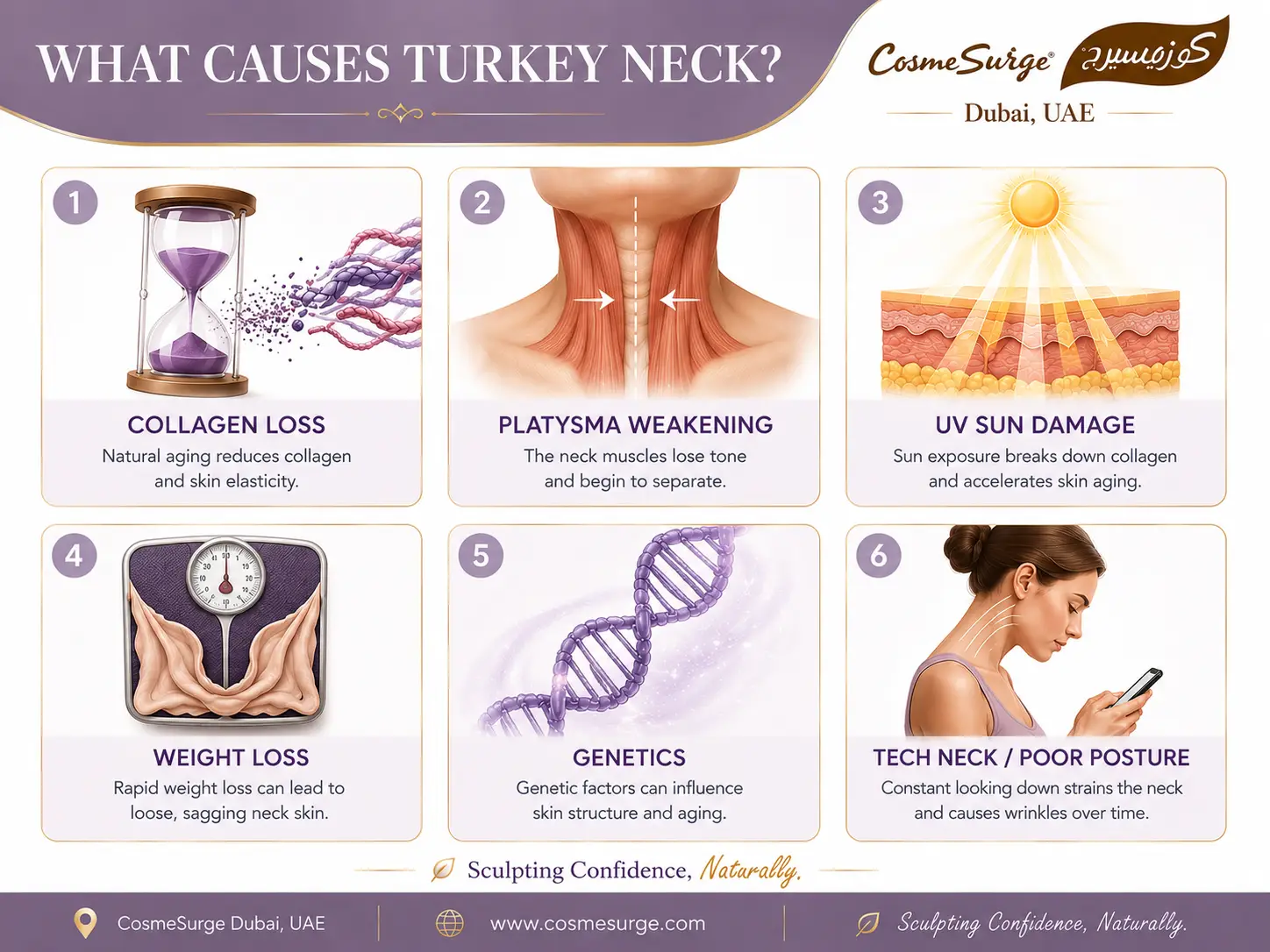
Understanding what causes turkey neck is essential for both choosing the right treatment and putting in place an effective prevention strategy. The following table summarizes the key contributing factors:
Cause / Factor | How It Contributes to Turkey Neck |
Aging (collagen + elastin loss) | From the mid-thirties, collagen and elastin decline. Skin loses firmness and sags downward under gravity. |
Platysma muscle weakening | The platysma muscle separates and weakens with age, creating visible vertical bands beneath the skin. |
Sun damage (UV radiation) | UV breaks down collagen and elastin, accelerating visible aging in the thin neck skin. |
Significant weight loss | Rapid fat loss leaves behind excess skin that cannot contract, particularly in the chin and neck area. |
Genetics | Inherited skin thickness, elasticity, fat distribution, and collagen turnover rates influence when and how turkey neck develops. |
Smoking | Reduces blood flow to the skin and depletes collagen synthesis, accelerating premature neck aging. |
Poor posture (tech neck) | Looking down at screens repeatedly creates mechanical horizontal lines and accelerates skin laxity. |
Fluctuating weight | Repeated cycles of weight gain and loss stretch and weaken skin elasticity over time. |
Aging and Collagen Loss
Aging is the primary driver. From the mid-thirties onward, the body’s collagen production declines by approximately 1% per year – and the cumulative effect on skin firmness becomes visible in the neck, often earlier than in other facial areas. Elastin production declines in parallel, reducing the skin’s ability to snap back after stretching. The neck’s naturally thinner skin and lower density of sebaceous (oil-producing) glands make it significantly more vulnerable to these aging changes than the face above it.
Other Contributing Factors
Beyond aging, several accelerating factors explain why do i suddenly have a turkey neck – and why some patients develop it significantly earlier than others:
Sun damage: UV radiation is the most controllable accelerant of neck skin aging – it actively breaks down collagen and elastin in skin that is frequently left unprotected
Smoking: reduces cutaneous blood flow and triggers enzymatic collagen degradation, accelerating visible neck aging
Genetics: skin thickness, fat distribution patterns, and collagen turnover rates are substantially inherited
Rapid weight loss: fat loss that outpaces the skin’s ability to retract leaves excess, unsupported tissue
Fluctuating weight: repeated cycles of gain and loss progressively weaken skin elasticity
Poor posture: repetitive downward head position creates mechanical lines and accelerates tissue descent
Turkey Neck After Weight Loss
Loose neck skin after weight loss is one of the most common – and most frustrating – body image concerns for patients who have worked hard to lose significant weight. Whether weight was lost through bariatric surgery, medications, or sustained lifestyle change, the skin does not always contract to match the new, smaller underlying structure.
Crepey neck after weight loss occurs because the skin has been stretched over months or years, and has lost enough collagen and elastin that it cannot retract when the fat beneath it disappears. The faster the weight loss, the more pronounced the loose skin tends to be – which is why gradual weight reduction is always preferable from a skin health perspective.
Neck wrinkles after weight loss can also worsen paradoxically: fat previously filled and softened the horizontal lines and vertical bands of the neck. As that fat dissolves, these underlying structural features become more visible. Patients dealing with a double chin after weight loss who hoped that slimming down would resolve the problem often find the opposite – the skin remains while the fat disappears, creating a saggy neck after weight loss that requires specific treatment.
For these patients, body contouring specialists evaluate the degree of skin laxity and muscle condition to determine whether non-surgical skin tightening, neck fat removal, or neck lift surgery offers the most appropriate and effective solution.
How to Get Rid of Turkey Neck Naturally
For mild turkey neck, or as a supportive complement to clinical treatments, consistent natural approaches can deliver meaningful improvement. How to tighten neck skin naturally involves a combination of nutrition, evidence-based skincare, and lifestyle habits.
Nutrition, Hydration, and Collagen
Collagen-supporting foods: bone broth, chicken, fish, egg whites – all rich in the amino acids used to build collagen
Vitamin C: essential cofactor for collagen synthesis; found in citrus fruit, bell peppers, kiwi, and strawberries
Adequate protein daily: 0.8-1.2g per kg of body weight supports ongoing skin protein production and repair
Water intake: dehydrated skin appears more lax, wrinkled, and crepe-like – adequate hydration is a basic foundation
Antioxidants: vitamins A, C, and E, plus polyphenols from berries and green tea, reduce oxidative damage to skin proteins
Skincare Ingredients That Work
How to firm neck skin through topical skincare relies on a small group of well-evidenced active ingredients:
Retinoids (retinol or prescription tretinoin): the most clinically supported topical ingredient for neck skin tightening – they stimulate collagen production, accelerate cell turnover, and improve skin texture with consistent use
SPF 30+ daily on the neck and decolletage: preventing further UV collagen damage is the single most impactful protection step – a frequently overlooked area
Peptide-rich neck creams: signal fibroblasts to produce more collagen and elastin; a useful complement to retinoids
Hyaluronic acid serums: attract and retain moisture in the skin, temporarily improving plumpness and reducing the appearance of fine lines
Vitamin C serum: brightens, protects against UV-generated free radicals, and supports new collagen synthesis
Lifestyle and Posture
How to get rid of turkey neck naturally is also supported by consistent lifestyle habits. Correcting forward head posture reduces the mechanical formation of horizontal neck lines – holding phones and screens at eye level rather than looking down is a simple but meaningful change. Sleeping on your back reduces facial and neck skin creasing. Gentle upward massage of the neck and decolletage using a facial oil or serum improves circulation and lymphatic drainage. And stopping smoking immediately benefits skin quality at any age.
Best Exercises for Turkey Neck
Neck exercises for turkey neck strengthen and tone the platysma and surrounding neck muscles, reducing the appearance of mild muscle banding and improving neck definition. They are a valuable prevention and maintenance tool – but it is important to understand their limitations. Exercises cannot remove excess skin, address structural laxity, or eliminate significant crepiness. For mild concerns, they are worth doing consistently.
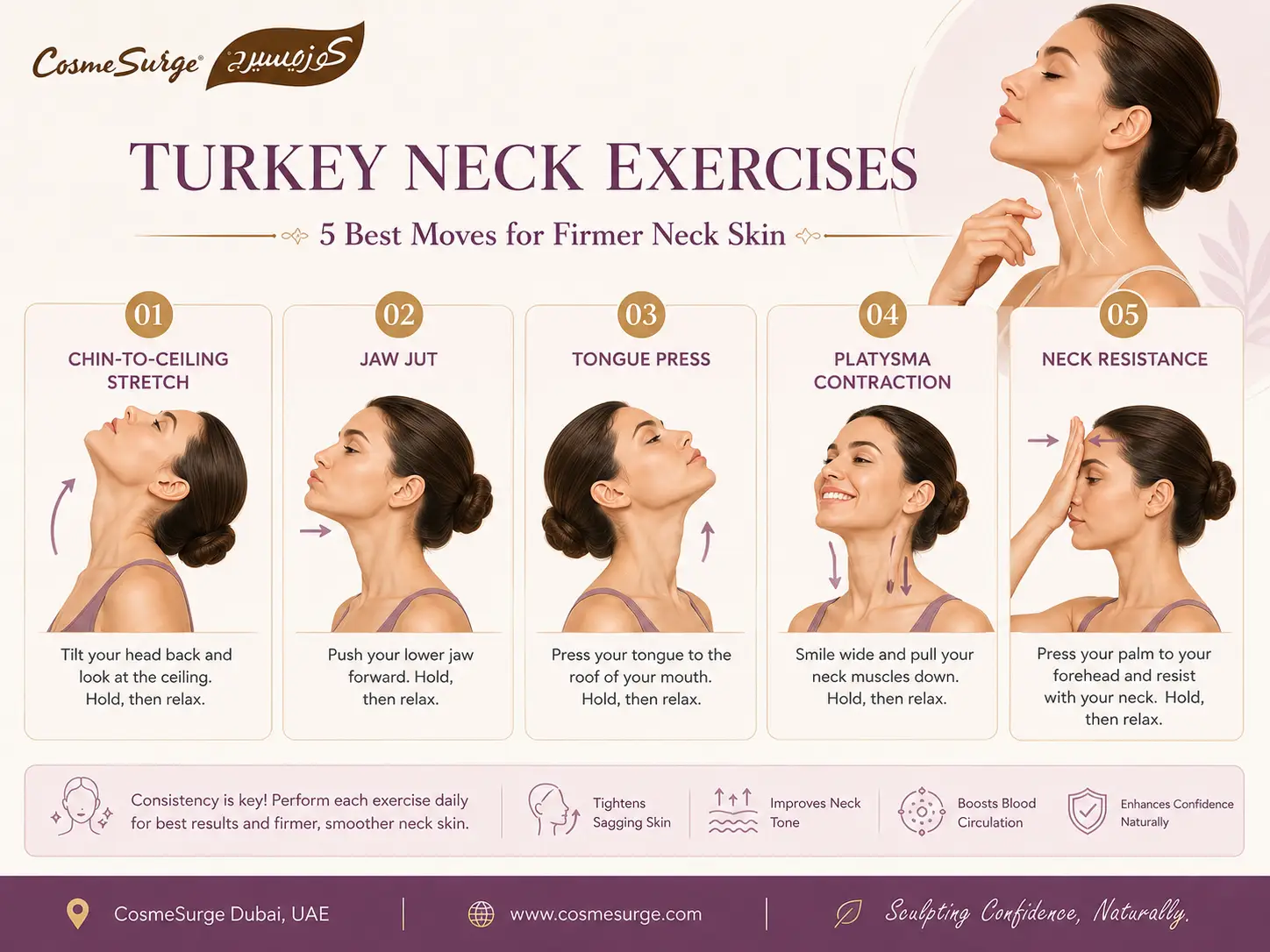
The best exercises for turkey neck include:
Chin-to-ceiling stretch: tilt your head back, press your tongue firmly to the roof of your mouth, hold 5-10 seconds, repeat 10 times. Engages the platysma and submental muscles effectively.
Jaw jut: tilt your head back and push your lower jaw forward until you feel a stretch under the chin; hold 5 seconds, repeat 10 times. Targets the suprahyoid and platysma muscles.
Neck resistance (isometric): place your palm against your forehead and push your head forward against it without moving; hold 10 seconds. Repeat pushing left, right, and backward. Builds overall neck muscle tone.
Tongue press: press your tongue firmly to the roof of your mouth while tilting your head upward; hold 5 seconds, repeat 10 times. Effective for submental tightening.
Platysma contraction: smile widely while tightening the neck muscles and drawing the corners of the mouth downward; hold 5 seconds, repeat 10 times. Directly engages the platysma.
Neck rolls: slow controlled neck rolls in both directions, 5 repetitions each way, warm up the neck muscles and improve mobility.
Performing these exercises consistently 5 days per week for 4-8 weeks produces noticeable tonal improvement for suitable candidates. For patients with significant loose skin, crepey texture, or prominent platysmal banding, exercises alone will not produce visible results – clinical intervention is needed alongside the exercise routine.
Best Non-Surgical Turkey Neck Treatments
Non-surgical turkey neck treatment options have expanded significantly over the past decade. For patients with mild to moderate skin laxity, these treatments can deliver clinically meaningful improvement without the downtime or commitment of surgery.
Botox for Turkey Neck (Nefertiti Lift)
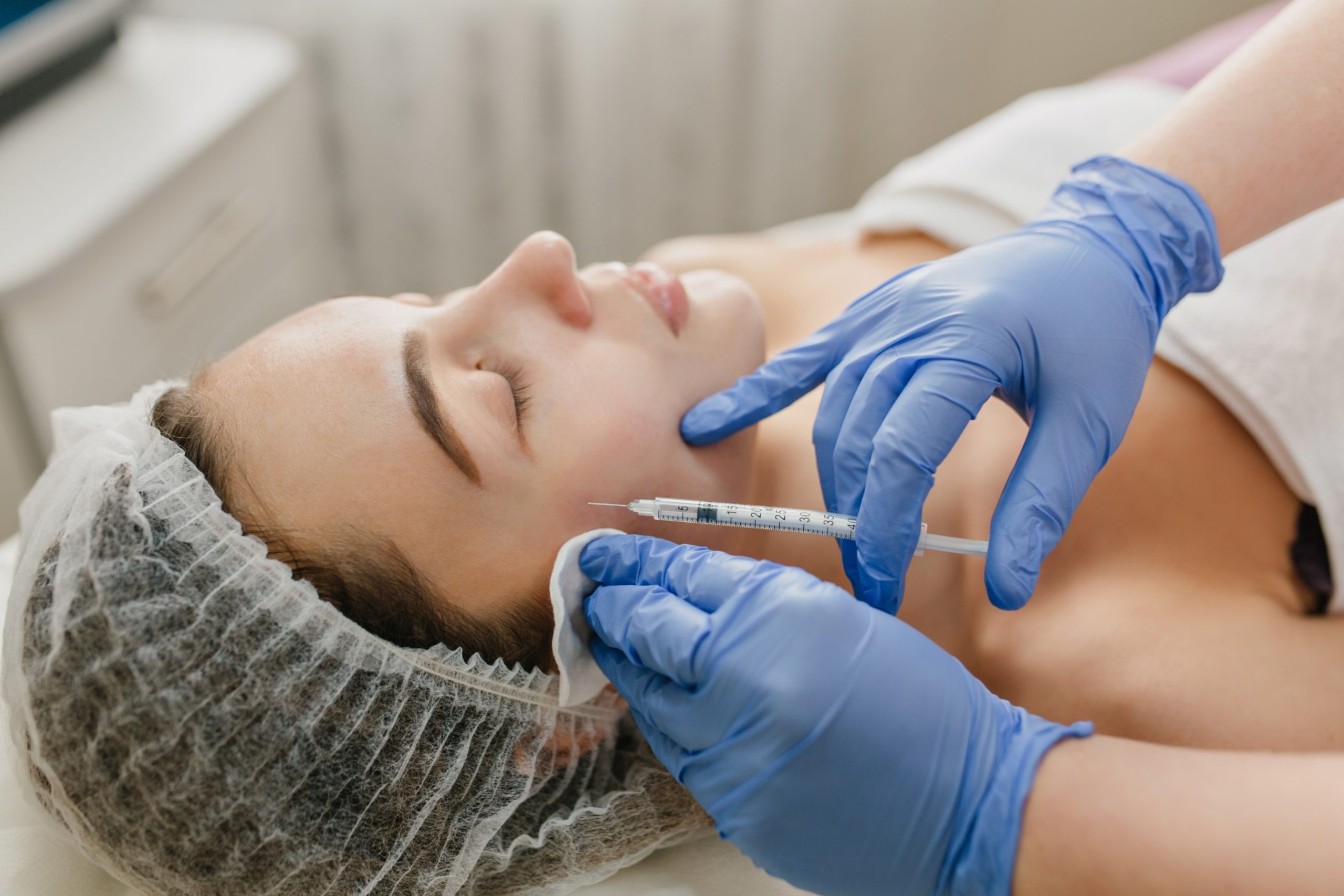
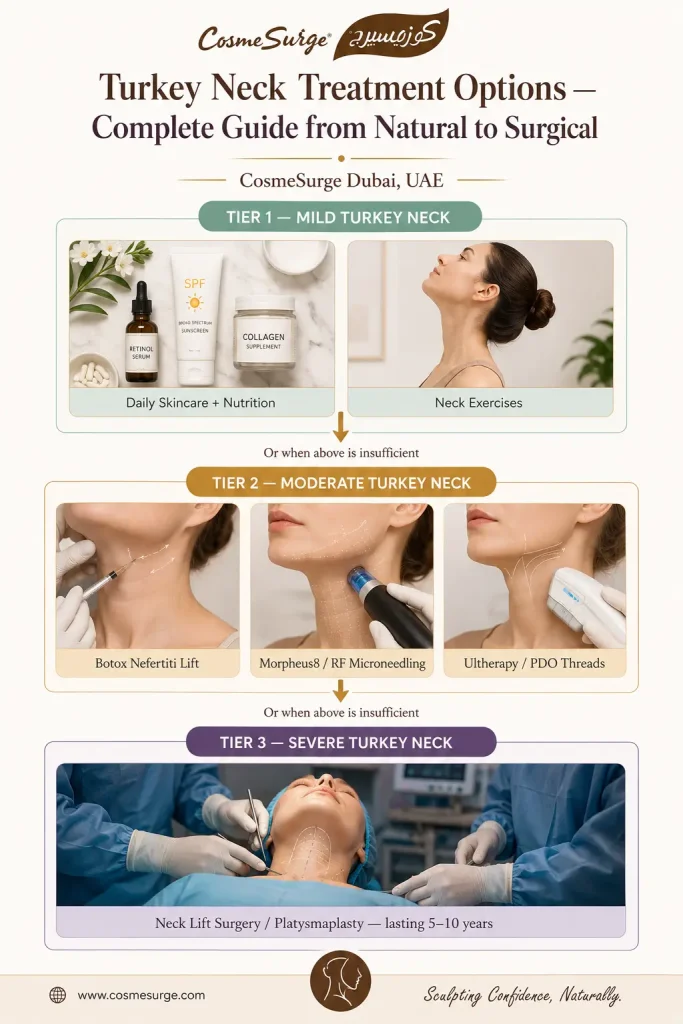
Botox for turkey neck is injected into the platysma muscle to soften the appearance of vertical platysmal bands and create a subtle lifting effect along the jawline and neck. Called the Nefertiti lift, this technique relaxes the downward-pulling platysma, allowing the elevating muscles of the lower face and neck to work with less opposition – resulting in a subtly lifted, more defined neck contour. Results last approximately 3-4 months and require regular maintenance injections.
RF Microneedling and Morpheus8
RF microneedling combines the collagen-stimulating effect of microneedling with radiofrequency energy delivered deep into the skin and subdermal tissue. Morpheus8 is one of the leading RF microneedling platforms and is particularly effective for neck skin tightening – it remodels both the superficial dermis and deeper subdermal fat layer. For mild to moderate turkey neck, Morpheus8 can meaningfully improve skin tightness, reduce crepiness, and sharpen jawline definition. A series of three sessions is typically recommended, with results developing over 3-6 months and lasting 1-2 years.
Ultherapy
Ultherapy uses focused ultrasound energy to stimulate collagen production in the deeper layers of the skin and the SMAS (superficial musculoaponeurotic system) layer below it. It is the only FDA-cleared non-invasive treatment specifically indicated for lifting the neck and chin. Results develop gradually over 2-6 months as new collagen forms and matures. Ultherapy is best suited to patients with mild to moderate skin laxity who want gradual, natural-looking improvement without any downtime.
PDO Thread Lift
Polydioxanone (PDO) thread lifts insert dissolvable sutures beneath the skin to provide immediate mechanical lifting and stimulate ongoing collagen production over the following months. The immediate lifting effect makes PDO threads one of the faster non-surgical options for visible improvement. Results typically last 12-18 months before the threads dissolve completely.
Laser Skin Tightening
Fractional laser treatments and ablative laser resurfacing improve skin texture, stimulate new collagen, and can meaningfully reduce crepey neck skin and horizontal necklace lines. Non-ablative fractional lasers involve minimal downtime (1-3 days of redness); ablative treatments deliver more dramatic results but require 7-14 days of healing. Both are effective for surface texture improvement alongside deeper tightening from RF or ultrasound-based devices.
Other Non-Surgical Options
Additional non-surgical options include: dermal fillers for horizontal neck lines and volume restoration; chemical peels (TCA) for surface skin quality; skin boosters (Profhilo, Juvederm Volite) for hydration and skin quality; and biostimulators (Sculptra) that trigger the body’s own collagen production for progressive skin thickening and tightening over 3-6 months.
The specialists at CosmeSurge offer comprehensive non-surgical neck rejuvenation programs that combine treatments strategically – often pairing Botox for platysmal bands with RF microneedling for skin tightening and skin boosters for surface quality – for synergistic results.
When Is Neck Lift Surgery the Best Option?
Non-surgical treatments are effective for mild to moderate turkey neck. But for patients with significant loose skin, prominent platysmal banding, excess submental fat, or skin laxity that cannot be adequately addressed without surgery, a neck lift delivers the most comprehensive and longest-lasting results available.
What Is a Neck Lift (Platysmaplasty)?
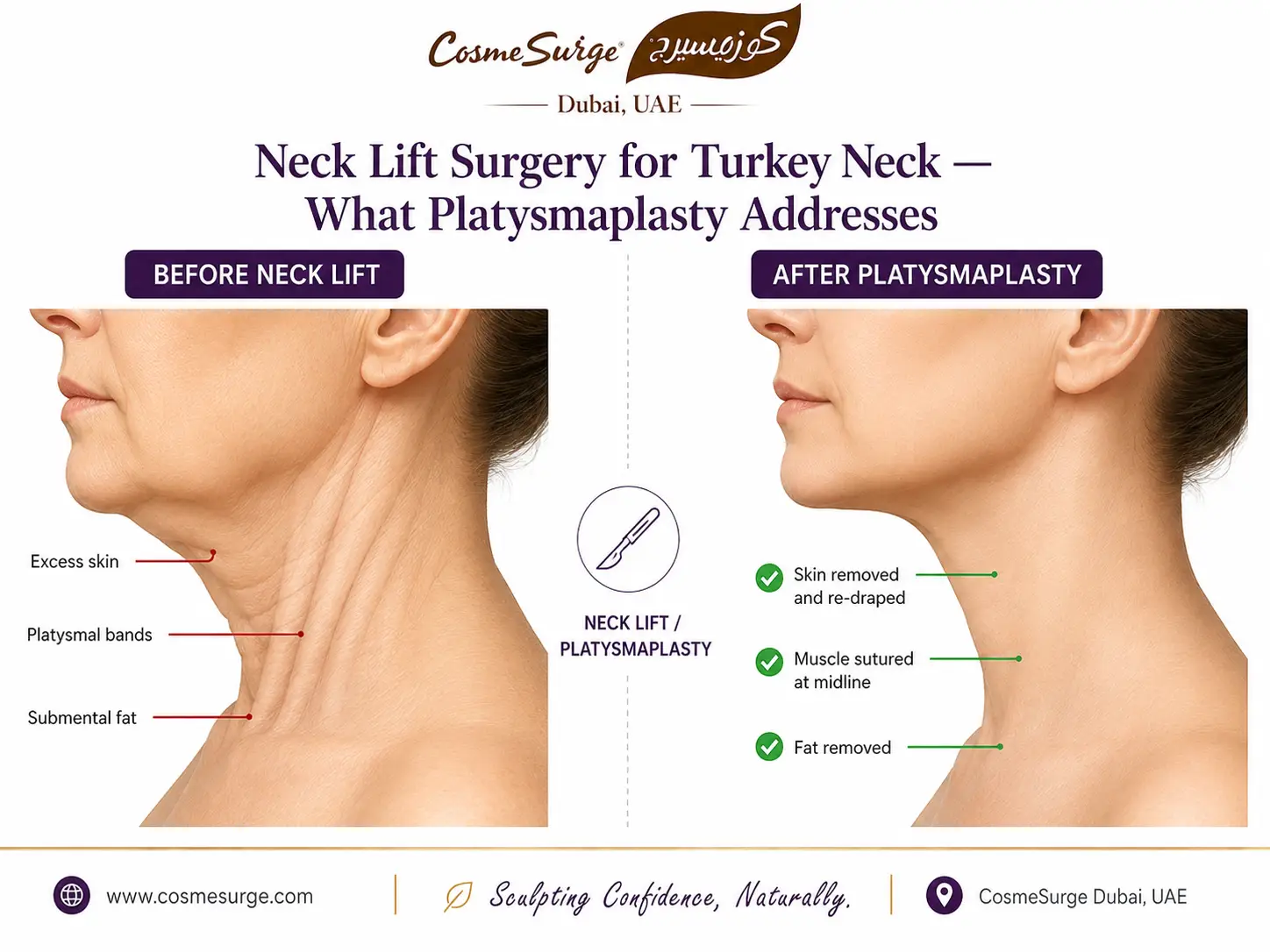
A neck lift – or platysmaplasty when it includes muscle repair – is a surgical procedure that addresses all three structural components of turkey neck simultaneously:
Skin removal: redundant neck skin is excised and the remaining skin is re-draped smoothly over the underlying structures for a natural, tight result
Muscle repair (platysmaplasty): the separated platysmal muscle is sutured back together at the midline and tightened, eliminating vertical banding and restoring a youthful neck angle
Fat removal: excess submental and neck fat is removed through direct excision or liposuction, defining the neck-to-chin transition
Neck lift surgery is performed under general or local anesthesia with sedation, typically takes 2-3 hours, and uses incisions placed discreetly behind the ears and beneath the chin. Scarring heals well and remains largely hidden within the natural contours of the ear and hairline.
Ideal Candidates for Neck Lift
Patients with significant loose or hanging neck skin that cannot be adequately improved non-surgically
Those with prominent platysmal bands visible at rest or during movement
Patients with excess submental (under-chin) fat and skin following significant weight loss or aging
Individuals in good general health, non-smokers (or those who have stopped smoking 6+ weeks pre-operatively)
Those with realistic expectations who understand recovery requires 2-4 weeks before return to normal activities
Patients who have reached a stable weight and are not planning significant further weight loss
Recovery from neck lift surgery involves 1-2 weeks of swelling, bruising, and restricted activity, with most patients returning to normal activities within 3-4 weeks. Final results are fully visible at 3-6 months and typically last 5-10 years with good skincare and a stable lifestyle.
Plastic surgeons at CosmeSurge evaluate each neck lift candidate individually, reviewing skin laxity, muscle condition, fat distribution, and facial anatomy before developing a personalized surgical plan.
Turkey Neck Before and After: Realistic Expectations
Realistic expectations are essential before any neck rejuvenation treatment, whether surgical or non-surgical.
Non-surgical before and after results: Treatments such as Morpheus8, Ultherapy, and PDO threads deliver progressive improvement in neck tightness, texture, and jawline definition. Results develop gradually over 2-6 months and are most visible in patients with mild to moderate laxity. Turkey neck before and after photos from non-surgical patients consistently show improved skin texture, reduced crepiness, and a firmer neck contour beneath the chin.
Surgical before and after results: Neck lift surgery delivers the most dramatic and lasting transformation. Turkey neck before and after surgery images show significant reduction in skin excess, elimination of platysmal bands, and a sharper, more defined jawline and neck angle. The transformation is typically immediately apparent once post-operative swelling resolves and continues to refine over 3-6 months.
All results depend on individual anatomy, skin quality, biological healing response, adherence to post-treatment care, and the experience of the treating specialist. Turkey neck treatment before and after outcomes vary from patient to patient.
How to Prevent Turkey Neck
Prevention is always more effective than treatment. The following habits, when applied consistently from the late twenties and thirties onward, meaningfully delay and reduce the development of turkey neck:
Prevention Habit | Why It Matters |
Daily SPF 30+ on neck and decolletage | Maintain a stable, healthy weight |
Consistent retinoid use from your thirties onward | Avoid rapid weight loss where possible |
Adequate daily protein intake (skin repair) | Quit smoking – significant impact on skin aging |
Stay well hydrated throughout the day | Correct forward head posture; hold screens at eye level |
Moisturise the neck daily (often overlooked) | Perform regular neck exercises from your thirties onward |
Use antioxidant serums (Vitamin C) daily | Limit alcohol – dehydrates skin and impairs collagen |
Turkey Neck Treatments Comparison
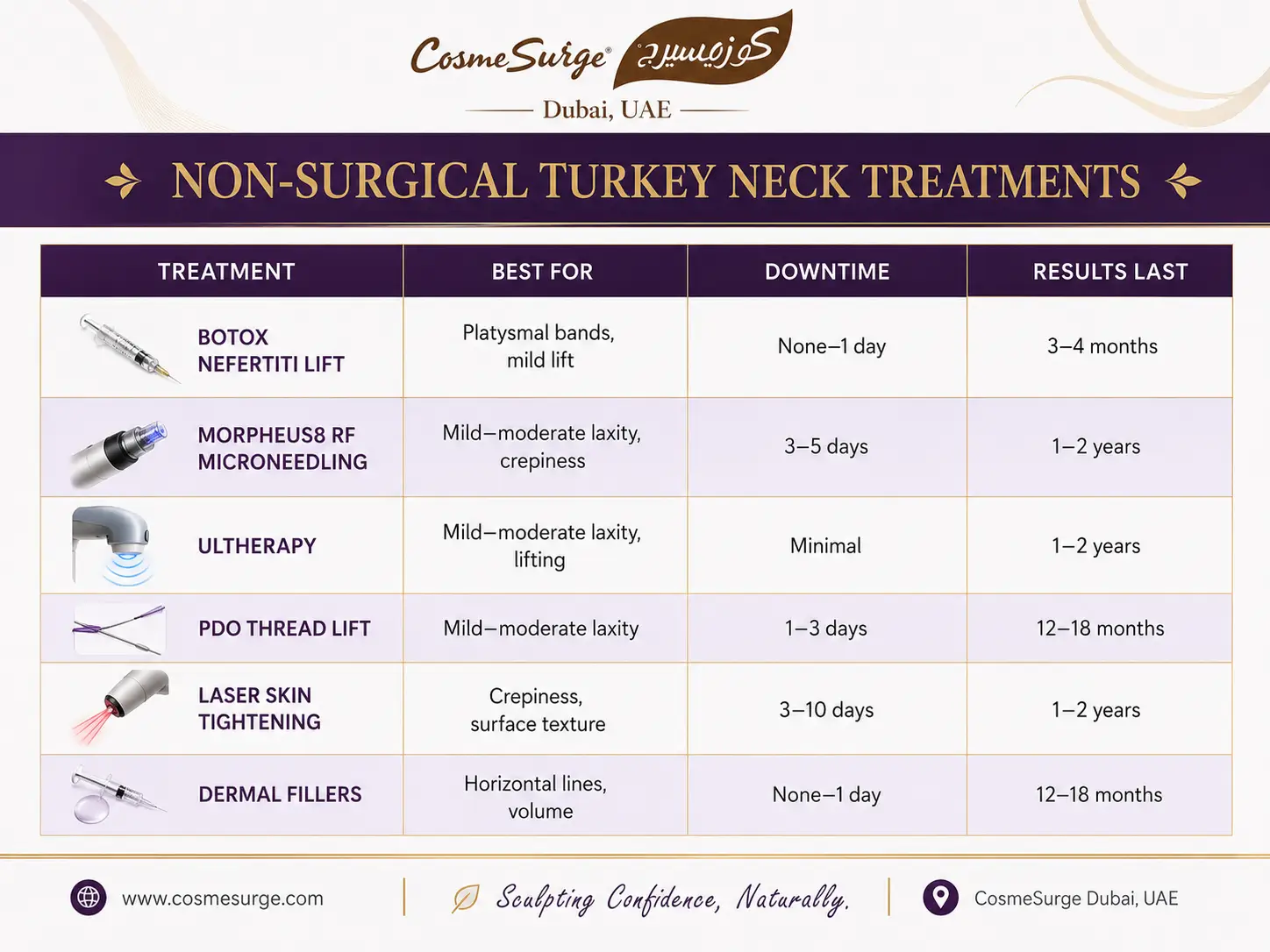
The table below compares all available turkey neck treatments by indication, downtime, duration of results, and the naturalness of outcomes:
Treatment | Best For | Downtime | Duration | Natural Look |
Neck Exercises | Mild muscle banding; toning | None | Ongoing (daily) | Natural |
Retinoids + Skincare | Early crepiness; prevention | None | Ongoing maintenance | Natural |
Botox (Nefertiti Lift) | Platysmal bands; mild lift | None – 1 day | 3-4 months | Natural |
Dermal Fillers | Horizontal lines; volume loss | None – 1 day | 12-18 months | Natural |
PDO Thread Lift | Mild-moderate skin laxity | 1-3 days | 12-18 months | Natural |
RF Microneedling (Morpheus8) | Mild-moderate laxity; crepiness | 3-5 days | 1-2 years | Natural |
Ultherapy | Mild-moderate laxity; lifting | Minimal | 1-2 years | Very natural |
Laser Skin Tightening | Crepiness; surface texture | 3-10 days | 1-2 years | Natural |
Chemical Peel | Surface lines; skin texture | 5-10 days | 6-12 months | Natural |
Skin Boosters | Hydration; skin quality | None – 1 day | 6-12 months | Natural |
Neck Lift Surgery | Severe laxity; bands; fat excess | 2-4 weeks | 5-10+ years | Natural (surgeon-dependent) |
Choosing between these options depends on the severity of your turkey neck, your tolerance for downtime, budget, and how long-lasting you need the results to be. The aesthetic experts at CosmeSurge design individualized treatment plans that may combine multiple approaches for synergistic results.
Common Myths About Turkey Neck
Myth: Neck exercises alone can get rid of turkey neck.
Fact: Turkey neck exercises strengthen and tone the platysma and neck muscles, which can reduce mild banding and improve definition. However, they cannot remove excess skin, eliminate crepiness, or address significant structural laxity caused by aging or weight loss. Exercises are most effective as prevention and maintenance – not as a treatment for established turkey neck.
Myth: Neck creams can replace professional treatment.
Fact: Topical skincare – particularly retinoids and daily SPF – meaningfully improves skin quality and slows aging. But no cream can remove significant loose skin or address platysmal banding. Neck creams are a valuable complement to clinical treatment and an essential part of the prevention toolkit, not a replacement for professional intervention.
Myth: Turkey neck is only caused by aging.
Fact: While aging is the primary cause, significant or rapid weight loss, genetics, prolonged sun damage, and smoking all contribute substantially. Many patients in their thirties experience visible turkey neck concerns primarily from rapid weight loss or inherited skin characteristics.
Myth: Non-surgical treatments cannot achieve meaningful results.
Fact: Modern non-surgical treatments – including Morpheus8, Ultherapy, PDO threads, and Botox – can deliver clinically meaningful improvement for mild to moderate turkey neck. They are not equivalent to surgery for severe cases, but for appropriate candidates they offer real, visible, and lasting improvement without the risks or downtime of a surgical procedure.
Myth: Turkey neck is irreversible.
Fact: Turkey neck can be treated effectively at every stage of severity. Mild cases respond to non-surgical treatment and lifestyle changes. Moderate cases improve significantly with advanced energy-based treatments. Severe cases are effectively addressed through neck lift surgery (platysmaplasty). No severity of turkey neck is untreatable with current aesthetic medicine options.
Conclusion
Turkey neck is one of the most visible and common signs of facial and neck aging – but it is also one of the most treatable, with effective options at every severity level.
The causes are well understood: collagen and elastin loss, platysma muscle weakening, fat redistribution, sun damage, weight loss, and genetic factors all contribute. Prevention through daily SPF, consistent retinoid use, good nutrition, stable weight, and healthy lifestyle habits can meaningfully slow its development when started early.
For those already dealing with loose neck skin or visible banding, the treatment landscape is broad and effective. Natural skincare approaches and targeted exercises provide meaningful support for mild concerns. Non-surgical treatments – including Botox for platysmal bands, RF microneedling (Morpheus8), Ultherapy, PDO threads, and laser skin tightening – deliver visible improvement for mild to moderate turkey neck without surgery. And for patients with significant skin laxity, prominent platysmal bands, or excess fat that cannot be adequately addressed non-surgically, a neck lift (platysmaplasty) remains the gold standard – delivering dramatic, lasting, and natural-looking results.
The best turkey neck treatment for you depends on the degree of skin laxity, muscle condition, fat distribution, aesthetic goals, and overall health. A single approach does not work for every patient – effective treatment requires an honest assessment of what the anatomy needs and what the patient is willing to undergo.
Schedule a consultation with the specialists at CosmeSurge for a personalized neck rejuvenation assessment. Their team of aesthetic experts and plastic surgeons evaluate every factor – from skin quality and muscle laxity to lifestyle and goals – before designing a treatment plan built specifically around your neck, your anatomy, and your ambitions.
Book your neck rejuvenation consultation at CosmeSurge today and take the first step toward a firmer, more defined, and more confident neck profile.
Frequently Asked Questions About How Do You Get Rid of Turkey Neck
The following answers address the most common patient questions about turkey neck treatment
Getting rid of turkey neck depends on severity. Mild cases often improve with consistent skincare (retinoids, SPF), neck exercises, and non-surgical treatments such as Botox, RF microneedling, or Ultherapy. Moderate cases respond well to Morpheus8, PDO threads, or combined non-surgical approaches. Severe cases – particularly those with significant loose skin or platysmal banding after weight loss – typically require a neck lift (platysmaplasty) for lasting improvement. A consultation with an aesthetic specialist is the best starting point for identifying the right approach.
No. Turkey neck does not resolve without intervention. Once collagen and elastin have broken down and the skin has lost its elasticity, it does not self-repair. Very early, mild cases may respond to aggressive skincare and lifestyle changes, but moderate to severe turkey neck requires clinical treatment – non-surgical or surgical – to achieve visible and lasting improvement. Starting a consistent skincare routine early is the most effective preventive step.
The primary cause is aging – specifically the progressive loss of collagen and elastin from the mid-thirties onward, combined with weakening and separation of the platysma muscle beneath the skin. Contributing factors include UV sun damage, genetics, significant or rapid weight loss, smoking, fluctuating weight, and poor posture (particularly ‘tech neck’ from prolonged screen use). The neck’s naturally thinner skin makes it more vulnerable to visible aging changes than the face.
Neck exercises can improve muscle tone and reduce the appearance of mild platysmal banding, but they cannot remove excess or crepey skin. For patients with visible loose skin under the chin or significant neck laxity, exercises alone will not produce meaningful results. Turkey neck exercises are best used as a preventive measure or as a complement to clinical treatments – not as a standalone solution for moderate or severe cases.
Yes, Botox injected into the platysmal muscle can soften vertical neck bands and create a subtle lifting effect along the jawline and neck. This technique – sometimes called the Nefertiti lift – works by relaxing the downward-pulling platysma, allowing the elevating muscles of the face and neck to function more effectively. Results typically last 3-4 months and require regular maintenance injections to sustain the improvement.
Neck lift surgery provides long-lasting but not technically permanent results, as natural aging continues after surgery. Results typically last 5-10 years, with many patients enjoying significant improvement for longer when they maintain stable weight, good skincare, and sun protection. Some patients benefit from non-surgical maintenance treatments – such as Botox or RF microneedling – between surgical procedures to further prolong results.
Very mild skin laxity may show some improvement with consistent daily retinoids, SPF, hydration, neck exercises, and collagen-supporting nutrition. However, skin that has stretched significantly from weight loss or prolonged aging cannot tighten meaningfully without clinical intervention. Non-surgical treatments such as RF microneedling and Ultherapy stimulate collagen remodeling and can improve mild to moderate laxity. Significant loose skin typically requires surgical removal for a lasting result.
Duration varies by treatment. Botox (Nefertiti lift) lasts 3-4 months. RF microneedling (Morpheus8) results last 1-2 years. Ultherapy lasts 1-2 years. PDO thread lifts last 12-18 months. Laser skin tightening results last 1-2 years. Neck lift surgery provides results that typically last 5-10 years or longer. All treatments benefit from consistent skincare, daily SPF, and a healthy lifestyle to maximize longevity of results.
Among surgical options, neck lift surgery delivers the most immediate and dramatic improvement – visible results appear once post-operative swelling resolves (typically within 2-4 weeks). Among non-surgical treatments, PDO threads provide the most immediately visible lifting effect, with results appearing within days of the procedure. RF microneedling and Ultherapy develop results gradually over 2-6 months. Botox for platysmal bands shows visible softening within 1-2 weeks of injection.
Yes. RF microneedling – including platforms such as Morpheus8 – is one of the most effective non-surgical treatments currently available for turkey neck. It delivers radiofrequency energy through micro-needles into the skin and subdermal tissue, stimulating significant collagen production and remodeling. For mild to moderate turkey neck, Morpheus8 can meaningfully improve skin tightness, reduce crepiness, and sharpen jawline definition. Most patients require a series of three treatments for optimal results.
Yes, genetics play a significant role. Factors including skin thickness, collagen quality, fat distribution patterns, platysma muscle structure, and the rate of collagen degradation are all genetically influenced. Patients with a strong family history of early neck aging are at elevated risk. However, modifiable factors – particularly sun damage, smoking, and significant weight loss – can substantially accelerate genetically predetermined aging patterns, making lifestyle choices important regardless of genetic predisposition.
In many cases, yes. When significant weight is lost, particularly rapidly, the skin that was stretched over the underlying fat may not retract sufficiently after the fat is gone. This can leave loose, excess skin in the neck and chin area that creates or worsens the turkey neck appearance. The faster and more extensive the weight loss, the more pronounced this effect tends to be. Gradual weight loss gives the skin more time to adapt, though significant loss almost always produces some degree of residual skin laxity.
Turkey neck can begin developing as early as the mid-thirties, when collagen production starts declining and the platysma muscle begins to weaken. Most patients first notice visible changes in their forties and fifties. However, significant sun damage, rapid weight loss, smoking, or genetic predisposition can accelerate this significantly – with some patients in their late twenties or early thirties already noticing early horizontal neck lines or early skin laxity beneath the chin.
Treatment costs vary considerably depending on the procedure chosen, the clinic, geographic location, and the extent of treatment required. Non-surgical options such as Botox or skin boosters are generally the most accessible in terms of cost; advanced treatments such as Morpheus8, Ultherapy, and PDO threads represent a higher per-session investment. Neck lift surgery carries the most significant upfront cost but typically provides the longest-lasting results and the most dramatic improvement. At CosmeSurge, all pricing is discussed transparently during the consultation.
For severe turkey neck – defined by significant loose skin, prominent platysmal banding, and excess submental fat that cannot be adequately addressed by non-surgical means – neck lift surgery (platysmaplasty) is the most effective treatment. It addresses all three structural components: skin, muscle, and fat. Non-surgical treatments are generally insufficient as standalone options for severe cases, though they may serve as useful maintenance tools after surgery. The aesthetic experts at CosmeSurge assess each patient individually to develop the most appropriate and effective treatment plan.
Medical Disclaimer & Review
This content is for educational purposes only and does not replace professional medical advice. Always consult a qualified healthcare provider for diagnosis and treatment.
Medically reviewed by the CosmeSurge Plastic Surgery Team, Dubai,UAE.