
Key Takeaways: Panniculectomy vs Tummy Tuck
Panniculectomy removes the hanging apron of excess skin and fat (the pannus) from the lower abdomen – primarily for medical and functional reasons.
A tummy tuck (abdominoplasty) removes excess skin, tightens stretched abdominal muscles, and reshapes the waist – primarily for cosmetic improvement.
Some patients benefit from combining both procedures in a single surgery, addressing medical and aesthetic concerns simultaneously.
The right choice depends on medical needs, cosmetic goals, abdominal muscle condition, and overall health.
Plastic surgeons at CosmeSurge assess each patient individually to recommend the most appropriate surgical approach.
Two surgical procedures. One shared region of the body. Very different outcomes. If you are dealing with excess abdominal skin – whether after significant weight loss, multiple pregnancies, or years of living with a large abdominal pannus – understanding the difference between panniculectomy vs tummy tuck is the first and most important step toward making the right surgical decision.
For some patients, the goal is purely functional: to remove skin that is causing infections, restricting movement, or preventing proper hygiene. For others, the priority is cosmetic: a flatter, firmer abdomen, repaired muscles, and a reshaped waist. And for many – especially those following bariatric surgery – both goals matter equally.
This comprehensive guide breaks down panniculectomy and tummy tuck in clinical detail, covering what each procedure involves, who qualifies, what recovery looks like, how results differ, and when combining both surgeries delivers the most complete outcome.
What Is a Panniculectomy?
A panniculectomy is a surgical procedure that removes the pannus – the apron of excess skin and fat that hangs from the lower abdomen. The word derives from the Latin ‘panniculus,’ meaning a small piece of cloth, referring to the folds of redundant tissue that accumulate following significant weight loss, obesity, or repeated pregnancies.
Panniculectomy is classified as a reconstructive or functional surgery – not a cosmetic one – because it is performed to address genuine medical problems caused by the overhanging tissue, rather than to improve appearance.
What Is the Pannus?
The pannus (also called a panniculus) is the overhanging fold of skin and subcutaneous fat that develops when excess tissue accumulates in the lower abdomen. It can range from a small flap of skin to a large, pendulous structure that extends well below the pubic area. Panniculus surgery is most commonly needed following massive weight loss – particularly after bariatric (weight loss) surgery – when large amounts of excess skin remain after fat has been lost.
Medical Indications for Panniculectomy
Panniculectomy is recommended when the overhanging skin causes documented medical problems including:
Chronic skin infections (intertrigo) in the skin folds beneath the pannus
Persistent rashes, moisture-related dermatitis, or fungal infections that fail to resolve with conservative treatment
Difficulty with hygiene – limited access to the affected area for cleaning
Significant mobility restriction – the weight of the pannus makes walking, exercise, or daily activities difficult
Back pain or altered posture caused by the weight and mechanical load of the overhanging tissue
Difficulty fitting into clothing, particularly following bariatric surgery
Wound or ulcer formation from skin-on-skin friction
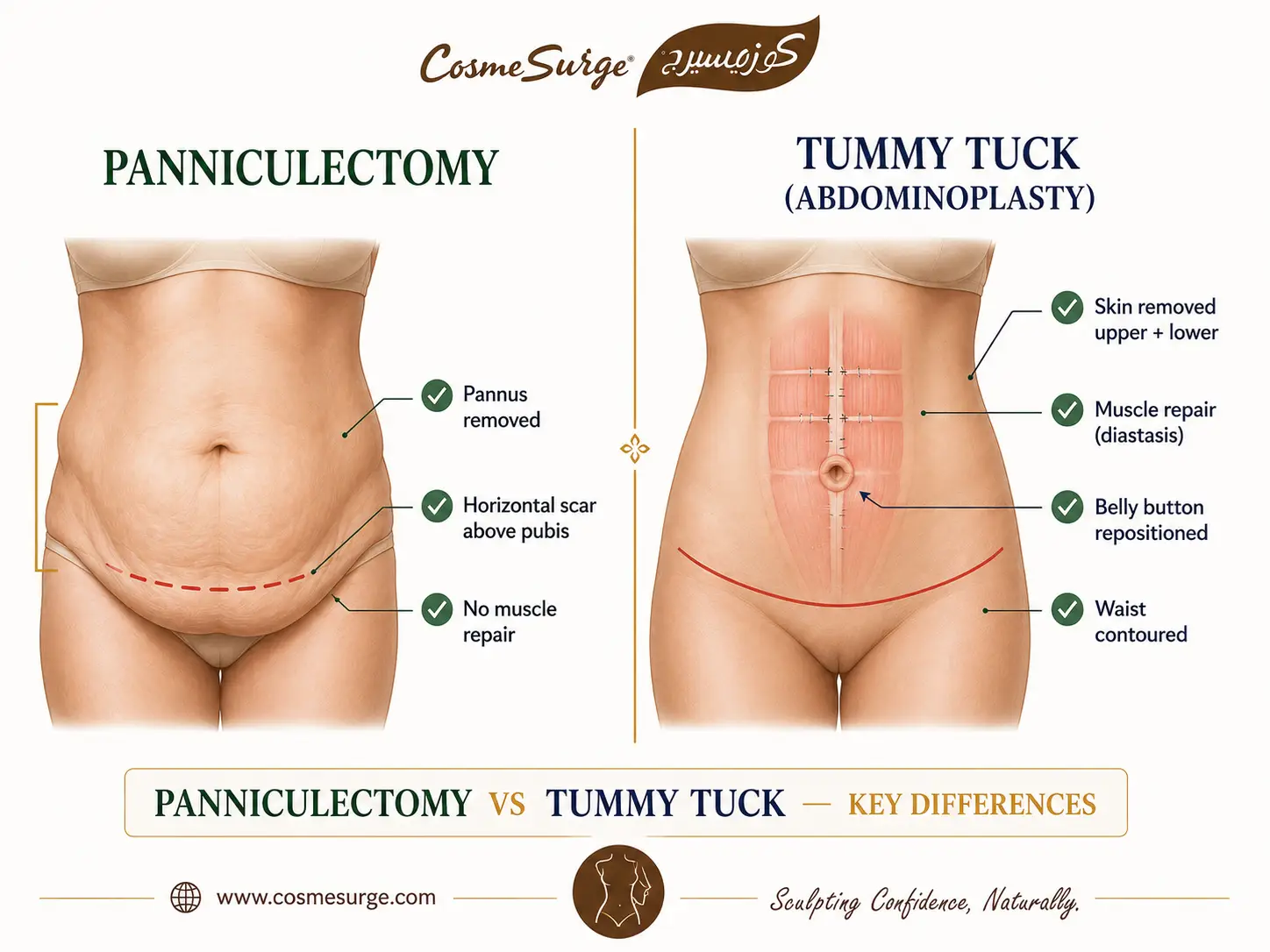
Panniculectomy removes the overhanging skin and fat from the lower abdomen, typically creating a horizontal scar above the pubic area. The procedure does not include abdominal muscle repair, significant waist contouring, or belly button repositioning in its standard form – features that distinguish it from a full tummy tuck.
What Does a Tummy Tuck Include?
A full tummy tuck (abdominoplasty) addresses multiple anatomical concerns in a single operation:
Skin removal: Excess abdominal skin is excised, particularly from the lower abdomen between the pubic area and navel
Muscle repair (diastasis recti repair): The rectus abdominis muscles, which commonly separate during pregnancy, are sutured back together – restoring core integrity and creating a flatter abdominal profile
Fat removal: Some direct fat excision occurs, and liposuction is frequently incorporated to further refine contour
Belly button repositioning: The navel is relocated to a natural anatomical position after the abdominal skin is pulled taut and excess tissue removed
Waist contouring: The combination of skin excision, muscle repair, and liposuction creates a significantly improved waist definition and overall abdominal shape
What Is a Tummy Tuck (Abdominoplasty)?
A tummy tuck – the medical term being abdominoplasty – is a cosmetic surgical procedure that removes excess skin and fat from the abdomen while simultaneously tightening the underlying abdominal muscles. It is one of the most commonly performed body contouring surgeries worldwide.
The medical term for tummy tuck – abdominoplasty – combines the Latin ‘abdomin’ (abdomen) with the Greek ‘plastos’ (moulded or shaped). Another name for tummy tuck in clinical documentation is dermolipectomy, referring to the removal of both skin (dermis) and underlying fat. Both terms describe the same operation.
Types of Tummy Tuck Surgery
Not all tummy tucks are identical. Variations include the full abdominoplasty (most comprehensive), mini tummy tuck (limited to below the navel, no muscle repair), extended abdominoplasty (includes flanks), and fleur-de-lis abdominoplasty (vertical and horizontal incisions for massive weight loss patients). The question ‘what is a tummy tuck without muscle repair called’ typically refers to a mini tummy tuck or a limited panniculectomy – procedures that do not address the rectus muscles.
Panniculectomy vs Tummy Tuck: Key Differences
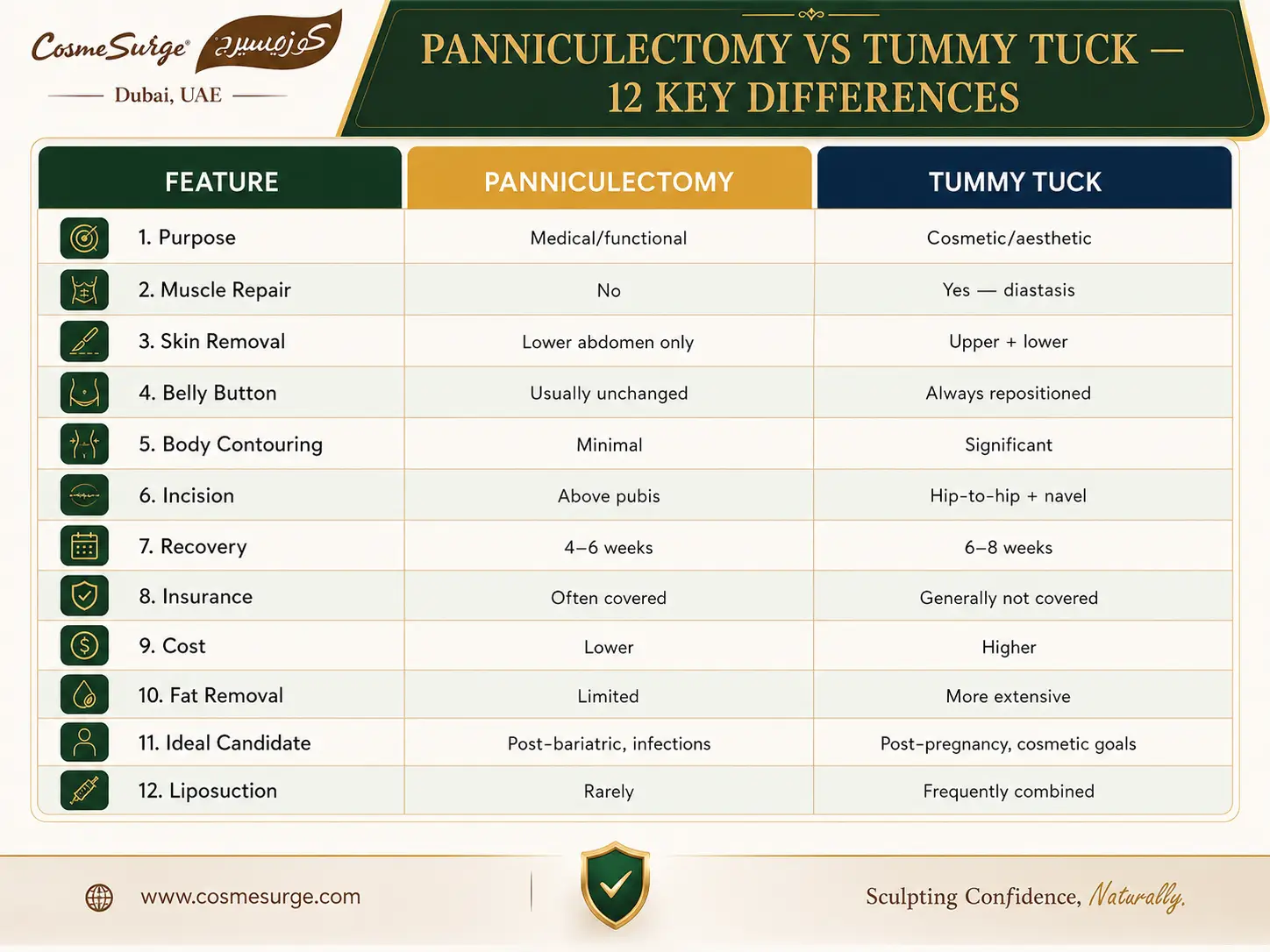
The comparison table below covers the twelve most clinically significant differences between panniculectomy vs tummy tuck surgery:
Feature | Panniculectomy | Tummy Tuck (Abdominoplasty) |
Primary Purpose | Remove hanging skin/fat (pannus) for medical/functional reasons | Remove skin + tighten muscles + contour waist for aesthetic improvement |
Muscle Repair | No – muscles are not addressed | Yes – diastasis recti repair is a core component |
Skin Removal | Lower abdomen (pannus) only | Upper and lower abdomen; more comprehensive |
Fat Removal | Limited; primarily excess skin and fat of pannus | More extensive; often combined with liposuction |
Belly Button Repositioning | Not typically required | Always repositioned to natural position |
Body Contouring | Minimal – functional focus | Significant – waist definition improved |
Incision/Scarring | Horizontal scar above pubic area | Longer hip-to-hip scar; additional navel scar |
Recovery Duration | 4-6 weeks to most activities | 6-8 weeks to most activities |
Insurance Coverage | Potentially covered (medical necessity) | Generally not covered (cosmetic) |
Cost | Lower (less complex surgery) | Higher (more comprehensive procedure) |
Ideal Candidate | Post-bariatric; skin infections; mobility issues | Post-pregnancy; diastasis recti; cosmetic goals |
Expected Results | Functional relief; flatter lower abdomen | Flat, firm abdomen; defined waist; improved core |
Understanding these distinctions is essential for patients researching tummy tuck vs panniculectomy. The right procedure – or combination of procedures – is determined by a thorough surgical consultation that evaluates medical history, skin quality, muscle condition, and personal goals.
Can You Have a Panniculectomy Without a Tummy Tuck?
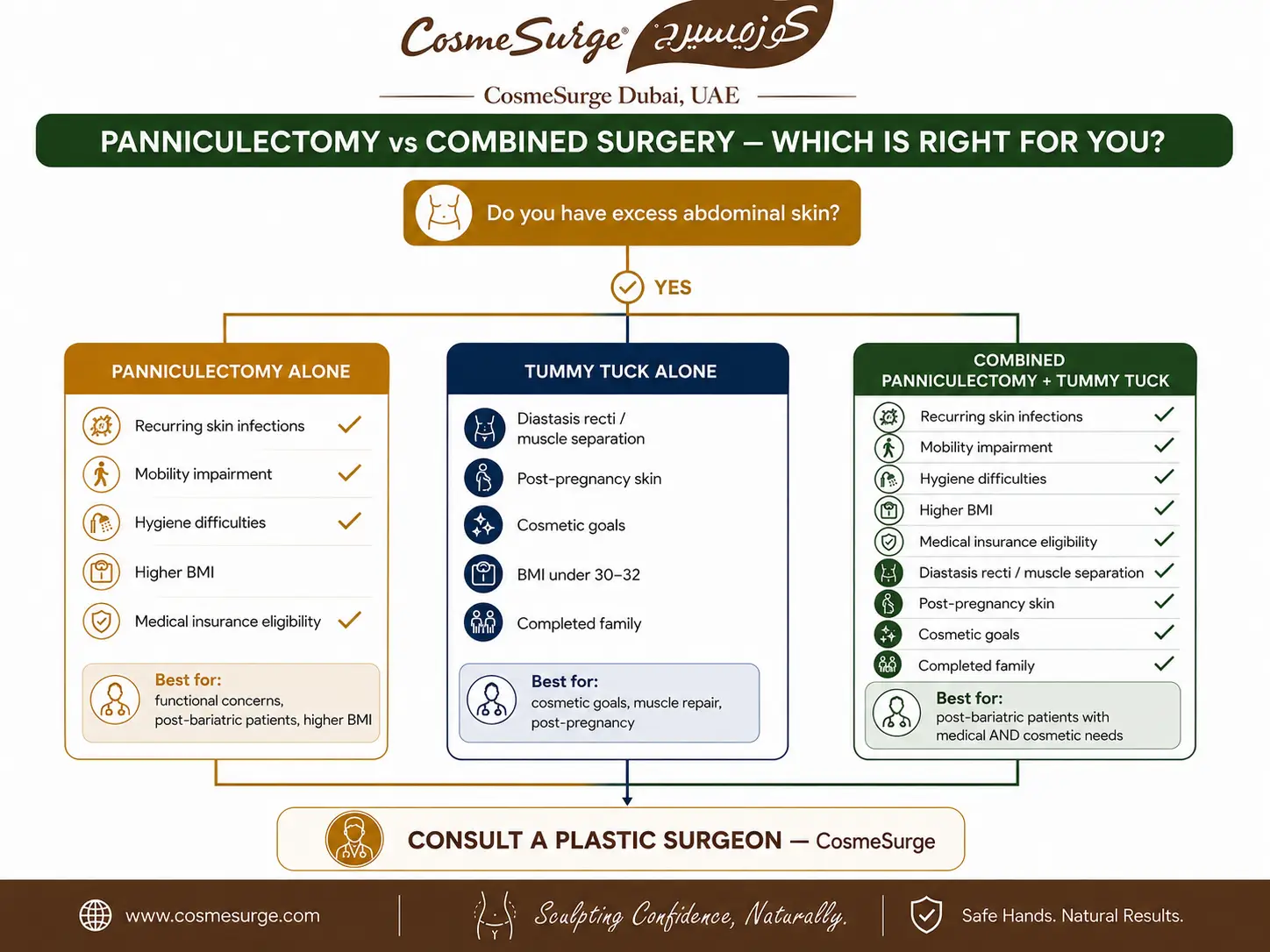
Yes. A panniculectomy without tummy tuck is a valid and frequently performed standalone procedure for patients whose concerns are primarily medical rather than cosmetic. This approach is appropriate when:
The primary concern is functional – recurring skin infections, hygiene difficulties, or mobility impairment
The patient’s BMI or health status makes a longer, more complex operation inadvisable
There is no significant diastasis recti requiring muscle repair
The abdominal skin above the pannus is relatively flat and does not require comprehensive tightening
The patient does not have cosmetic goals for the upper abdomen, waist, or belly button position
Insurance coverage is being sought for the medical necessity component only
A standalone panniculectomy is typically shorter in operative duration and may carry lower risk for patients with higher BMI or significant medical comorbidities. The results are more limited aesthetically than a full tummy tuck, but the functional improvements – relief from infections, rashes, mobility difficulties, and hygiene challenges – can be profoundly life-changing.
Can You Combine a Panniculectomy with a Tummy Tuck?
Yes – and for many patients who are medically and cosmetically appropriate, combining panniculectomy with tummy tuck in a single surgical session offers the most comprehensive outcome available.
A panniculectomy with abdominoplasty simultaneously accomplishes everything both procedures offer individually:
Removes the overhanging pannus (panniculectomy component)
Repairs separated abdominal muscles – panniculectomy with muscle repair addresses the diastasis recti
Tightens and removes excess skin across the entire abdomen
Repositions the belly button to a natural, aesthetically appropriate position
Refines and contours the waist and lower abdomen
Combining both procedures in one operation reduces the patient’s total exposure to general anesthesia compared to two separate surgeries, and consolidates the recovery period. It also allows the surgeon to plan incisions holistically – achieving the best possible functional and aesthetic result in a single operative plan.
Panniculectomy and tummy tuck before and after results from combined procedures are typically far more dramatic than either surgery performed in isolation – particularly for post-bariatric patients who present with significant skin excess, abdominal muscle separation, and both functional and cosmetic goals.
The experienced team at CosmeSurge conducts thorough preoperative assessments to determine whether combined surgery is clinically safe and appropriate for each patient.
Panniculectomy vs Abdominoplasty: Understanding the Terminology
Patients frequently encounter multiple terms when researching these procedures, and the terminology can be confusing. Here is what you need to know about panniculectomy vs abdominoplasty naming conventions:
Abdominoplasty = tummy tuck: both terms refer to the same cosmetic surgery involving skin excision, muscle repair, and waist contouring
Panniculectomy = panniculus removal = pannus surgery: a reconstructive surgery focused on removing overhanging skin and fat for functional reasons
Dermolipectomy vs tummy tuck: dermolipectomy is a clinical term for removal of skin and fat tissue – it overlaps with both panniculectomy and abdominoplasty depending on context
Lipectomy vs panniculectomy: lipectomy broadly refers to surgical fat removal; panniculectomy specifically removes the pannus (skin and fat apron)
Belt lipectomy vs panniculectomy: a belt lipectomy (lower body lift) removes skin and fat circumferentially from the abdomen, flanks, and back – more extensive than a standard panniculectomy
Apron surgery vs tummy tuck: ‘apron surgery’ is a patient-friendly term for panniculectomy, referring to the removal of the skin apron
Understanding the difference between panniculectomy and abdominoplasty in terminology also matters practically: insurance companies distinguish between reconstructive (panniculectomy) and cosmetic (abdominoplasty) coding when processing claims.
Skin Removal Surgery vs Tummy Tuck
After massive weight loss – whether through bariatric surgery or sustained dietary effort – patients often face a specific challenge: extensive loose skin that cannot be addressed without surgery. This is where the distinction between skin removal surgery and tummy tuck becomes clinically important.
Skin removal vs tummy tuck distinctions:
Tummy tuck (abdominoplasty): comprehensive body contouring including muscle repair, skin excision across both upper and lower abdomen, liposuction, and belly button repositioning
Panniculectomy (skin removal/apron surgery): focused excision of the lower abdominal pannus without muscle repair – primarily functional
Belt lipectomy: circumferential removal of excess skin from abdomen, flanks, and back – suited to patients with generalized post-bariatric skin excess
Thigh lift and arm lift: address excess skin of the inner thighs and upper arms respectively – common companion procedures after massive weight loss
Body contouring specialists at CosmeSurge evaluate the full extent and anatomical distribution of excess skin in post-bariatric patients before recommending the most appropriate combination of procedures – whether that is panniculectomy alone, tummy tuck alone, or a comprehensive plan that may include a Mommy Makeover, body lift, arm lift, or thigh lift.
Who Is the Best Candidate?
The ideal candidate profile differs meaningfully between panniculectomy and tummy tuck surgery. The comparison table below summarizes the key criteria:
Panniculectomy – Ideal Candidate | Tummy Tuck – Ideal Candidate |
Significant weight loss (bariatric or lifestyle) | Excess abdominal skin and/or fat after pregnancy or weight change |
Chronic skin infections beneath the pannus | Diastasis recti (abdominal muscle separation) |
Hygiene difficulties due to overhanging skin | Completed family (no future pregnancies planned) |
Mobility limitation caused by the pannus weight | Near or at stable target weight |
Stable weight for at least 6-12 months | BMI generally below 30-32 for optimal safety |
Medically cleared for surgery | Non-smoker or cessation 6+ weeks prior |
Non-smoker (or cessation 6+ weeks prior) | Good general health and realistic expectations |
Best Candidates for Panniculectomy
Patients who derive the greatest benefit from panniculectomy are those who have experienced massive weight loss – typically 100 lbs (45 kg) or more – through bariatric surgery, medication, or sustained lifestyle change, and are left with a significant hanging pannus causing documented medical problems. Weight stability for at least 6-12 months before surgery is an important prerequisite.
Patients with higher BMI who may not be optimal candidates for the longer, more complex tummy tuck procedure can often safely undergo panniculectomy, which has a shorter operative duration and more focused surgical scope.
Best Candidates for Tummy Tuck
Tummy tuck candidates are typically patients with excess abdominal skin and fat that does not respond to diet and exercise, often with associated diastasis recti causing core weakness or aesthetic dissatisfaction. Women who have completed their family are particularly common tummy tuck candidates, as future pregnancies can reverse surgical results. Maintaining a BMI below 30-32 and being a non-smoker are important safety considerations for the longer, more complex abdominoplasty procedure.
Patients who are planning future pregnancies, have active cardiovascular disease, uncontrolled diabetes, or who smoke are not ideal candidates for either procedure until those risk factors are addressed.
Belly Button Changes After Surgery
The belly button question is one of the most frequently asked by patients comparing these two procedures – and the differences are clinically significant.
Belly Button in Tummy Tuck Surgery
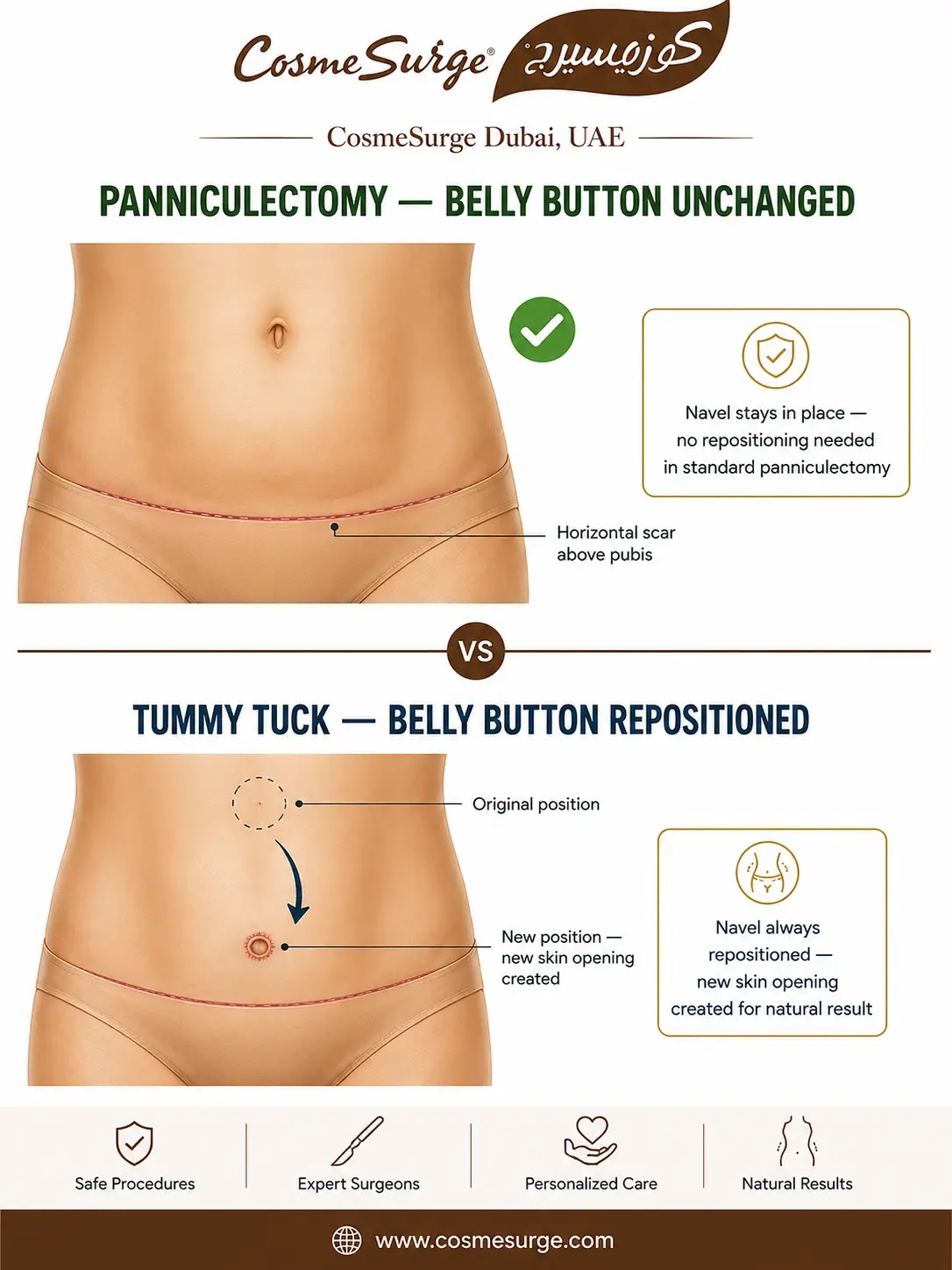
During a full abdominoplasty, the belly button must be repositioned. When the abdominal skin is pulled downward and excess tissue excised, the navel would otherwise end up displaced on the tightened abdominal skin. To avoid this, the surgeon creates a new opening in the tightened skin and reattaches the belly button at a natural, anatomically appropriate position. The result is a well-positioned navel surrounded by a small circular scar that typically fades over time.
Some patients ask about ‘two belly buttons’ after tummy tuck. This concern relates to the small risk of visible scarring at the original navel site – a complication that is rare with skilled surgical technique and proper scar management.
Belly Button in Panniculectomy
A standard panniculectomy does not require belly button repositioning. The surgery removes the overhanging lower abdominal pannus, and when the extent of the resection is limited, the navel remains in its original position. However, in larger panniculectomies where significant skin is removed, the belly button position may shift or, in some cases, need to be surgically recreated.
The panniculectomy no belly button repositioning rule applies to most cases – but the panniculectomy belly button outcome depends on the specific extent of the surgery and the individual patient’s anatomy. When panniculectomy is combined with a full tummy tuck, belly button repositioning is always performed as part of the tummy tuck component.
Recovery Timeline: Week by Week
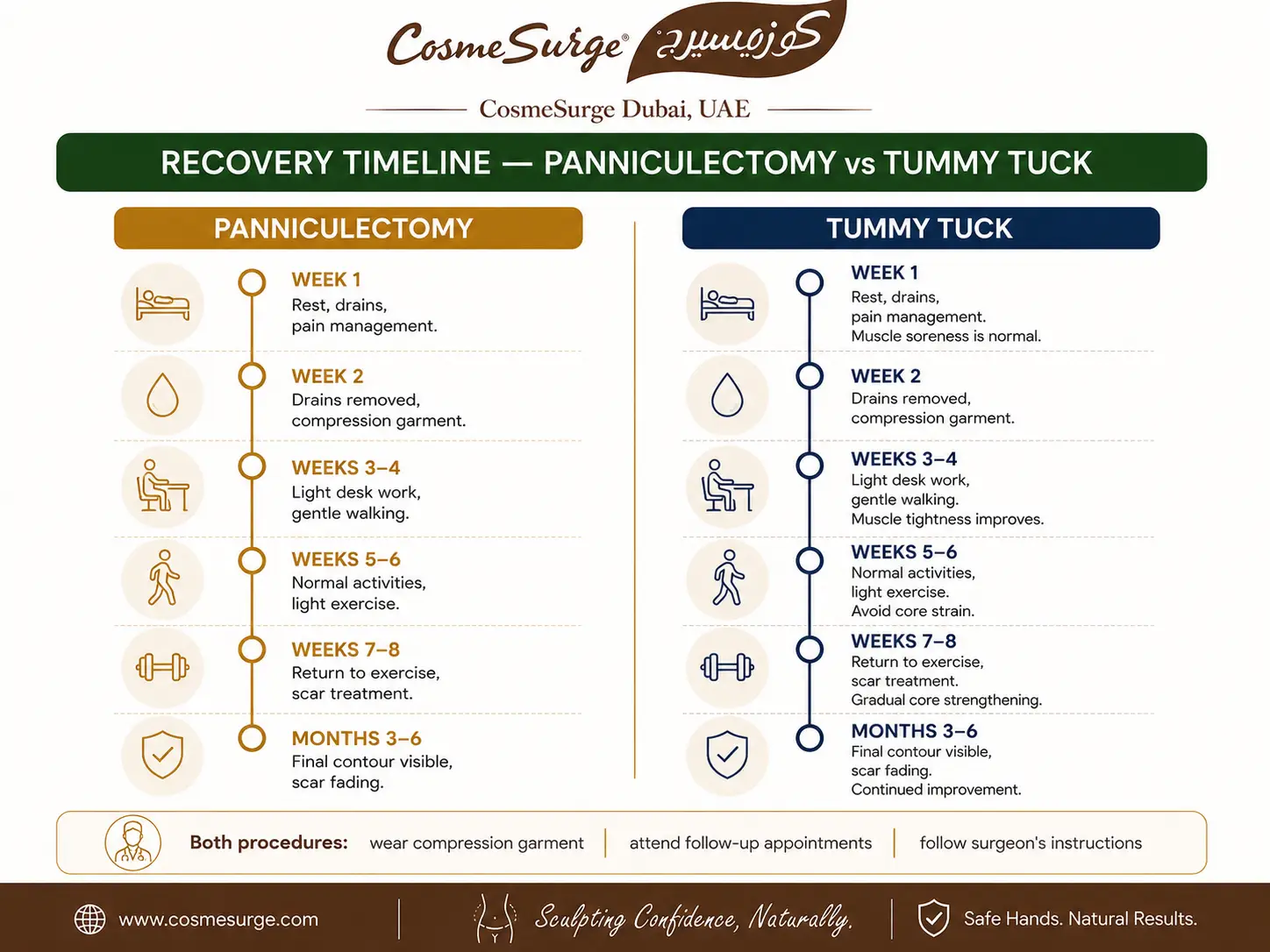
Recovery from panniculectomy and tummy tuck follows a broadly similar early trajectory but differs in duration, intensity, and the factors that affect it. Tummy tuck recovery tends to be slightly longer and more intense in the initial weeks due to abdominal muscle repair.
Timeframe | Panniculectomy | Tummy Tuck |
Week 1 | Rest, pain management, drain care, short walks. Limited mobility. Prescription pain medication. | Rest, muscle soreness, drain care. Walking in a slightly bent position. Pain may be more pronounced due to muscle repair. |
Week 2 | Drains typically removed. Reduced pain. Compression garment worn continuously. Gentle movement. | Drains removed. Pain reducing. Compression garment worn. Gradual increase in mobility. Standing straighter. |
Weeks 3-4 | Return to light desk work. Continued garment use. Light walking. Swelling continuing to reduce. | Return to sedentary work. Garment worn. Upper body mobility improving. Abdominal tightness persists. |
Weeks 5-6 | Most patients resume normal daily activities. Light exercise may begin. Driving usually permitted. | Daily activities mostly resumed. Light lower-impact exercise starting. Numbness and tightness easing. |
Weeks 7-8 | Return to non-strenuous work and exercise. Scar treatment begins. | Return to most exercise. Core engagement with care. Scar treatment and massage begin. |
Months 3-6 | Scar maturing and fading. Most swelling resolved. Final contour becoming visible. | Scar maturing. Muscle repair fully integrated. Final abdominal shape emerging. |
Months 6-12 | Final results fully visible. Scar fading continues for 12-18 months. | Final results visible. Navel appearance settled. Scar continues to fade. |
All recovery timelines are approximate and vary based on the individual patient’s health, the complexity of the surgery, adherence to post-operative instructions, and whether both procedures were performed simultaneously. Panniculectomy recovery photos from the clinical period typically show progressive improvement in lower abdominal contour from week two onward.
Risks and Complications
Both panniculectomy and tummy tuck are major abdominal operations performed under general anesthesia, and both carry a recognized profile of potential risks. Patients should understand these risks before proceeding with surgery.
Risk / Complication | Panniculectomy | Tummy Tuck |
Wound infection | Possible; higher risk with diabetes or obesity | Possible; antibiotic prophylaxis standard |
Seroma (fluid build-up) | Common; managed with drains and compression | Common; managed with drains and compression |
Hematoma (blood pooling) | Uncommon; may require drainage | Uncommon; may require drainage |
Poor wound healing | Higher risk in smokers/diabetic patients | Higher risk in smokers/high BMI patients |
Blood clots (DVT/PE) | Possible with prolonged immobility | Possible; prevented with early mobilization |
Skin numbness | May occur; usually resolves over months | Common; particularly in lower abdomen |
Visible scarring | Permanent scar above pubis | Permanent hip-to-hip and navel scars |
Asymmetry | Rare with skilled technique | Rare with skilled technique |
Anesthesia reactions | Standard general anesthesia risks | Standard general anesthesia risks |
Factors that significantly increase complication risk include active smoking, BMI above surgical safety thresholds, uncontrolled diabetes, cardiovascular disease, prior abdominal surgeries, and blood clotting disorders. Honest preoperative health disclosure is essential for patient safety. An experienced surgical team minimizes risk through careful patient selection, meticulous operative technique, and comprehensive post-operative monitoring.
Expected Results After Surgery
After panniculectomy, patients can expect:
Elimination of the overhanging pannus and associated excess skin
Significant relief from chronic skin infections, rashes, and hygiene difficulties
Improved mobility and reduced physical discomfort when walking or exercising
Easier clothing fit, particularly trousers and underwear
A flatter lower abdomen – though the upper abdomen and waist are not significantly altered
Absence of dramatic waist contouring or muscle tone improvement
After tummy tuck (abdominoplasty), patients can expect:
A significantly flatter and firmer abdominal profile from pubis to ribcage
Improved waist definition and overall body contour
Resolution of diastasis recti and associated core weakness
Better-fitting clothing across the entire waistline
Repositioned belly button in a natural anatomical location
Long-lasting results when maintained with stable weight and healthy lifestyle
Improved self-confidence and body image
Before and After Results
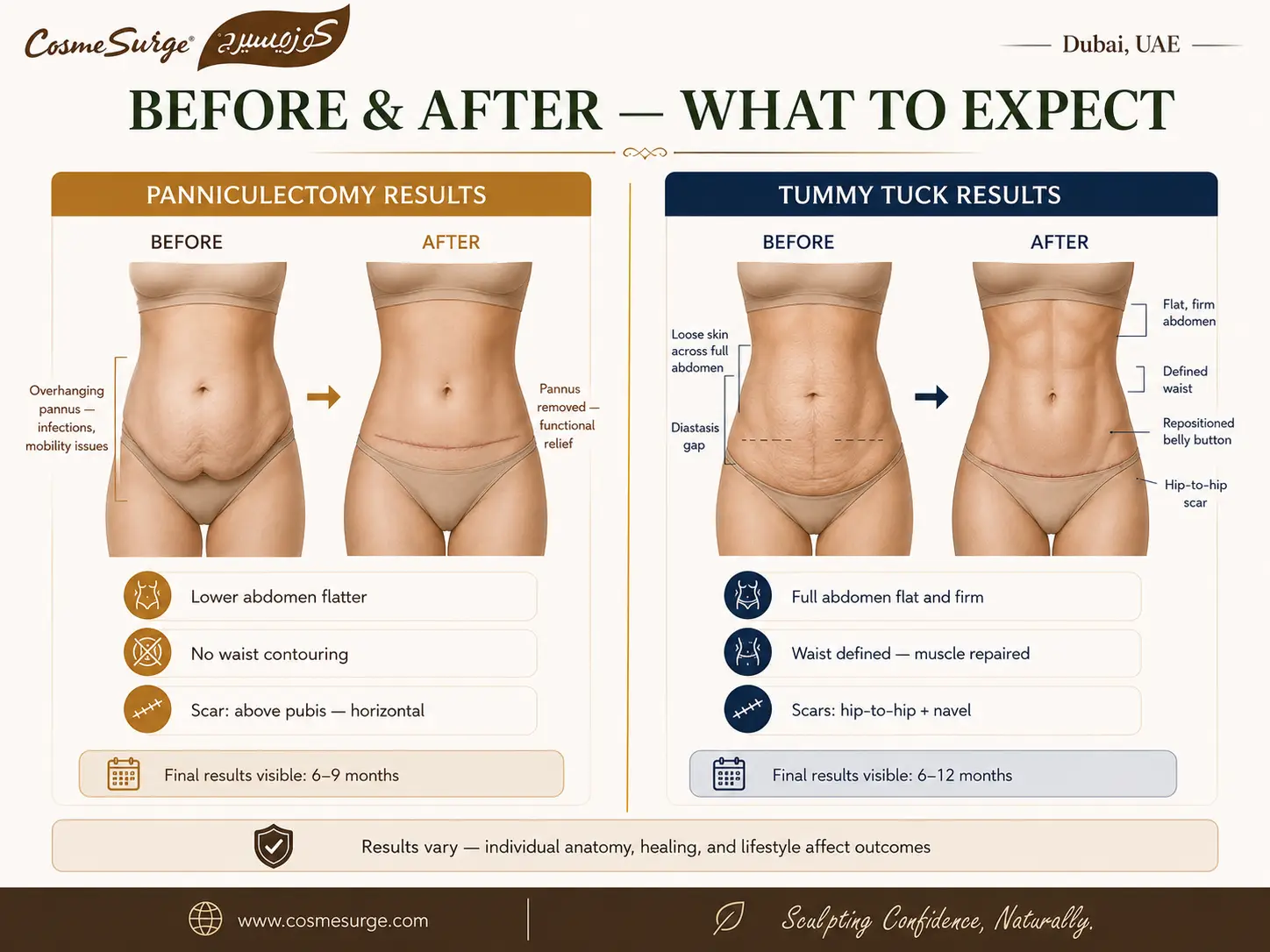
Realistic expectations are essential for both procedures. Surgical results develop progressively over 6-12 months as swelling resolves and scars mature.
Panniculectomy before and after: The most visible change is the elimination of the hanging skin apron. The lower abdomen will appear flatter and patients typically report major functional improvement. Panniculectomy recovery photos from patients at 3-6 months consistently show significant improvement in lower abdominal contour and skin distribution. The upper abdomen and waist, however, are not significantly altered.
Panniculectomy and tummy tuck before and after: Combined procedures produce more dramatic results. Panniculectomy vs tummy tuck pictures consistently demonstrate that the combined approach delivers the most comprehensive cosmetic improvement: a flat, tight abdomen from pubis to ribcage, defined waist, repositioned navel, and repaired core. Panniculectomy vs tummy tuck photos from post-bariatric patients typically show transformative improvements in overall body shape.
All patients should view before and after results as a realistic guide, not a guarantee. Individual anatomy, skin elasticity, healing response, and post-operative lifestyle choices all influence final outcomes.
Cost Comparison
The cost of panniculectomy vs tummy tuck varies significantly based on several factors: the surgeon’s experience and qualifications; the geographic location and facility reputation; the complexity of the individual case (extent of skin excess, whether muscle repair is included, whether liposuction is added); anesthesia fees; facility and operating room charges; and the extent of any combination procedures performed simultaneously.
As a general principle, a standalone panniculectomy tends to cost less than a full tummy tuck due to shorter operative time and fewer technical components. When panniculectomy is combined with abdominoplasty, costs increase to reflect the additional complexity. Combination surgeries, however, are generally more cost-effective than having the two procedures separately, as facility and anesthesia costs are shared.
At CosmeSurge, all costs are discussed transparently during the surgical consultation. Patients receive a comprehensive, individualized cost breakdown that reflects their specific treatment plan – including any combination procedures such as liposuction, arm lift, thigh lift, or breast lift that may be incorporated.
Insurance Coverage
Insurance coverage is one of the most practically significant differences between panniculectomy and tummy tuck surgery. Understanding coverage criteria before pursuing surgery is essential for financial planning.
Situation | Panniculectomy Coverage | Tummy Tuck Coverage |
Routine cosmetic surgery | Not covered | Not covered |
Documented recurrent skin infections | Often covered | Not covered |
Functional impairment from pannus weight | Often covered | Not covered |
Diastasis recti repair (functional) | Not applicable | Occasionally covered (muscle repair only) |
Combined panniculectomy + tummy tuck | Panniculectomy portion may be covered | Abdominoplasty portion generally excluded |
Post-bariatric surgery body contouring | May be covered with criteria met | Generally not covered |
To support a panniculectomy insurance claim, patients typically need: written documentation from a primary care physician or dermatologist confirming recurrent skin infections; evidence that conservative treatments (antifungal medications, barrier creams) have been tried and failed; BMI documentation; and records of functional impairment caused by the pannus. Insurance decisions vary significantly by provider and policy, and patients should verify their specific coverage before proceeding.
Tummy tuck (abdominoplasty) is almost universally classified as a cosmetic procedure and is not covered by health insurance. The diastasis recti repair component may occasionally be covered when performed for documented functional reasons, but this varies by insurer and requires prior authorization.
Conclusion
Panniculectomy and tummy tuck are distinct surgical procedures that serve different – and sometimes overlapping – patient needs. Understanding the difference between tummy tuck and panniculectomy is the essential first step toward choosing the right path.
Panniculectomy is a reconstructive surgery that removes the overhanging pannus to resolve genuine medical problems: chronic skin infections, persistent rashes, mobility limitations, and hygiene difficulties. For patients whose excess abdominal skin creates functional impairment – particularly following bariatric surgery or major weight loss – panniculectomy can deliver life-changing relief.
Tummy tuck (abdominoplasty) is a comprehensive cosmetic surgery that removes excess skin, repairs separated abdominal muscles (diastasis recti), repositions the belly button, and reshapes the waist. It offers significantly greater aesthetic improvement for patients whose goals include a flatter abdomen, improved core strength, and a more contoured body profile.
For many patients – particularly those following massive weight loss who present with both a hanging pannus and abdominal muscle separation – combining panniculectomy with abdominoplasty in a single procedure provides the most complete outcome: functional relief and cosmetic transformation together, with one recovery.
The right procedure depends on your individual medical needs, cosmetic goals, abdominal muscle condition, skin distribution, overall health, and surgical risk profile. It may also form part of a broader body contouring plan that includes procedures such as liposuction, thigh lift, arm lift, breast lift, or a Mommy Makeover or full body lift.
Plastic surgeons at CosmeSurge provide personalized, in-depth surgical consultations that evaluate all of these factors and guide each patient toward the most clinically appropriate and personally meaningful decision – whether that is panniculectomy alone, tummy tuck alone, or a combined approach designed around your body, your health, and your goals.
Schedule your consultation at CosmeSurge today and take the first step toward lasting comfort, confidence, and a body you are proud of.
Frequently Asked Questions About Panniculectomy vs Tummy Tuck
The following answers address the most common questions about panniculectomy vs tummy tuck surgery.
No. Panniculectomy removes the overhanging apron of excess skin and fat (the pannus) from the lower abdomen and is primarily performed for medical reasons such as chronic infections or mobility impairment. A tummy tuck (abdominoplasty) is a more comprehensive cosmetic surgery that removes excess skin, tightens the abdominal muscles, and reshapes the waist. Both involve abdominal skin removal, but their goals, techniques, and outcomes differ significantly. Many patients benefit from having both procedures combined.
Neither is universally better – the right procedure depends on your individual situation. If excess abdominal skin is causing medical problems such as recurring infections or limited mobility, panniculectomy is the appropriate intervention. If your goals include improved aesthetics, muscle tightening, and waist contouring, a tummy tuck is more suitable. Many post-bariatric patients with both functional concerns and cosmetic goals benefit most from a combined panniculectomy and tummy tuck performed together.
No. A standard panniculectomy does not include muscle repair. It removes the hanging skin and fat apron but does not address diastasis recti (abdominal muscle separation) or tighten the rectus abdominis muscles. If muscle tightening is a goal, an abdominoplasty (tummy tuck) component must be incorporated into the surgical plan. This combined approach – panniculectomy with muscle repair – addresses both the functional skin concern and abdominal core reconstruction.
In most standard panniculectomies, the belly button remains in its original position because the surgery focuses on the lower abdominal pannus. However, in larger resections or when panniculectomy is combined with a tummy tuck, the belly button may need to be repositioned. During a full tummy tuck, navel repositioning is always performed to achieve a natural aesthetic result. The procedure creates a new skin opening for the navel, leaving a small circular scar.
Yes. Panniculectomy with abdominoplasty can be performed simultaneously for appropriate candidates. Combining both procedures addresses the medical need (removing the pannus) and the cosmetic goal (muscle repair, skin tightening, belly button repositioning, waist contouring). The combined approach also reduces total anesthesia exposure compared to two separate surgeries and allows the patient to recover from both procedures at the same time. Candidacy is assessed on an individual basis.
Potentially yes – if documented medical necessity criteria are met. Insurance providers typically require evidence of recurrent skin infections despite conservative treatment, documented functional impairment from the pannus, and stable weight. Tummy tuck (abdominoplasty) is classified as a cosmetic procedure and is generally not covered. The diastasis recti repair component of a tummy tuck may occasionally be covered when functional indications are clearly documented. Patients should verify coverage directly with their insurer.
Yes. Panniculectomy is most commonly performed on patients who have undergone bariatric surgery and achieved major weight loss. The procedure is typically planned once weight has been stable for at least 6-12 months, as continued weight fluctuation can affect surgical results and increase complication risk. Patients who have lost 100 lbs or more and are left with significant excess abdominal skin are often excellent candidates for panniculectomy – alone or combined with tummy tuck.
Recovery typically takes 4-8 weeks for most patients to return to normal activities. The first two weeks involve rest, wound care, and management of surgical drains. A compression garment is worn for several weeks to reduce swelling and support healing. Walking short distances is encouraged from day one to reduce blood clot risk. Strenuous exercise and heavy lifting should be avoided for 6-8 weeks. Swelling continues to reduce over 3-6 months before final results are visible.
Pain is expected during the first few days and is managed with prescribed medication. Most patients describe the discomfort as significant but controllable during the first week. By week two, pain typically reduces to mild soreness. Tummy tuck recovery often involves greater initial discomfort due to abdominal muscle repair – the tightening of the core adds an additional layer of post-operative tension and soreness. Both procedures have manageable pain trajectories with proper medical support.
Both panniculectomy and tummy tuck remove excess abdominal skin, though in different ways. Panniculectomy focuses on the lower abdominal pannus. Tummy tuck addresses upper and lower abdominal skin comprehensively. For more extensive post-bariatric skin excess across the abdomen, flanks, and back, a belt lipectomy or lower body lift may be recommended. Arm lift, thigh lift, or breast lift procedures may also be recommended as part of a broader body contouring plan following massive weight loss.
The medical term for tummy tuck is abdominoplasty – derived from ‘abdomin’ (abdomen) and ‘plastos’ (moulded or shaped). It is sometimes also referred to as dermolipectomy in clinical settings, which specifically refers to the removal of both skin (dermis) and underlying fat. Both ‘tummy tuck’ and ‘abdominoplasty’ describe the same cosmetic surgical procedure involving skin removal, muscle repair, and waist contouring.
Abdominoplasty (tummy tuck) is a comprehensive cosmetic procedure that removes excess skin, repairs separated abdominal muscles, repositions the belly button, and reshapes the waist. Panniculectomy is a reconstructive procedure that removes the hanging pannus of skin and fat for functional medical reasons. Abdominoplasty produces more complete aesthetic results; panniculectomy addresses medical problems caused by the excess skin. The two can be performed together for patients with both functional and cosmetic concerns.
Yes – surgical drains are commonly used after both procedures. Drains are thin tubes placed beneath the skin to remove excess fluid during early healing, preventing seroma formation. Most drains are removed within 1-2 weeks once daily drainage output falls below a safe threshold. Your surgical team will provide detailed instructions for drain care at home, including how to measure and record output and signs that warrant contacting your surgeon.
Results from both procedures are long-lasting when patients maintain stable weight and a healthy lifestyle. Excess skin removed during surgery does not return, and muscle repair from a tummy tuck is permanent. However, significant weight gain, subsequent pregnancies, or natural aging can affect abdominal appearance over time. Patients who maintain a consistent weight and healthy habits generally enjoy their results for many years – in many cases, for decades.
The ideal panniculectomy candidate has significant excess abdominal skin causing medical problems – typically following major weight loss – and is at a stable weight with documented health concerns. The ideal tummy tuck candidate has excess abdominal skin with or without muscle separation, primarily aesthetic goals, is near target weight, and has completed their family. Many post-bariatric patients meet criteria for both procedures and benefit most from a combined panniculectomy and tummy tuck approach.
Medical Disclaimer & Review
This content is for educational purposes only and does not replace professional medical advice. Always consult a qualified healthcare provider for diagnosis and treatment.
Medically reviewed by the CosmeSurge Plastic Surgery Team, Dubai,UAE.
Related Posts

Puffy Nipples: Causes, Symptoms, and Treatment Options for Men and...Read More

Flat After Breast Implant Removal: Is It Normal and What...Read More

How to Get Rid of Gyno: Causes, Natural Remedies, Exercises,...Read More

Gaunt Face, Hollow Cheeks and Sunken Cheeks: Treatment Key Takeaways...Read More