
Key Takeaways A gaunt face, hollow cheeks, and sunken cheeks are common concerns that affect both men and women — and they are caused by a wider range of factors than most people realise. Facial fat loss, aging, weight changes, genetics, and certain medical conditions can all contribute to a hollowed, drawn, or deflated facial appearance. Key points:
Specialists at CosmeSurge provide personalised facial rejuvenation plans designed to restore youthful volume and improve facial contour in a natural, proportionate way. |
What Is a Gaunt Face?
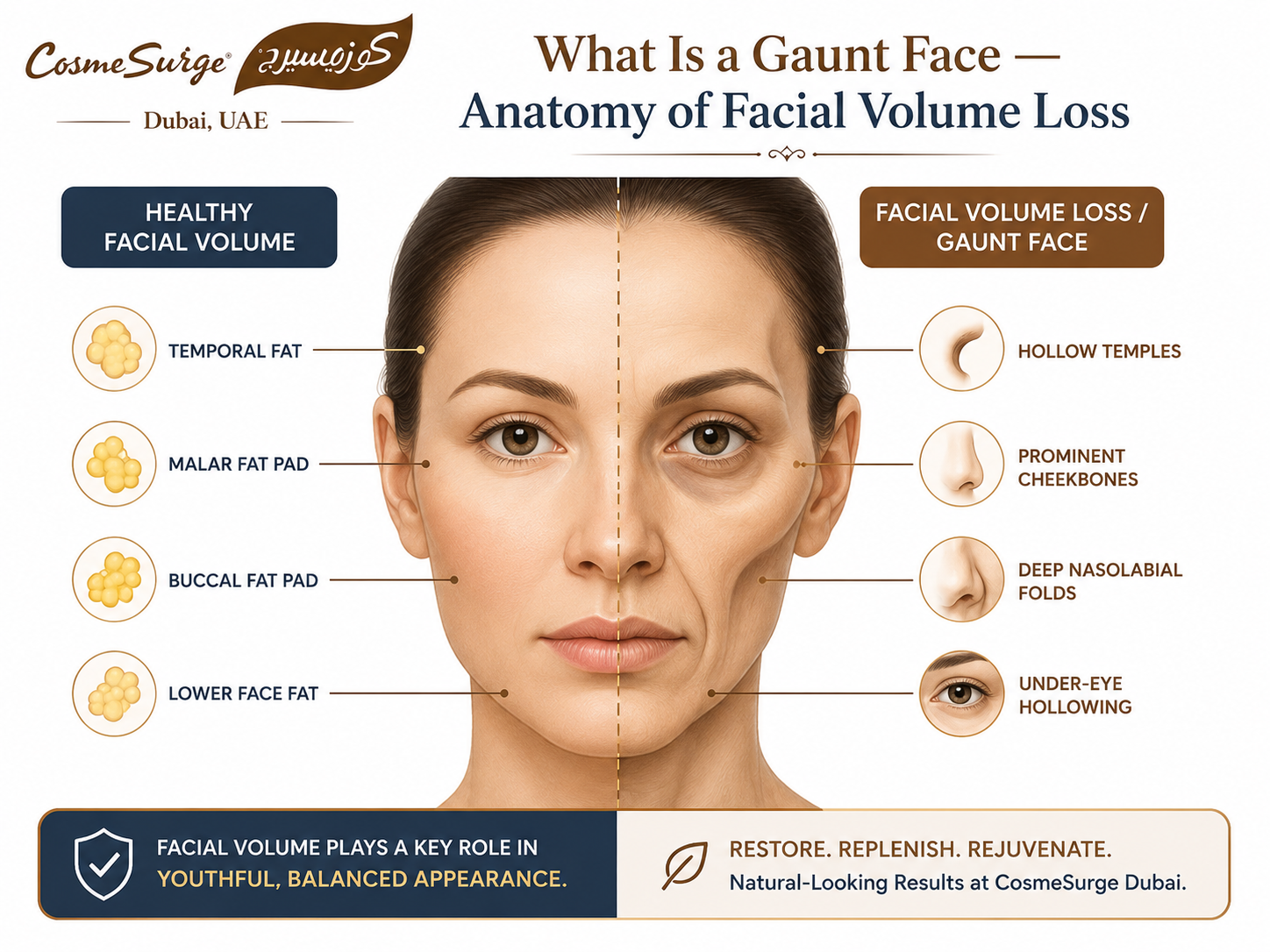
The word “gaunt” refers to a face that appears excessively thin, bony, or drawn — one that looks depleted of the soft tissue and fat that normally give the face its fullness and vitality. A gaunt face meaning goes beyond simply having fine features or angular cheekbones; it suggests a visible loss of facial volume that alters the overall appearance in a way that often reads as unwell, aged, or tired.
Facial fat is not a cosmetic afterthought — it is a structural element. The face contains multiple discrete fat compartments distributed across the forehead, temples, cheeks, and lower face. These compartments provide the soft cushioning that creates smooth contours, rounded cheeks, and a three-dimensional facial silhouette. When these compartments shrink or shift — through aging, weight loss, illness, or genetics — the underlying bony structures become more prominent and the face takes on that characteristic hollowed-out look.
It is worth distinguishing between a naturally thin face and abnormal facial hollowing. Some people simply have less subcutaneous facial fat as part of their genetic makeup — their faces are lean and angular without any underlying pathology. A gaunt appearance, in the clinical sense, implies a change from an earlier baseline or a degree of facial wasting that goes beyond natural variation.
What Are Hollow Cheeks and Sunken Cheeks?
Hollow cheeks refer specifically to the concavity that forms in the mid-cheek area — the region between the cheekbone above and the jawline below. When the buccal fat pad and the subcutaneous fat in this area diminish, the cheekbone becomes more prominent while the area beneath it caves inward, creating that characteristic hollowed appearance. People with hollow cheekbones often describe their reflection as looking gaunt, angular, or skeletal — even when the rest of their body is at a healthy weight.
Sunken cheeks describe a similar but often more widespread deflation that can extend beyond the cheek itself — encompassing the temples, the under-eye area, and the midface as a whole. Deflated cheeks and facial hollowing of this type tend to make the face look older, more tired, and less three-dimensional than it once appeared.
Both conditions result from cheek volume loss — the depletion of facial fat that was once present — though the cause, extent, and most appropriate treatment may differ between them.
What Does a Gaunt Face Look Like?
A gaunt appearance has several recognisable visual characteristics. The most common include:
Hollow or concave cheeks that create a visible shadow beneath the cheekbone
Prominent bony facial structures — a bony face where the skull’s landmarks are clearly visible through the skin
A drawn face — skin that appears tight, stretched, or lacking softness
Deep nasolabial folds (the creases running from the nose to the corners of the mouth)
Hollowed-out temples where the temporal fat pad has diminished
Under-eye hollowing or dark circles made more pronounced by volume loss
A sharp, angular jawline without the soft transition of healthy facial fat
An overall aged, tired, or unwell impression — even in younger individuals
In men, hollow cheeks and a gaunt appearance are sometimes considered structurally attractive — the angular, chiselled look has cultural cachet. In other contexts, and for both men and women, the same features signal ageing, illness, or weight loss that goes beyond the aesthetic ideal.
Causes of Hollow Cheeks and Sunken Cheeks
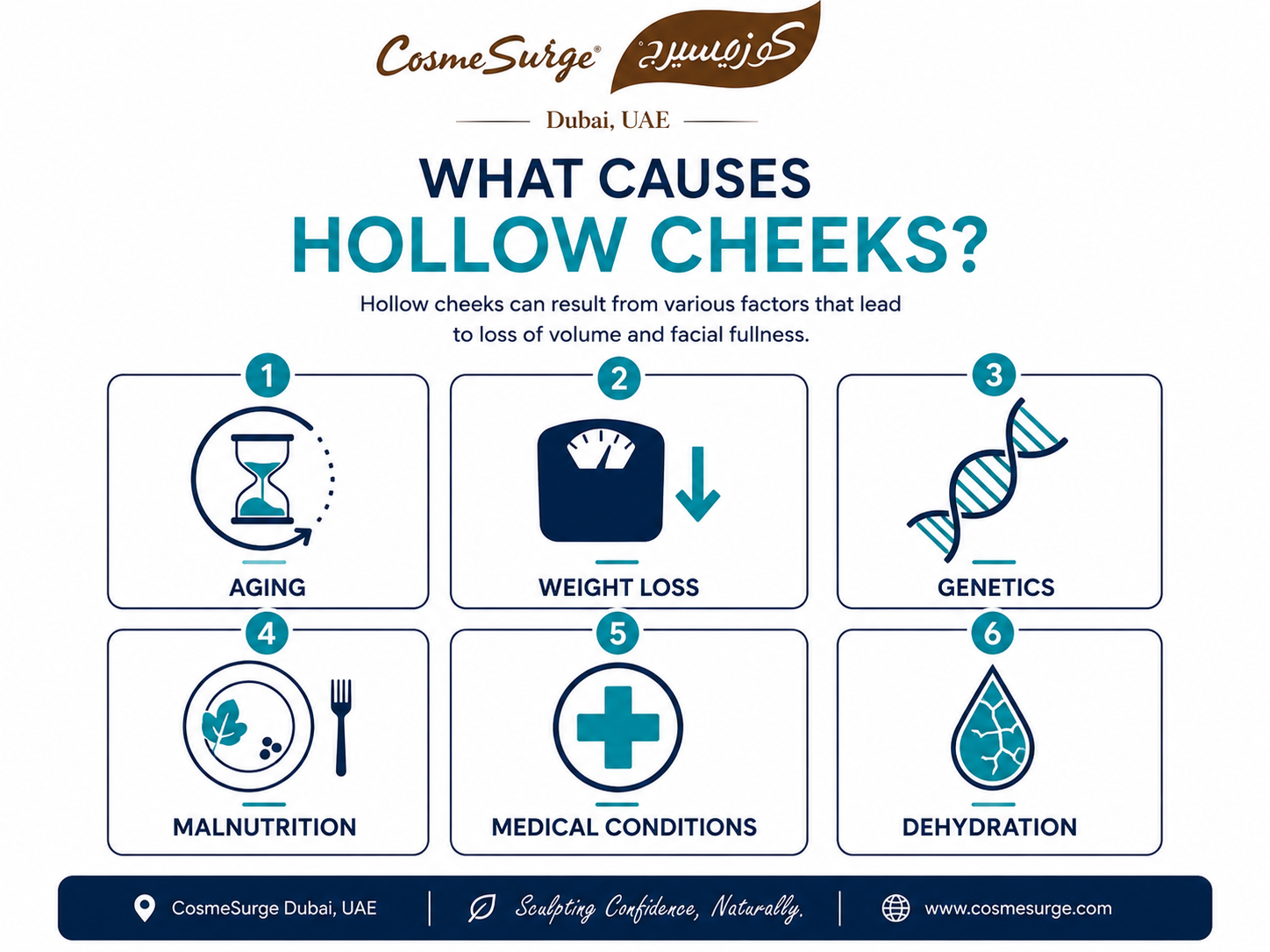
Facial hollowing rarely has a single cause. In most cases, several factors combine to produce the final result.
Aging
The most universal cause of facial volume loss is the natural aging process. As we get older, the multiple fat compartments of the face gradually shrink and descend. The bony structures of the facial skeleton also undergo resorption over time — the cheekbones, eye sockets, and jaw subtly lose mass, reducing the scaffold on which soft tissue rests.
Yes — your face does get thinner as you age. The loss of facial fat that comes with aging is one of the central drivers of what we recognise as an older appearance. The round, full midface of youth gives way to a deflated, hollow cheeks appearance as the decades progress. Collagen and elastin loss further reduces the skin’s ability to maintain a firm, plump appearance, accelerating the drawn, sunken effect.
This age-related facial hollowing typically becomes noticeable from the mid-30s onward, progressing gradually through the 40s, 50s, and beyond.
Weight Loss
Face thinning is frequently one of the first visible signs of weight loss — and for many people, it is one of the most distressing. The face has a significant fat component, and weight loss draws on facial fat alongside body fat. A gaunt face after weight loss is particularly common when the loss is rapid or significant.
The signs of weight loss in face include prominent cheekbones, deepened nasolabial folds, visible temple hollowing, and loss of the soft fullness around the jawline. People who lose 20 pounds or more often notice a face after weight loss that looks considerably older — sometimes by five to ten years — even when their overall health has improved.
Sudden fat loss in face without corresponding body weight change can signal a medical issue worth investigating, as this pattern is less typical of simple caloric reduction.
Genetics
Some people are genetically predisposed to a thin face, hollow cheekbones, or minimal facial fat. This is not a medical condition — it is a natural variation in the way facial fat is distributed and maintained throughout life. Genetically thin faces may be more pronounced in lean body types and may become more apparent as the person ages and further fat reduction occurs.
Hollow cheeks female presentations related to genetics are particularly common in naturally slender women, where the absence of facial fat creates a striking but sometimes gaunt-looking cheekbone definition.
Malnutrition and Being Underweight
A malnourished face is one of the more visible signs of nutritional deficiency. When the body is deprived of adequate caloric or nutritional intake — whether through disordered eating, illness, poverty, or chronic digestive conditions — it draws on fat stores throughout the body, including the face. An emaciated face or underweight face has characteristic features: sunken eyes, prominent cheekbones, and an overall hollowed, sick-looking appearance that can be distressing both for the individual and those around them.
An anorexia face — the severely depleted facial appearance associated with anorexia nervosa — is perhaps the most extreme expression of this pattern. Nutritional rehabilitation is the primary treatment in these cases, though cosmetic intervention is sometimes considered later as a supportive measure.
Medical Conditions
Several medical conditions can cause facial wasting or accelerated facial fat loss. HIV-associated lipodystrophy was historically one of the most common — older antiretroviral medications caused facial fat redistribution that produced a markedly gaunt appearance in some patients. Certain autoimmune conditions, thyroid disorders, cancer, and chronic illness can all produce similar effects.
Chronic illness generally taxes the body’s fat and muscle stores over time. Patients with long-term conditions who experience unexplained or rapid facial fat loss should discuss this with a healthcare provider, as it may reflect an underlying issue that requires investigation.
Why Are My Cheeks Sunken?
Sunken cheeks most commonly result from one or a combination of these causes: loss of the buccal fat pad with aging, significant weight loss, genetics, or the compounding effects of dehydration and poor nutrition on facial tissue quality.
What causes sunken cheeks in younger patients? In people under 40, sunken cheeks are usually genetic — the natural architecture of the face simply includes hollow mid-cheeks — or related to low body fat. In lean, athletic individuals, very low body fat percentages often produce a hollowed cheek appearance even without any pathology.
What causes hollow cheeks in older patients? Aging is the dominant factor. As the buccal fat pad shrinks, the malar fat pad descends, and the underlying bone remodels, the once-full midface gradually deflates. This process is well understood and essentially universal — it is simply a matter of timing and degree.
Why Is My Face Getting Skinny?
If you have noticed your face getting skinnier over weeks or months, the most common explanations are entirely benign — weight loss, aging, or increased physical activity that has reduced overall body fat. In most cases, face weight loss accompanies broader body changes.
Why is my face so skinny? Sometimes the answer is simply genetics — some people carry very little fat in their faces regardless of overall body composition. Others notice their face looking skinny during periods of high physical activity, intermittent fasting, or sustained caloric restriction even when overall weight loss seems modest.
Why does my face look skinny even when I haven’t lost weight? This can occur as a result of natural aging — the fat compartments redistribute and descend with time, creating a leaner-looking face even without significant weight change. Dehydration and low-grade nutritional deficiency can also accelerate the drawn appearance of the skin.
If facial thinning is rapid, unexplained, or accompanied by other symptoms (fatigue, fever, unintentional weight loss elsewhere), a medical evaluation is the right response.
Can Sunken Cheeks Be Reversed?
Yes — in most cases, sunken cheeks and facial hollowing can be meaningfully improved, though the extent of improvement depends on the cause and the treatment chosen.
Age-related sunken cheeks that have progressed gradually over years cannot be fully reversed through natural means alone. The fat has gone, the bone has remodelled, and the collagen has thinned. However, cosmetic treatments — particularly facial fat transfer and dermal fillers — can replace or simulate the lost volume with remarkable effectiveness, restoring a fuller, younger-looking midface.
Weight-loss-related hollow cheeks may improve partially if the weight is regained, though fat does not necessarily redistribute back to the face in the same proportions as before loss. For some patients, targeted cosmetic treatment is still needed even after weight stabilisation.
Genetically thin cheeks can be addressed at any age through cosmetic intervention. The goal in these cases is not “restoration” but careful augmentation that respects the patient’s natural facial structure.
How to Get Fuller Cheeks Naturally
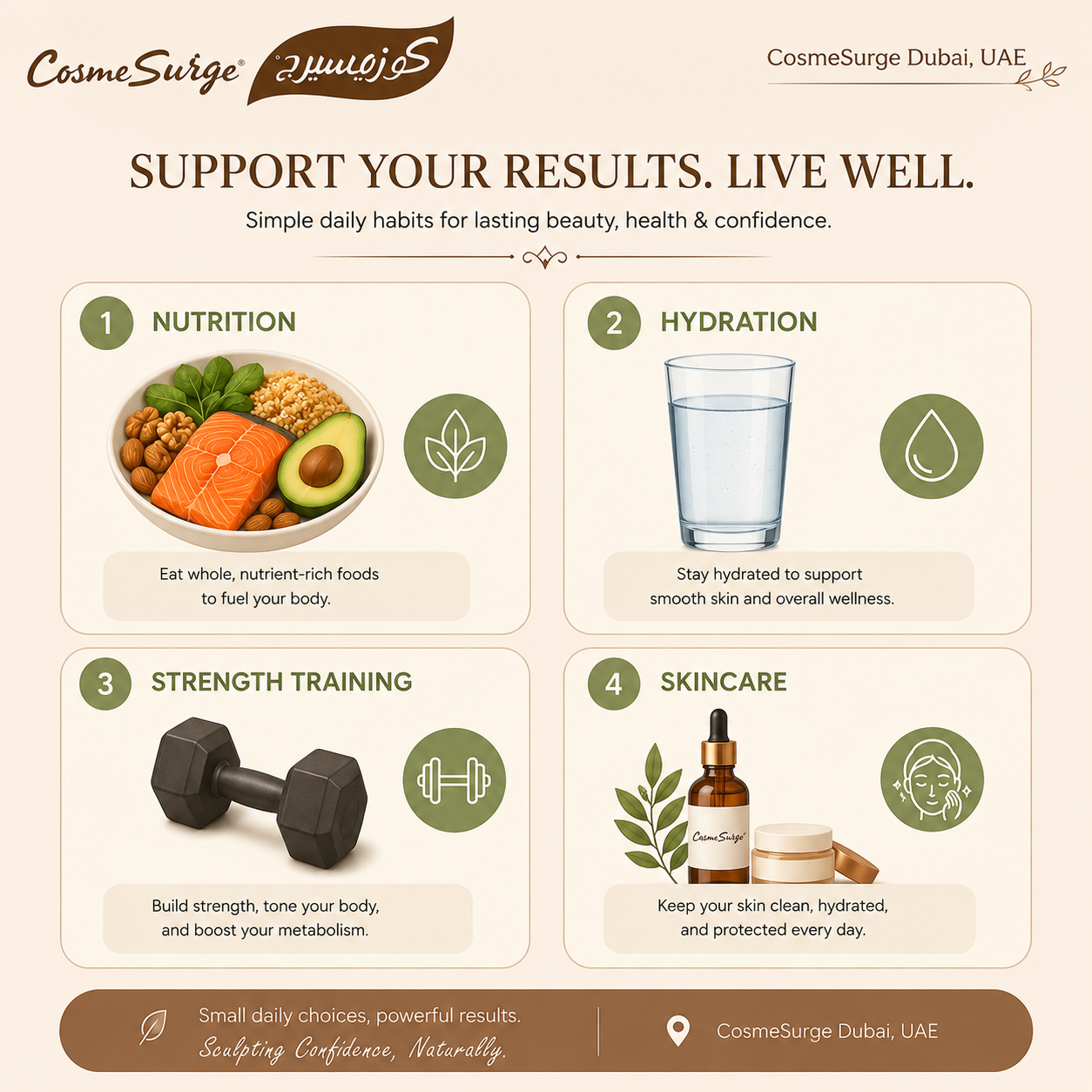
For mild facial thinning or as a complement to cosmetic treatment, several lifestyle approaches can improve facial volume and skin quality.
Healthy Weight Gain
If facial thinning is related to being underweight or to recent weight loss, returning to a healthy weight is the most direct natural intervention. Weight gain naturally redistributes fat throughout the body, including the face. A gradual, sustained weight gain is more effective than rapid fluctuations, which can compromise skin elasticity.
Nutrition
A diet rich in healthy fats (avocado, olive oil, nuts, oily fish), protein (for collagen support), and antioxidant-rich vegetables supports the maintenance of facial tissue. Vitamin C is essential for collagen synthesis; deficiency accelerates the breakdown of the structural proteins that keep skin plump and resilient.
Hydration
Dehydration makes the skin appear more sallow, drawn, and deflated than it actually is. Consistent adequate hydration — alongside moisturising skincare that supports the skin barrier — keeps the skin looking fuller and more supple.
Strength Training
While you cannot spot-train facial fat, full-body resistance training increases muscle mass and overall body composition, which can modestly improve facial fullness — particularly in very lean individuals whose face thinning is linked to a low overall body fat percentage.
Skincare
Topical retinoids, peptides, and hyaluronic acid-containing serums support collagen production and skin hydration. While no skincare product replaces lost facial fat, a well-maintained skin surface improves the overall appearance of the face and can soften the visual impact of hollowing.
How to Fix Hollow Cheeks and Sunken Cheeks
When lifestyle changes are not sufficient — or when the degree of hollow cheeks or facial hollowing goes beyond what natural approaches can address — several cosmetic treatments offer reliable and meaningful results.
Lifestyle changes: Weight gain, nutrition, hydration, and skincare form the foundation for any patient, regardless of whether additional treatment is pursued.
Dermal fillers: Injected into the cheek area, fillers provide immediate volume restoration and can be precisely placed to address specific areas of hollowing.
Sculptra (poly-L-lactic acid): A collagen stimulator that builds volume gradually over several months, rather than providing instant correction.
Facial fat transfer: Using the patient’s own harvested fat to restore volume — the most natural and longest-lasting treatment for significant facial hollowing.
Cheek implants: Solid implants placed surgically over the cheekbone for permanent structural augmentation — typically reserved for patients wanting significant, lasting change.
Dermal Fillers for Hollow Cheeks
Hyaluronic acid (HA) fillers are the most widely used treatment for hollow cheeks and facial hollowing. HA is a substance naturally present in the skin that attracts and retains water, providing a soft, cushioned volume effect when injected into the cheek area.
Modern HA fillers designed for the midface have a high viscosity and lift capacity, meaning they integrate well with the natural tissues of the cheek while providing noticeable volume restoration. Results are immediate and can last 12 to 24 months depending on the product used, the area treated, and the individual’s metabolism.
Before and after cheek fillers show a consistent pattern: a softening of the hollow below the cheekbone, an improvement in the nasolabial fold depth, and an overall more youthful, rested facial appearance. The best results come from a conservative, anatomically informed approach — experienced injectors focus on restoring the natural facial geometry rather than simply adding volume indiscriminately.
HA fillers are also reversible with hyaluronidase, which dissolves the filler if correction is needed. This makes them an attractive entry point for patients who want to assess the effect of added midface volume before committing to a more permanent solution.
Sculptra for Sunken Cheeks
Sculptra (poly-L-lactic acid) works differently from hyaluronic acid fillers. Rather than providing immediate volume, it acts as a collagen stimulator — triggering the body’s own collagen-producing cells (fibroblasts) to generate new structural protein over the following weeks and months.
Results from Sculptra are gradual, appearing over three to six months and continuing to improve for up to a year. This makes it particularly well-suited for patients who want a subtle, natural-looking improvement in overall facial volume rather than a dramatic or immediate change. Once the collagen has been stimulated, the effects typically last two years or longer.
Sculptra is especially effective for widespread, diffuse facial hollowing — the type that affects the entire midface rather than one specific area. It is sometimes combined with HA fillers for targeted correction alongside broader collagen stimulation.
Facial Fat Transfer for a Gaunt Face
Facial fat transfer — also called facial fat grafting — is the gold standard treatment for significant facial hollowing and the gaunt face appearance. It involves removing a small amount of fat from a donor area of the body (typically the abdomen, flanks, or inner thighs) through liposuction, processing the fat cells, and re-injecting them into the areas of the face where volume is needed.
The key advantage of fat transfer is that it uses the body’s own biological material. Transferred fat that survives the initial healing period integrates permanently into the facial tissue. It feels completely natural — because it is natural — and behaves as part of the face rather than as a foreign substance.
Facial fat transfer is particularly well-suited for:
Patients with significant facial hollowing that requires more volume than fillers can safely provide
Those who want the longest-lasting possible result without maintenance injections
Patients having other facial or body surgery simultaneously, where liposuction is already being performed
Individuals who prefer an entirely natural, autologous approach to facial rejuvenation
The procedure is performed under local or general anaesthesia depending on the volume being treated. Recovery involves one to two weeks of swelling and bruising at both the donor and injection sites. Final results are visible at three to six months, once any reabsorbed fat has settled.
Advanced facial fat transfer procedures for midface rejuvenation and gaunt face correction are available at CosmeSurge, delivered by experienced surgeons who specialise in facial volume restoration.
Cheek Augmentation
For patients who want a structural, permanent change to the cheekbone prominence and midface profile, cheek augmentation using solid implants is an option alongside fillers and fat grafting.
Implants
Silicone cheek implants are placed surgically over the malar (cheekbone) area through small incisions inside the mouth or at the lower eyelid margin. They provide permanent, structural augmentation that does not require maintenance. Implants are best suited for patients wanting a defined cheekbone structure rather than simply soft volume replacement.
Fillers for Augmentation
Dermal fillers can achieve a degree of cheekbone projection and midface augmentation without surgery. For moderate cases, this is often the preferred approach — it is reversible, requires no downtime, and can be refined over time.
Fat Grafting
Fat grafting for cheek augmentation combines the structural benefits of volume replacement with the natural feel of autologous tissue. For patients wanting both volume and improved cheekbone definition, a layered fat grafting approach — placing fat at different depths — provides the most sophisticated result.
Hollow Cheeks vs Sunken Cheeks: Key Differences
Feature | Hollow Cheeks | Sunken Cheeks |
Primary location | Cheek area below the cheekbone — the buccal region | Broader — includes cheeks, under-eye area, and temples |
Tissue involved | Loss of buccal fat and subcutaneous cheek fat | Loss across multiple facial fat compartments |
Visual effect | Inward concavity below the cheekbone; angular appearance | Deeper, more pronounced overall facial deflation |
Common triggers | Aging, weight loss, genetics, high cheekbone structure | Significant weight loss, illness, advanced aging |
Best treatments | Fillers, fat transfer, Sculptra for targeted cheek filling | Fat transfer or combination treatments for broader restoration |
Dermal Fillers vs Facial Fat Transfer
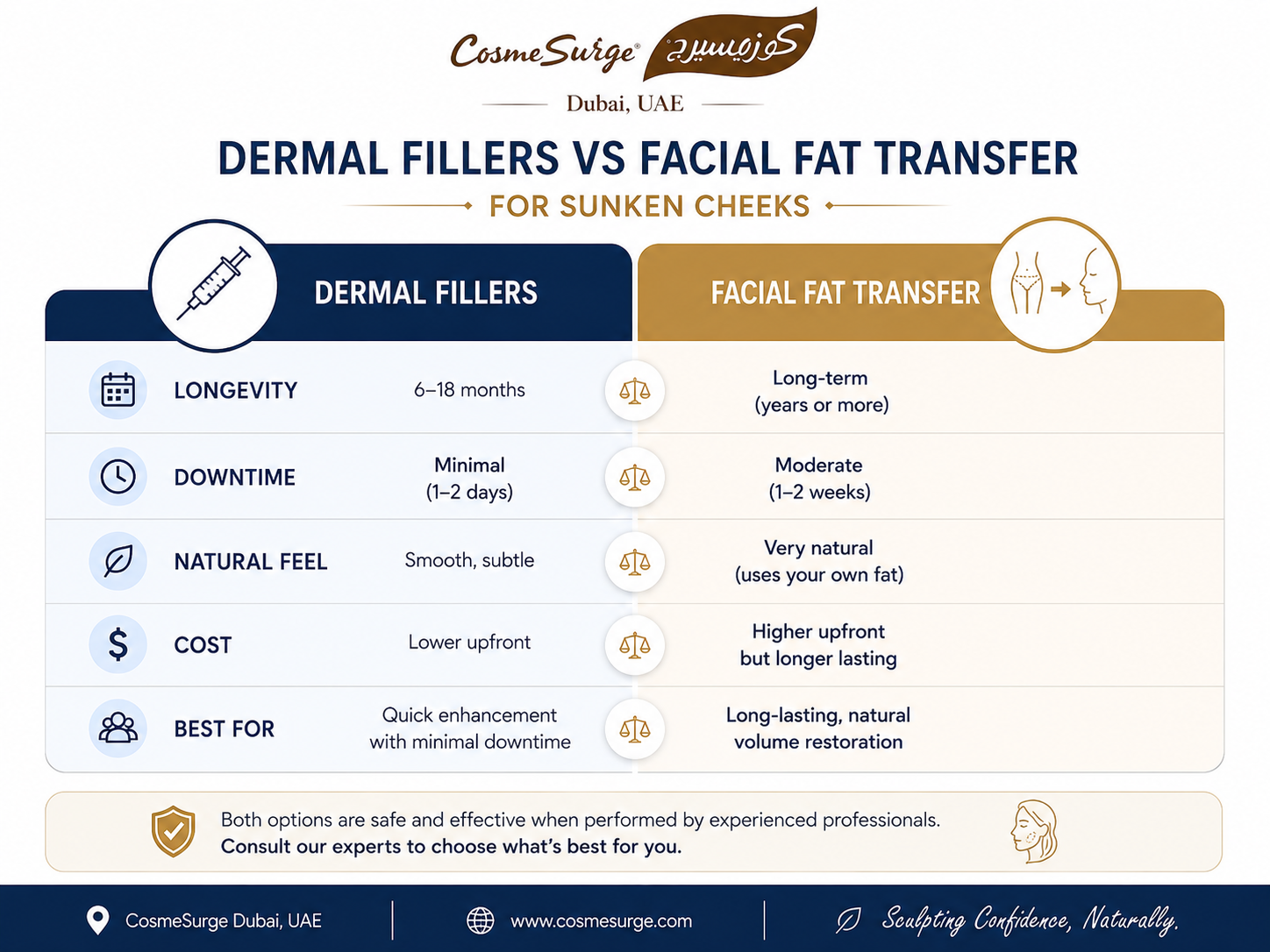
For patients choosing between the two most common treatments for facial hollowing, the table below outlines the key differences:
Feature | Dermal Fillers | Facial Fat Transfer |
Longevity | 12 to 24 months — depends on product and metabolism | Semi-permanent; surviving fat lasts 3–5+ years or longer |
Downtime | Minimal — 1 to 3 days of mild swelling and bruising | Moderate — 1 to 2 weeks (liposuction donor site recovery) |
Natural feel | Excellent with modern HA fillers; very soft and pliable | Outstanding — the body’s own fat integrates with existing tissue |
Cost | Lower upfront cost per session; maintenance required | Higher upfront investment; better long-term value |
Volume restoration | Good for targeted, moderate volume correction | Superior for significant or widespread facial hollowing |
Reversibility | HA fillers are reversible with hyaluronidase | Permanent — transferred fat cannot be easily removed |
The right treatment depends on the degree of hollowing, the patient’s goals, recovery availability, and budget. Experts at CosmeSurge guide each patient through this decision based on a thorough clinical assessment and honest conversation about expected outcomes.
Prevention Tips for Facial Volume Loss
Maintain a stable, healthy body weight — significant fluctuations accelerate facial fat loss and skin laxity
Eat a nutrient-dense diet rich in healthy fats, protein, and antioxidants to support collagen and fat tissue health
Stay consistently hydrated — dehydration accelerates the appearance of a drawn, thin face
Use broad-spectrum SPF daily — UV exposure breaks down collagen and accelerates the loss of structural skin proteins
Avoid smoking — it significantly impairs collagen synthesis and skin microcirculation, accelerating facial aging
Use skincare that supports collagen — topical retinoids and peptides have the best evidence for slowing collagen degradation
Consider early cosmetic intervention — addressing mild facial hollowing before it becomes significant is more straightforward than restoring substantial volume loss
When Should You See a Doctor?
Most cases of hollow cheeks or a gaunt face are cosmetic rather than medical — but there are situations where a medical evaluation is the right first step.
Sudden or unexplained facial fat loss not linked to intentional weight loss
Facial wasting accompanied by fatigue, fever, night sweats, or other systemic symptoms
Significant weight loss with no dietary or lifestyle explanation
Concern about a possible eating disorder affecting facial and body appearance
Hollow cheeks or a gaunt face causing significant psychological distress
For cosmetic concerns — hollow cheeks caused by aging, genetics, or past weight loss — a consultation with a cosmetic physician or plastic surgeon is the appropriate starting point. They can assess the specific pattern of volume loss, discuss realistic treatment options, and create a plan tailored to the individual’s anatomy and goals.
Myth vs Fact: Gaunt Face and Facial Hollowing
Myth: A gaunt face always means illness.
Fact: Many people naturally have thin facial features, and facial fat loss with age is universal. A gaunt appearance can result from genetics, weight loss, or normal aging — without any underlying medical condition. However, sudden or unexplained facial wasting warrants a medical evaluation.
Myth: Weight gain alone can completely restore hollow cheeks.
Fact: Weight gain can partially restore facial fullness, but fat does not always redistribute back to the face in the same pattern as before it was lost. Significant or established facial hollowing often requires targeted cosmetic treatment — fillers, fat transfer, or Sculptra — for meaningful restoration.
Myth: Facial fillers always look unnatural.
Fact: Modern hyaluronic acid fillers, when placed by an experienced injector with anatomical knowledge and restraint, produce soft, natural-looking results that enhance rather than alter the face. The “overfilled” look is a product of excess volume or poor technique — not an inherent feature of fillers themselves.
Myth: Fat transfer results never last.
Fact: Some fat reabsorption is expected in the weeks following fat transfer, but fat cells that successfully establish a blood supply become a permanent part of the facial tissue. Well-executed facial fat grafting can provide results that last many years — often far longer than any filler.
Conclusion
A gaunt face, hollow cheeks, and sunken cheeks are concerns that affect people across a wide range of ages, body types, and health backgrounds. Whether the cause is the natural passage of time, weight loss, genetics, or an underlying medical condition, the effect — a face that looks older, more tired, or less vital than it once did — can have a genuine impact on self-confidence and quality of life.
The good news is that facial volume loss is one of the most effectively addressed concerns in modern cosmetic medicine. From natural lifestyle measures that support facial tissue health, to precisely placed dermal fillers, to long-lasting facial fat transfer — the tools available today are capable of producing genuinely impressive, natural-looking results.
The right approach depends on the cause and extent of the hollowing, the patient’s goals, and their tolerance for downtime and cost. No single treatment is right for everyone, which is why a thorough, individualised consultation is always the right starting point.
Specialists at CosmeSurge provide personalised facial rejuvenation treatments designed to restore natural facial contours, improve facial harmony, and address hollow cheeks and sunken cheeks with precision and care. Whether the aim is a subtle improvement or a significant transformation, the approach is always grounded in anatomy, experience, and a genuine understanding of what makes the face look its best.
If you are concerned about facial hollowing, a gaunt appearance, or the progressive changes that aging brings to the face, consulting the experts at CosmeSurge is the first step toward an informed and effective plan.
Frequently Asked Questions About Gaunt Face
Here are some answers to the specific questions we often hear but didn’t cover in detail above.
A gaunt face is one that appears excessively thin, hollow, or drawn — typically due to a loss of facial fat and soft tissue volume. It gives the face a skeletal or aged appearance, with prominent bony structures and visible concavities where full, rounded tissue once sat. A gaunt appearance can result from aging, weight loss, illness, malnutrition, or genetic predisposition to low facial fat.
Sunken cheeks most commonly result from the loss of the buccal fat pad and subcutaneous facial fat through aging, significant weight loss, or genetics. Dehydration, nutritional deficiency, and certain medical conditions can also contribute. In younger patients without significant weight changes, genetics is often the primary explanation. A clinical assessment helps determine whether a cosmetic or medical cause is responsible.
A face getting skinnier most commonly reflects weight loss — even modest overall body fat reduction can produce a noticeable change in facial appearance. Aging causes gradual fat loss from the facial compartments over time. In some cases, dehydration, nutritional deficiency, or medical conditions may be contributing. If facial thinning is rapid or unexplained, a medical review is worthwhile.
Yes — in most cases, sunken cheeks can be meaningfully improved. Mild cases may respond to weight gain and improved nutrition. More significant hollowing, particularly that caused by aging or established facial fat loss, typically requires cosmetic intervention. Dermal fillers, Sculptra, and facial fat transfer all offer effective, proven approaches to restoring cheek volume and correcting the sunken appearance.
Fuller cheeks naturally can be encouraged through healthy weight gain (if underweight), a nutrient-rich diet with adequate healthy fats and protein, consistent hydration, and collagen-supporting skincare. Regular strength training can modestly improve facial fullness in very lean individuals. Natural approaches are most effective for mild facial thinning; established hollow cheeks caused by aging or significant fat loss usually require cosmetic treatment.
Hollow cheeks are caused by the depletion of the buccal fat pad and subcutaneous facial fat in the mid-cheek region. The most common causes are aging (which reduces all facial fat compartments progressively), significant weight loss, genetic predisposition to low facial fat, and certain medical conditions including HIV-associated lipodystrophy. Prolonged nutritional deficiency and very low body fat percentages in athletes can also produce the characteristic inward concavity.
Yes — weight loss is one of the most common causes of a gaunt face and hollow cheeks. The face contains a significant fat component, and weight loss draws on facial fat alongside body fat. Rapid or significant weight loss tends to produce the most pronounced facial thinning. Some face weight loss is expected with any overall weight reduction, and those who lose 15 to 20 or more pounds often notice their face looks considerably older as a result.
Yes. Aging is the most universal cause of facial thinning. Multiple fat compartments throughout the face gradually shrink with age, collagen production declines, and the underlying facial bones undergo subtle resorption. The combined effect is a face that loses the soft, rounded fullness of youth and develops the more hollowed, deflated, or sunken appearance associated with older age — typically becoming noticeable from the mid-30s onward.
Yes — dermal fillers are one of the most effective treatments for hollow cheeks. Hyaluronic acid fillers can be precisely placed in the cheek area to restore volume, improve the nasolabial fold, and lift the midface. Results are immediate, last 12 to 24 months, and can be reversed if needed. For mild to moderate hollow cheeks, fillers are often the most practical first treatment. Significant hollowing may require fat transfer for more substantial restoration.
Facial fat transfer produces long-lasting results, though not strictly permanent in the absolute sense. After the initial recovery period, during which some fat reabsorption occurs, the surviving fat cells integrate permanently into the facial tissue. Most patients see results lasting five years or more, and in many cases considerably longer. The fat that integrates successfully is a permanent part of the face — it behaves and ages naturally alongside the surrounding tissue.
The best treatment for facial hollowing depends on the degree and pattern of volume loss. Dermal fillers are ideal for targeted, moderate hollowing — they are precise, immediate, and reversible. Facial fat transfer is the gold standard for significant or widespread hollowing, offering the most natural, longest-lasting result. Sculptra suits patients who prefer gradual, diffuse improvement. A combination approach is often most effective for comprehensive facial rejuvenation.
Facial fat loss is caused primarily by aging (which naturally reduces all facial fat compartments), significant weight loss, very low overall body fat percentage in athletes, genetics, malnutrition, dehydration, and certain medical conditions. Smoking accelerates collagen breakdown and impairs skin health. HIV-associated lipodystrophy and some medications can cause targeted facial wasting. Identifying the cause is important because it influences which treatment approach will produce the most effective result.
Medical Disclaimer & Review
This content is for educational purposes only and does not replace professional medical advice. Always consult a qualified healthcare provider for diagnosis and treatment.
Medically reviewed by the CosmeSurge Plastic Surgery Team, Dubai,UAE.
Related Posts

Puffy Nipples: Causes, Symptoms, and Treatment Options for Men and...Read More

Flat After Breast Implant Removal: Is It Normal and What...Read More

How to Get Rid of Gyno: Causes, Natural Remedies, Exercises,...Read More
Gaunt Face, Hollow Cheeks and Sunken Cheeks: Treatment Key Takeaways...Read More