Key Takeaways
Onset: Botox begins working within 3-5 days of treatment.
Full results: Peak effects are visible within 10-14 days.
Duration: Results generally last 3-4 months, though this varies by individual.
Variables: Treatment area, dosage, muscle activity, metabolism, and lifestyle all play a role.
Specialists at CosmeSurge create personalised treatment plans to help you achieve natural-looking, long-lasting results.
What Is Botox?
Botox is the brand name most people know, but the substance behind it is botulinum toxin type A – a purified protein derived from the bacterium Clostridium botulinum. While the name might sound alarming, Botox has one of the most well-established safety profiles in modern medicine. It’s FDA-approved for both cosmetic and therapeutic uses, and millions of treatments are performed worldwide every year.
In cosmetic medicine, Botox is used to temporarily relax overactive facial muscles, smoothing dynamic lines and wrinkles. Medically, the same toxin treats conditions including chronic migraine, hyperhidrosis (excessive sweating), overactive bladder, and cervical dystonia.
How Botox Works
When injected into a specific muscle, Botox blocks the release of acetylcholine – the neurotransmitter responsible for telling muscles to contract. Without that chemical signal, the targeted muscle can’t move, which allows overlying skin to smooth out gradually over the following days.
This process is not permanent. Over time, nerve endings regenerate and acetylcholine release is restored, which is why Botox results are always temporary. The body metabolises the toxin naturally, and the muscle gradually returns to full function.
Cosmetic Botox vs Medical Botox
Cosmetic Botox targets expression lines – forehead wrinkles, frown lines, crow’s feet, and similar dynamic lines caused by repeated facial movement. Medical Botox addresses conditions where overactive muscles or glands cause symptoms. Both use the same active compound, but dosages and injection sites differ significantly depending on the clinical indication.
At CosmeSurge, both cosmetic and therapeutic applications are performed by qualified specialists who tailor every treatment to the individual’s anatomy and goals.
How Long Does Botox Last?
For most patients, how long does Botox last? The honest, evidence-based answer is three to four months. That’s the clinical reality. Some patients see results fading closer to two months; others enjoy smooth, refreshed skin for five to six months. The average, based on both clinical data and widespread patient experience, sits firmly in that three-to-four-month window.
Botox duration isn’t fixed – it responds to a combination of biological, lifestyle, and technical factors. Understanding these helps set realistic expectations and plan your treatment schedule effectively.
First-Time Botox Treatments
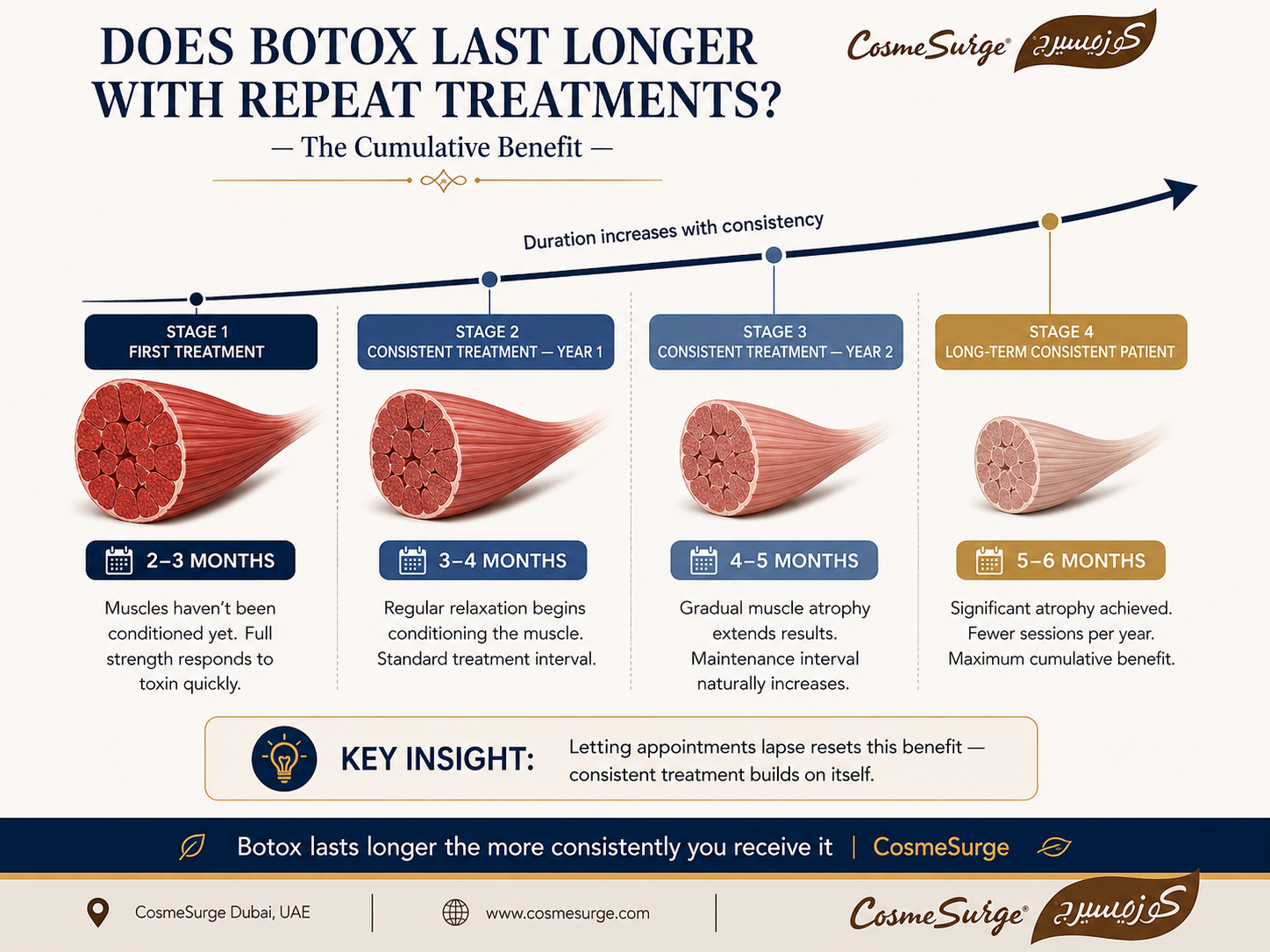
If you’re new to Botox, your results may not last as long as they eventually will with consistent treatment. First-timers often see effects lasting around two to three months. The facial muscles haven’t yet been conditioned by repeated relaxation, and the nervous system’s response is operating at full strength. This is completely normal – it doesn’t mean the treatment isn’t working.
Repeat Botox Treatments
Here’s something many first-timers don’t expect: Botox often lasts longer the more consistently you receive it. With regular treatments over time, the targeted muscles gradually weaken through repeated disuse. A muscle that’s been repeatedly relaxed over twelve to eighteen months tends to stay relaxed longer between injections – meaning your three-month results can naturally extend to four or five months.
How Long Does It Take for Botox to Work?
This is one of the most common questions after treatment. Botox doesn’t produce instant results – the onset is gradual, and the timeline follows a predictable pattern. Knowing what to expect day by day removes the anxiety that often comes with waiting.
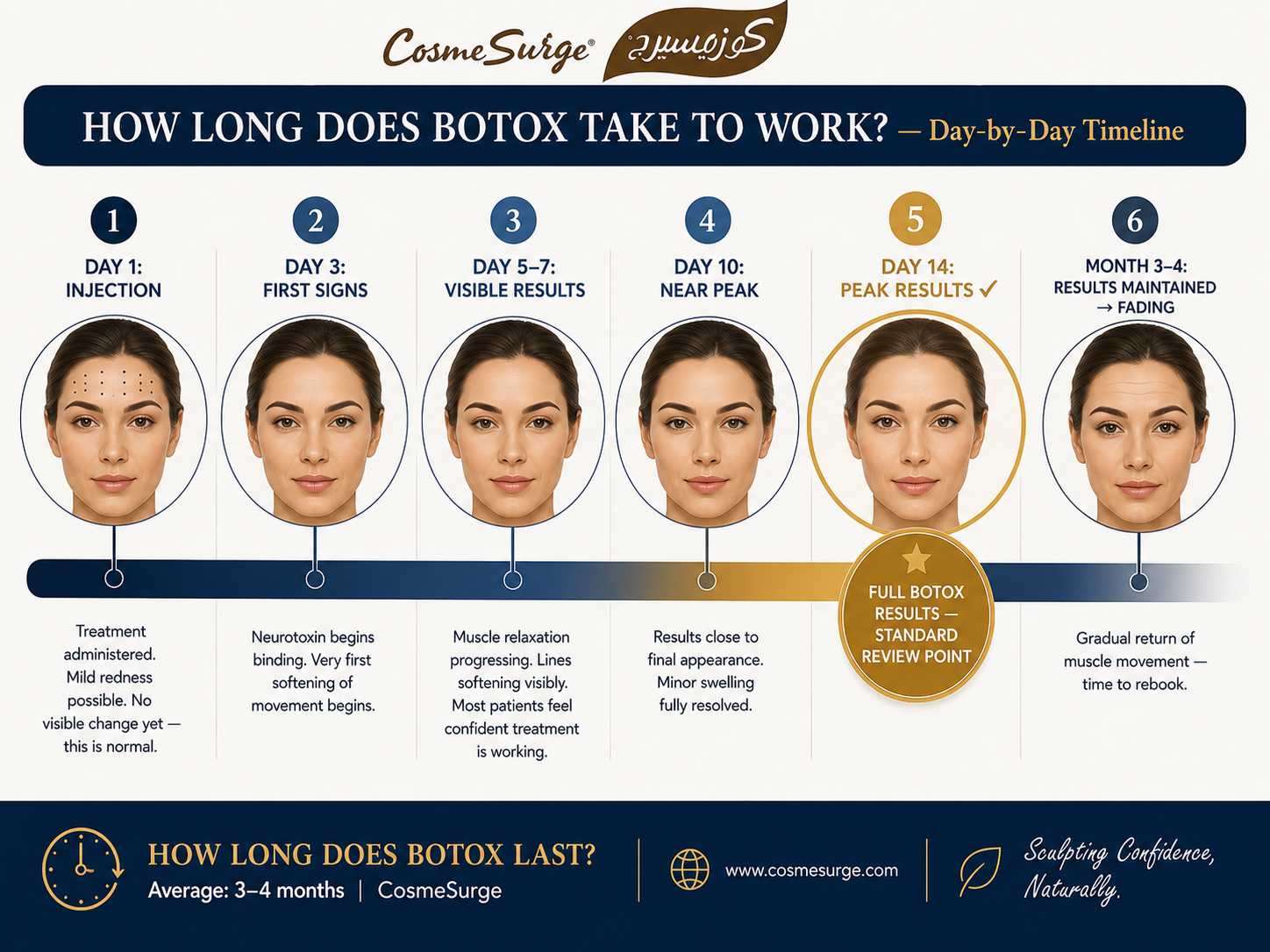
Day-by-Day Botox Onset Timeline
Day 1 – Treatment Day: Botox is administered. Some mild redness, swelling, or pinpoint bruising may be visible at injection sites. No visible muscle relaxation yet – this is normal.
Day 3: Some patients notice the very first hints of softening, particularly around the forehead and crow’s feet. Movement begins to feel slightly restricted in treated areas.
Day 5: Relaxation of the targeted muscles becomes more noticeable. Lines begin to soften visibly. This is typically when patients start to feel confident the treatment is working.
Day 7: Significant smoothing is usually evident by day seven. Treated areas look noticeably more relaxed, with dynamic wrinkles substantially reduced.
Day 10: Results continue to improve. Any remaining minor swelling has resolved and the outcome is close to its final appearance.
Day 14: Peak results. This is the standard two-week review point. The full effect of the treatment is visible, and this is the baseline from which results will gradually fade over the coming months.
Botox Timeline at a Glance
Time Point | What Happens | What to Expect |
Day 1 | Injection administered | Possible redness or minor swelling |
Day 3 | Neurotoxin begins binding to nerve endings | Subtle first signs of relaxation |
Day 5-7 | Muscle relaxation progressing | Visible line-softening begins |
Week 2 | Full muscle relaxation achieved | Peak results – standard review point |
Month 1 | Results stable at peak | Smooth, refreshed appearance maintained |
Month 3 | Neurotoxin begins to metabolise | Gradual return of muscle movement |
Month 4 | Nerve regeneration underway | Lines may begin returning – time to rebook |
What Affects Botox Longevity?
No two patients experience Botox in exactly the same way. Several factors interact to determine how long your results will last, and understanding them helps you work with your injector to optimise outcomes.
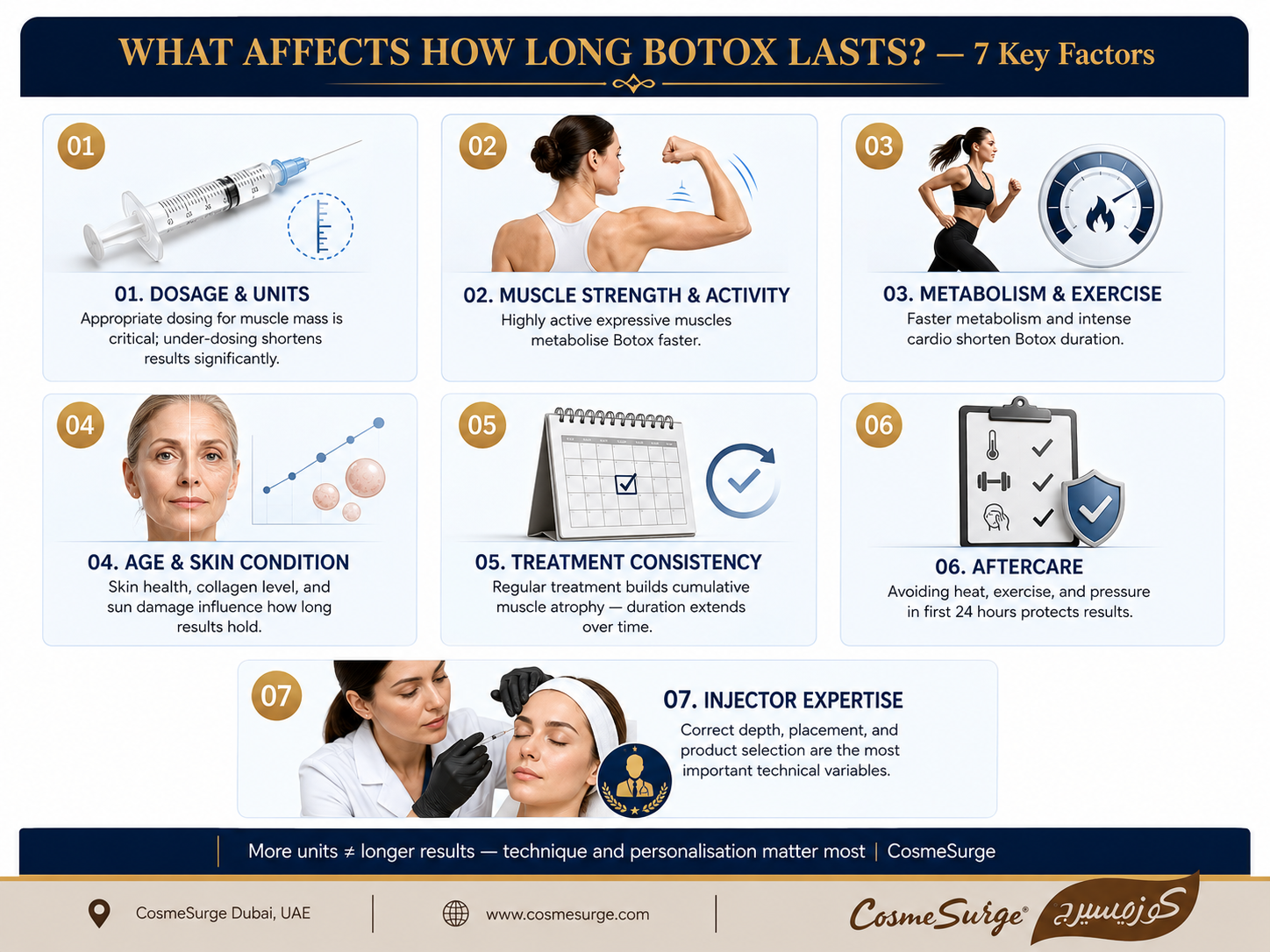
Dosage and Number of Units
The amount of Botox injected plays a direct role in how long results last. Under-dosing is one of the most common reasons for shorter-than-expected outcomes. A conservative dose may soften lines for six weeks where an appropriate dose would hold for three to four months.
However, more units don’t automatically mean longer results. There’s an optimal dosing range for each area and individual. Skilled injectors assess muscle mass, movement patterns, and patient goals to determine the right dose – rather than simply increasing units.
Muscle Strength and Activity
Highly active facial muscles burn through Botox faster than weaker ones. If you’re naturally very expressive – raised eyebrows, animated conversation, frequent squinting – your facial muscles are working hard. That increased activity accelerates how quickly the neurotoxin effect breaks down. This is why areas of intense activity, like crow’s feet, sometimes don’t hold results as long as the forehead.
Metabolism and Exercise
Metabolic rate affects Botox longevity significantly. People with faster metabolisms tend to process and break down the toxin more quickly. Athletes and those who exercise intensively often report shorter Botox duration – sometimes as little as six to eight weeks. High-intensity cardiovascular exercise increases blood flow and metabolic turnover, both of which accelerate how quickly Botox is broken down.
Age and Skin Condition
Younger patients with stronger, more elastic skin and robust facial muscles may metabolise Botox faster than older patients. Conversely, patients with thinner, more atrophied muscles may find results last longer. Sun damage, chronic dehydration, and poor skin health can also diminish results by compromising the structural environment around treated muscles.
Does Botox Last Longer After Repeat Treatments?
Yes – and this is one of the most important things to understand about long-term Botox use. When muscles targeted by Botox are repeatedly relaxed through consistent injections over time, the muscle fibres gradually atrophy (shrink). A smaller, weaker muscle requires less toxin to be controlled and stays relaxed for longer between treatments.
Studies and long-term clinical observations consistently show that patients who receive Botox regularly over one to two years begin extending their maintenance intervals. What starts as a three-month schedule often naturally becomes a four-to-five-month schedule by the second or third year of treatment.
This cumulative benefit is also why it’s important not to let too much time lapse between appointments. Allowing the muscle to fully recover between treatments means you’re effectively starting over each time, rather than building on the progressive atrophy effect.
Can Botox Last Six Months?
For some patients, yes. Six-month Botox results are not a myth, but they’re not the typical experience for most people either. Those most likely to achieve this include patients who have been receiving consistent Botox for several years, those with naturally lower muscle activity or a slower metabolism in treated areas, and those who follow best-practice aftercare diligently.
Treatment area also matters. The forehead and glabella (frown lines) often hold results longer than high-movement areas like crow’s feet. Patients combining Botox with supportive skincare and professional maintenance treatments also tend to report longer-lasting outcomes.
Can Botox Last a Year?
Standard cosmetic Botox does not last a full year. If someone claims their standard Botox results have lasted twelve months, it’s worth questioning whether they’re confusing it with a longer-lasting neurotoxin like Daxxify (daxibotulinumtoxinA), or with a dermal filler.
Certain medical applications of botulinum toxin – such as treatment for hyperhidrosis or detrusor overactivity – have been reported to last up to twelve months in some patients, though six months is more typical even for these indications. For cosmetic facial Botox, the realistic ceiling for most patients is five to six months, achieved with consistent long-term treatment.
Does Botox Wear Off Suddenly?
No. Botox wears off gradually – and this is actually one of its most reassuring qualities. There’s no single day where you “lose” your Botox. Instead, over several weeks, you’ll notice muscle movement gradually returning. Lines that had softened will begin to reappear, typically less severe than before treatment.
The gradual nature of the wearing-off process means most patients can identify the right moment to rebook before their lines fully return. Booking at the first sign of movement returning – rather than waiting until results have fully disappeared – is the standard clinical recommendation and maximises the cumulative benefit.
Does Botox Stay in Your Body?
The botulinum toxin itself is metabolised and eliminated by the body. The neurotoxin protein breaks down naturally over time, and there’s no long-term accumulation of the compound in the system with standard cosmetic dosing.
What does persist, temporarily, is the functional change at the nerve-muscle junction. The nerve endings need time to regenerate their ability to release acetylcholine effectively. This regeneration process is what dictates how long results last. Once regeneration is complete, the muscle returns to normal function – and Botox has effectively left the system.
Is Botox Permanent?
Botox is not permanent. This is a fundamental aspect of how it works – and for many patients, it’s a feature rather than a limitation. Because Botox is temporary, adjustments can be made over time. If you don’t like a result, it will fade. If your face changes with age, your treatment can evolve with it.
The temporary nature of Botox is why results from overly aggressive treatment or inaccurate placement resolve without surgical correction. This reversibility – while not instant – gives Botox a significant safety advantage over permanent interventions. No cosmetic Botox injection can ever become permanent; the body will always regenerate nerve function over time.
How Long Does Botox Last in Different Areas?
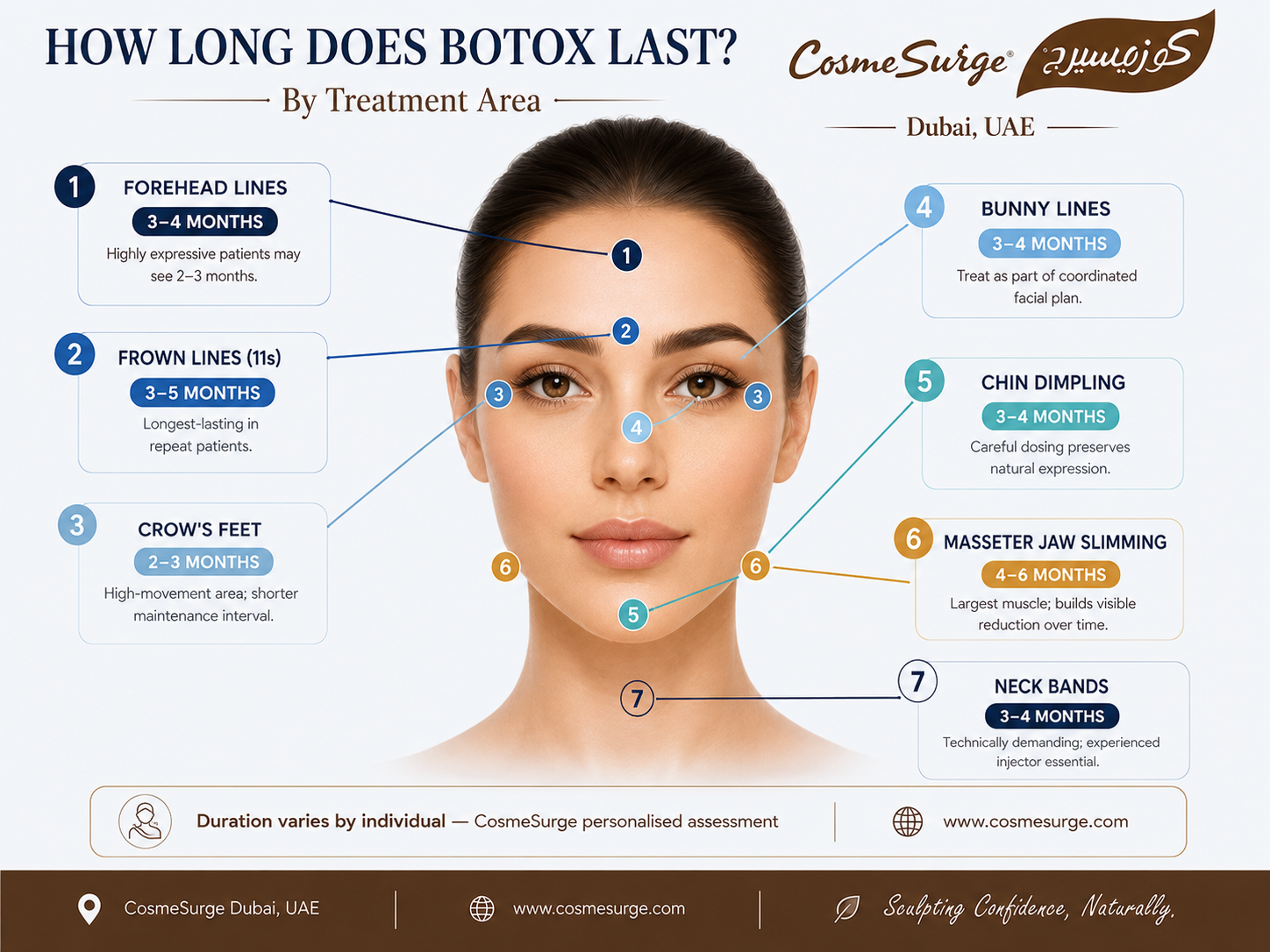
Duration varies by treatment site because the underlying muscles differ in mass, activity level, and neural innervation. Here’s a realistic area-by-area breakdown.
Forehead
The frontalis muscle – responsible for raising the eyebrows and creating horizontal forehead lines – is a large, broad muscle. Forehead Botox typically lasts three to four months. Patients with moderate activity tend to hit closer to four months; highly expressive individuals may see results fading around two to three months.
Frown Lines (Glabella)
The corrugator and procerus muscles between the brows create vertical “11 lines.” Frown line Botox is among the longest-lasting applications, often reaching four to five months in repeat patients. These muscles respond well to repeated relaxation and tend to atrophy more noticeably over time.
Crow's Feet
The orbicularis oculi muscle surrounding the eye is thin, highly active, and contracting constantly – every smile, squint, and blink engages it. Crow’s feet Botox typically lasts two to three months, making it one of the shorter-lasting applications. Maintenance frequency is slightly higher for this area.
Bunny Lines
Lines on the upper nose caused by the nasalis muscle can be addressed with precise, conservative Botox. Duration is typically three to four months and should always be treated as part of a coordinated facial approach to avoid unnatural movement patterns.
Chin and Jawline
Chin dimpling (treated via the mentalis muscle) and masseter reduction for jawline slimming are both popular applications. Mentalis results typically last three to four months. Masseter Botox, however, can last four to six months due to the size and strength of the muscle – and repeated treatment leads to meaningful visible reduction in jaw width over time.
Neck (Platysmal Bands)
Nefertiti lift and neck band treatment using Botox injections into the platysma typically last three to four months. This is a technically demanding area requiring an experienced injector – incorrect dosing can affect swallowing function. Results here tend to be more variable than in the upper face.
Duration by Treatment Area
Treatment Area | Typical Duration | Clinical Notes |
Forehead lines | 3-4 months | May shorten in highly expressive patients |
Frown lines (11s) | 3-5 months | Often longest-lasting in repeat patients |
Crow’s feet | 2-3 months | High-movement area; shorter maintenance interval |
Bunny lines | 3-4 months | Conservative dosing essential; treat as part of facial plan |
Lip lines | 2-3 months | High-movement area; topical skincare supports results |
Chin dimpling | 3-4 months | Careful dosing required to preserve natural expression |
Masseter (jaw slimming) | 4-6 months | Larger muscle; significant reduction builds with regular treatment |
Neck bands (platysma) | 3-4 months | Technically demanding area; experienced injector essential |
Botox Before and After: What to Expect
Realistic expectations are the foundation of a satisfying Botox experience. Before your treatment, it’s important to understand what Botox can and cannot achieve.
Dynamic wrinkles – lines caused by facial movement – respond best to Botox. Static wrinkles – lines present even when your face is at rest – typically require additional treatments such as dermal fillers or skin resurfacing. A thorough consultation should identify which type of lines you have.
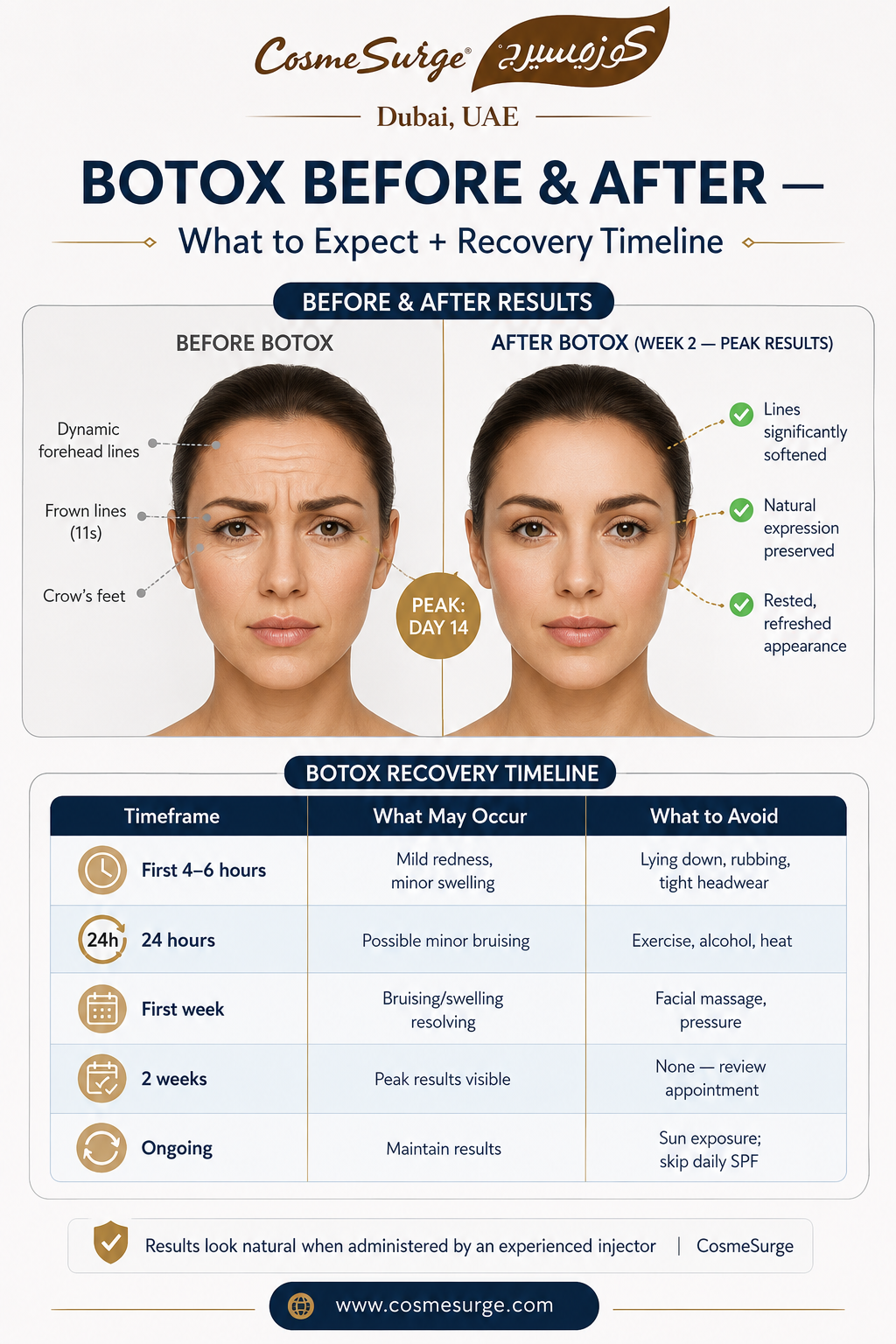
After treatment, at the two-week mark, you should see smoother skin in treated areas, softened expression lines, and a more rested, refreshed appearance. The result should look natural – not frozen. You should retain expressive movement; Botox should reduce excessive muscle contraction, not eliminate natural facial expression.
Forehead before and after Botox is often one of the most visually dramatic transformations. Horizontal lines that previously deepened on raising the brows become significantly softer. In patients with naturally heavy brows, proper dosing preserves a natural brow position – over-treatment in this area can cause unwanted brow heaviness.
Botox Recovery Timeline
Botox recovery is minimal compared to surgical procedures. Most patients return to work and normal activities immediately. However, a few simple precautions help protect your results.
Timeframe | What May Occur / What to Avoid |
First 4-6 hours | Avoid lying down, rubbing treated areas, wearing tight headwear, or applying makeup over injection sites |
24 hours | Avoid strenuous exercise, alcohol, and excessive heat (saunas, steam rooms, very hot showers) |
First week | Minor bruising or swelling possible (normal); avoid facial massage or pressure on treated areas |
2 weeks | Full results visible; ideal time for a review appointment with your injector if needed |
Ongoing | Apply SPF daily; maintain skincare routine; avoid excessive sun exposure to preserve results |
Sleep on your back for the first night where possible. While evidence is mixed, avoiding pressure on injected areas during the initial hours is a sensible precaution supported by most clinical practitioners.
How to Make Botox Last Longer
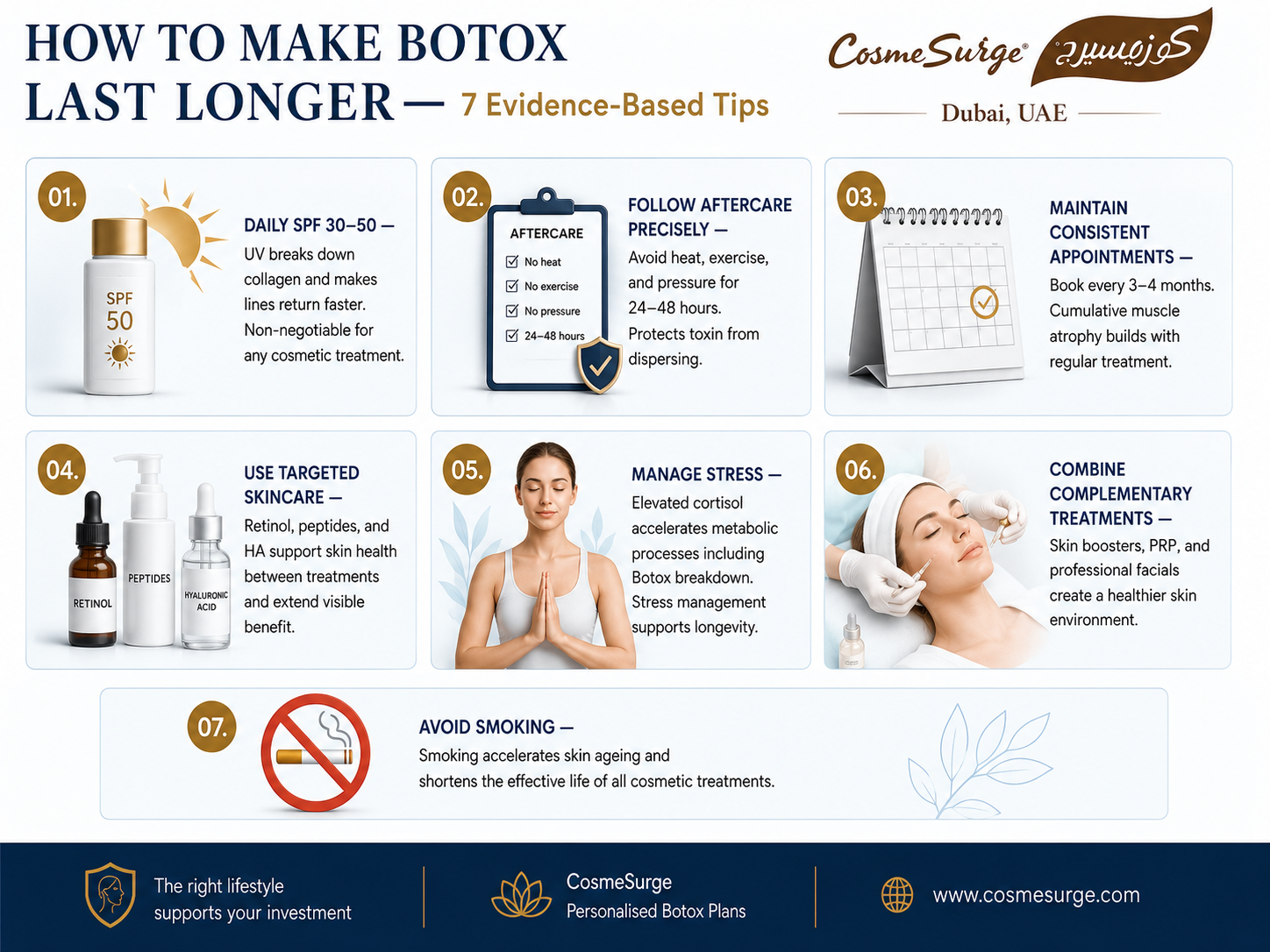
While you can’t control every factor influencing Botox longevity, several practical steps can meaningfully extend your results:
Sun protection (SPF 30-50 daily): UV exposure degrades collagen and accelerates skin ageing, making lines return faster even when Botox is active. Daily SPF is non-negotiable for anyone investing in cosmetic treatments.
Follow aftercare instructions precisely: The first 24-48 hours are critical. Avoiding heat, exercise, and pressure helps prevent the toxin from dispersing beyond the intended treatment area.
Maintain treatment consistency: Consistent treatment builds cumulative muscle atrophy. Letting appointments lapse resets this benefit and means restarting from scratch rather than building on progress.
Use a targeted skincare routine: Retinol, peptides, and hyaluronic acid support skin health between treatments. Healthier skin holds cosmetic results more effectively over time.
Manage stress where possible: Elevated cortisol can accelerate metabolic processes – including how quickly your body processes Botox. Stress management supports overall treatment longevity.
Combine complementary treatments: Skin boosters, PRP, or professional facials create a healthier skin environment that supports Botox outcomes and extends the visible benefit.
Avoid smoking: Smoking accelerates skin ageing, compromises microcirculation, and shortens the effective life of cosmetic treatments.
Common Mistakes That Shorten Botox Results
Certain behaviours and choices can significantly reduce how long your Botox lasts. Avoiding these makes a real difference:
Exercising intensively too soon: High-intensity workouts within 24 hours of treatment increase facial blood flow and can cause the toxin to migrate or metabolise faster.
Rubbing or massaging treated areas: Physical pressure in the first few hours can shift the toxin beyond the injection site, reducing efficacy and increasing unwanted side effects.
Choosing an underqualified injector: Incorrect dilution, poor injection depth, or inaccurate placement all affect how long Botox lasts and how good it looks. Injector expertise is the most important variable.
Waiting too long between treatments: Allowing full muscle recovery between every session reduces the cumulative atrophy benefit. Regular maintenance builds on itself – irregular treatment doesn’t.
Neglecting sun protection: Sun damage accelerates the visible return of lines, making Botox appear to wear off sooner than it actually has.
When Should You Schedule Your Next Botox Appointment?
The right time to rebook is when you first notice movement returning to treated areas – not when lines have fully reappeared. For most patients, this means booking between two-and-a-half to three months after treatment.
Treating at the first sign of returning movement (rather than waiting for lines to reappear fully) maintains the cumulative benefit of repeated treatment. Your injector may refer to this as treating “on the upswing” – catching the muscle before it regains full contraction strength.
Patients at CosmeSurge typically leave their consultation with a suggested follow-up window already in mind, which helps keep the treatment plan on track without unnecessary over-treatment.
Botox Quick Reference
Question | Answer |
When does Botox start working? | 3-5 days for first signs; full effect at 10-14 days |
Full results visible by? | Day 10-14 post-treatment |
How long does Botox last? | 3-4 months average; up to 5-6 months in long-term patients |
Does Botox wear off suddenly? | No – gradual over several weeks |
Is Botox permanent? | No – always temporary as nerves regenerate |
How often should I get Botox? | Every 3-4 months initially; may extend with consistent treatment |
Recovery time? | Minimal – most return to normal activities same day |
Can duration improve over time? | Yes – consistent treatment builds cumulative muscle atrophy |
Botox Myth vs Fact
Myth | Fact |
Botox lasts forever | Botox is always temporary – results fade as nerve function gradually returns. |
More units = longer results | Appropriate dosing and injector expertise matter far more than simply increasing units. Over-dosing increases risk without extending duration. |
Botox makes your face look frozen | Correctly dosed Botox by an experienced injector preserves natural movement. Frozen results are the product of poor technique or excessive dosing. |
Botox is addictive | Botox has no addictive properties. Patients who continue treatment do so because they like the results, not because of physical dependence. |
Stopping Botox makes wrinkles worse | When Botox wears off, the face returns to how it would look without treatment. There is no rebound worsening – just normal ageing continuing. |
Botox only treats wrinkles | Botox treats migraine, hyperhidrosis, teeth grinding, jaw tension, neck bands, and more. Cosmetic use is just one application. |
Botox stays in your body permanently | The toxin is metabolised and eliminated naturally. It does not accumulate in the body with standard cosmetic dosing. |
Conclusion
Botox is one of the most effective, well-studied, and widely used cosmetic treatments in the world – but its results are not fixed. How long Botox lasts depends on a complex interaction of factors: the treatment area, the dosage administered, muscle strength and activity level, individual metabolism, age, and how consistently you maintain your schedule.
For most patients, the realistic expectation is three to four months of smooth, refreshed results following each treatment. With consistent care over time, that window can extend naturally – and the cumulative benefit of muscle atrophy means experienced patients often enjoy longer-lasting outcomes than first-timers.
Understanding these variables allows you to approach Botox realistically, plan your schedule intelligently, and make lifestyle choices that actively support your results. It also underlines why choosing an experienced injector is so important: the right dosage, precise placement, and a personalised approach are the most powerful determinants of how long Botox lasts – and how good it looks.
The experienced specialists at CosmeSurge provide personalised Botox treatments tailored to your anatomy, goals, and lifestyle. A thorough consultation ensures the right treatment for your individual needs – along with the guidance to maintain your results between appointments.
Frequently Asked Questions About How Long Does Botox Last
Here are some answers to the specific questions we often hear but didn’t cover in detail above.
Botox typically lasts three to four months for most patients. First-time patients may see results closer to two to three months, while those who have received consistent Botox over several years sometimes report results lasting four to five months. Duration depends on dosage, treatment area, muscle activity, metabolism, and individual biology. Scheduling treatments every three to four months generally maintains continuous results without letting the muscle fully recover between sessions.
Botox begins working within three to five days of injection. Initial softening of muscle movement is usually noticeable by day three, with more visible smoothing by day five to seven. Full results appear at the two-week mark, which is the standard point for review appointments. The neurotoxin works by blocking acetylcholine release at the nerve-muscle junction – a process that occurs progressively over the first two weeks rather than immediately.
No. Botox is not permanent under any circumstances. The body metabolises the botulinum toxin naturally, and nerve endings regenerate their ability to release acetylcholine over time. This regeneration restores full muscle movement, and results fade completely within three to six months in most cases. The temporary nature of Botox is considered one of its clinical advantages – results can be adjusted over time, and any undesired outcome resolves without surgical correction.
No – Botox wears off gradually over several weeks, not overnight. Most patients notice the first signs of movement returning around the two-and-a-half to three-month mark. Lines reappear slowly as muscle activity returns, giving patients time to rebook before results fully regress. Rebooking at the first sign of returning movement, rather than waiting for full regression, maintains the best ongoing results and preserves the cumulative atrophy benefit.
For some patients, yes – though this is less common than the average three-to-four-month outcome. Patients most likely to achieve six-month results are those receiving consistent Botox over several years (allowing cumulative muscle atrophy), those with lower muscle activity or a slower metabolism in treated areas, and those who follow thorough aftercare. Certain areas, particularly the glabella (frown lines), also tend to hold results longer than high-movement areas like crow’s feet.
Standard cosmetic Botox does not last a full year. The realistic upper limit for most patients is five to six months with consistent long-term treatment. Some medical applications of botulinum toxin (such as hyperhidrosis treatment) have been reported to last up to twelve months in certain cases, but this is not typical for facial cosmetic Botox. Claims of twelve-month cosmetic results usually refer to longer-acting neurotoxins like Daxxify, not standard botulinum toxin A.
Most patients begin with a three-to-four-month treatment interval and may extend this to four to five months after one to two years of consistent treatment. The key is not waiting until lines have fully returned before rebooking – treating at the first signs of returning movement maintains cumulative muscle atrophy benefits. Experienced injectors will recommend a personalised schedule based on your anatomy, results, and goals.
Units vary depending on the treatment area and individual muscle strength. Typical ranges: forehead 10-20 units, frown lines 15-25 units, crow’s feet 10-15 units per side, masseter (jaw slimming) 20-30 units per side. These are guidelines only. Your injector should assess your specific anatomy and discuss units in the context of your desired outcome. More units does not always mean better or longer-lasting results – correct placement and dosing matter more.
Botox cost varies by clinic, location, injector expertise, and the number of areas treated. In the UAE, pricing is typically structured per unit or per treatment area. Choosing a provider based on cost alone is risky – the expertise of the injector directly affects both results and safety. Advanced aesthetic treatments available at CosmeSurge are priced transparently, with costs reflecting the clinical environment, specialist qualifications, and product quality.
Yes – Botox works on the first treatment. However, first-time patients typically experience shorter results than long-term patients, as muscles haven’t been conditioned by repeated relaxation. Some first-timers also require a slightly higher dose to establish a baseline. The full effect is visible at two weeks. If results feel suboptimal at the two-week review, your injector can assess whether a minor touch-up is appropriate.
Botox is metabolised (broken down) by the body rather than dissolving in the traditional sense. The protein is processed and eliminated naturally over several months. Unlike dermal fillers (hyaluronic acid-based), which can be reversed with hyaluronidase, there is no reversal agent for Botox. If you’re unhappy with results, waiting for the effects to wear off naturally is the only approach. In most cases, this takes weeks to months depending on the area and individual metabolism.
If you stop receiving Botox treatments, your face returns to how it would look without treatment over time. The muscles gradually regain full strength, and lines reappear. There is no rebound worsening, no withdrawal effect, and no permanent changes from having received Botox. The gradual muscle atrophy built up through consistent treatment slowly reverses over six to twelve months as normal activity resumes. Many long-term patients find that lines return less deeply than before they first started, reflecting cumulative benefit.
Medical Disclaimer & Review
Content on the CosmeSurge website is for informational and educational purposes only and does not replace professional medical advice, diagnosis, or treatment. Always consult a qualified healthcare professional for medical concerns and never delay seeking advice based on this content. In emergencies, contact your doctor or local emergency services immediately. All website content is reviewed by qualified medical professionals to ensure accuracy and alignment with current evidence-based practices.
Related Posts
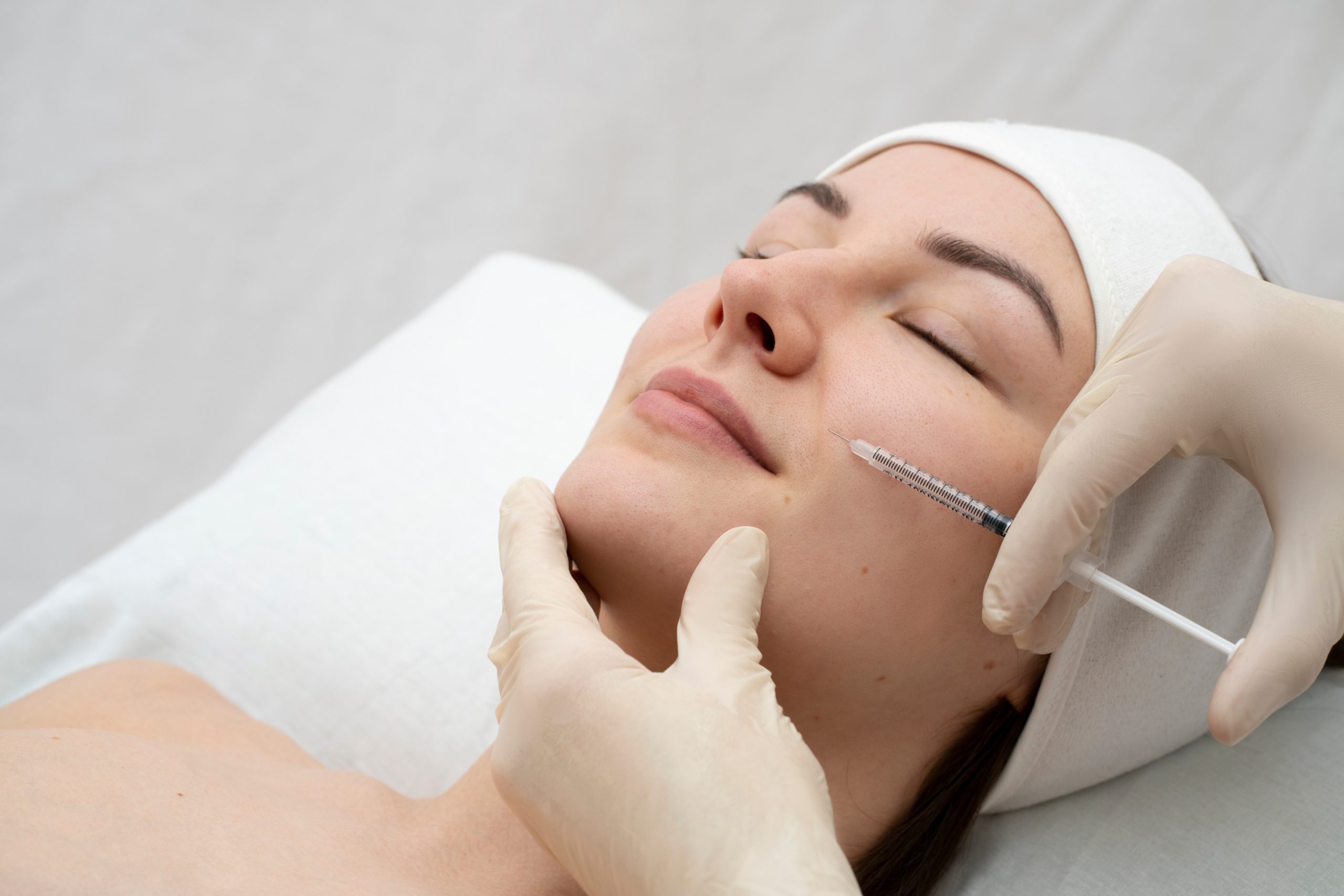
How Long Does Botox Last? Timeline, Results & Duration Key...Read More
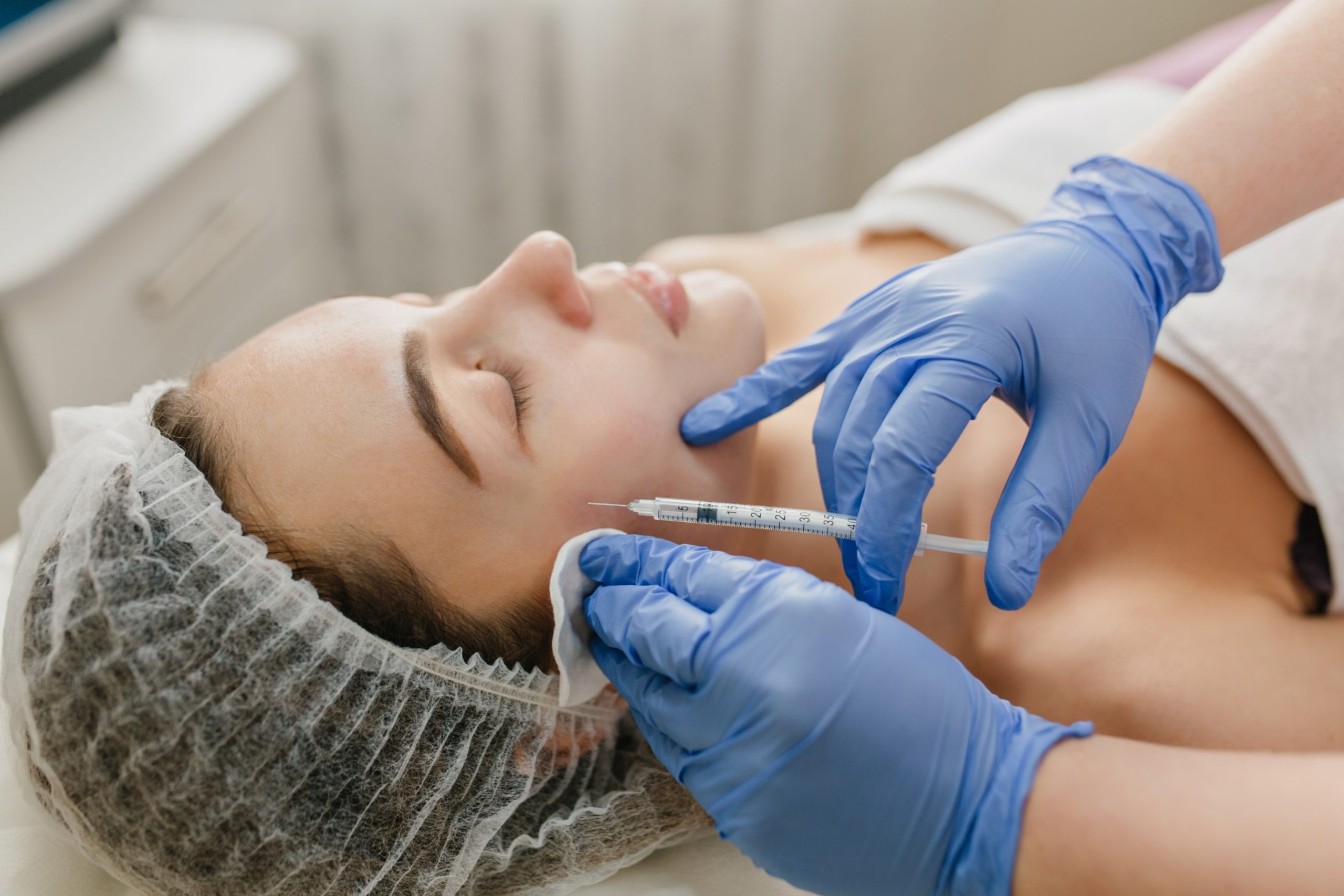
Daxxify vs Botox: Which Wrinkle Treatment Is Right for You?...Read More
Panniculectomy vs Tummy Tuck: Key Differences Explained Key Takeaways: Panniculectomy...Read More
Capsular Contracture After Breast Implants: Symptoms, Causes & Treatment Key...Read More