
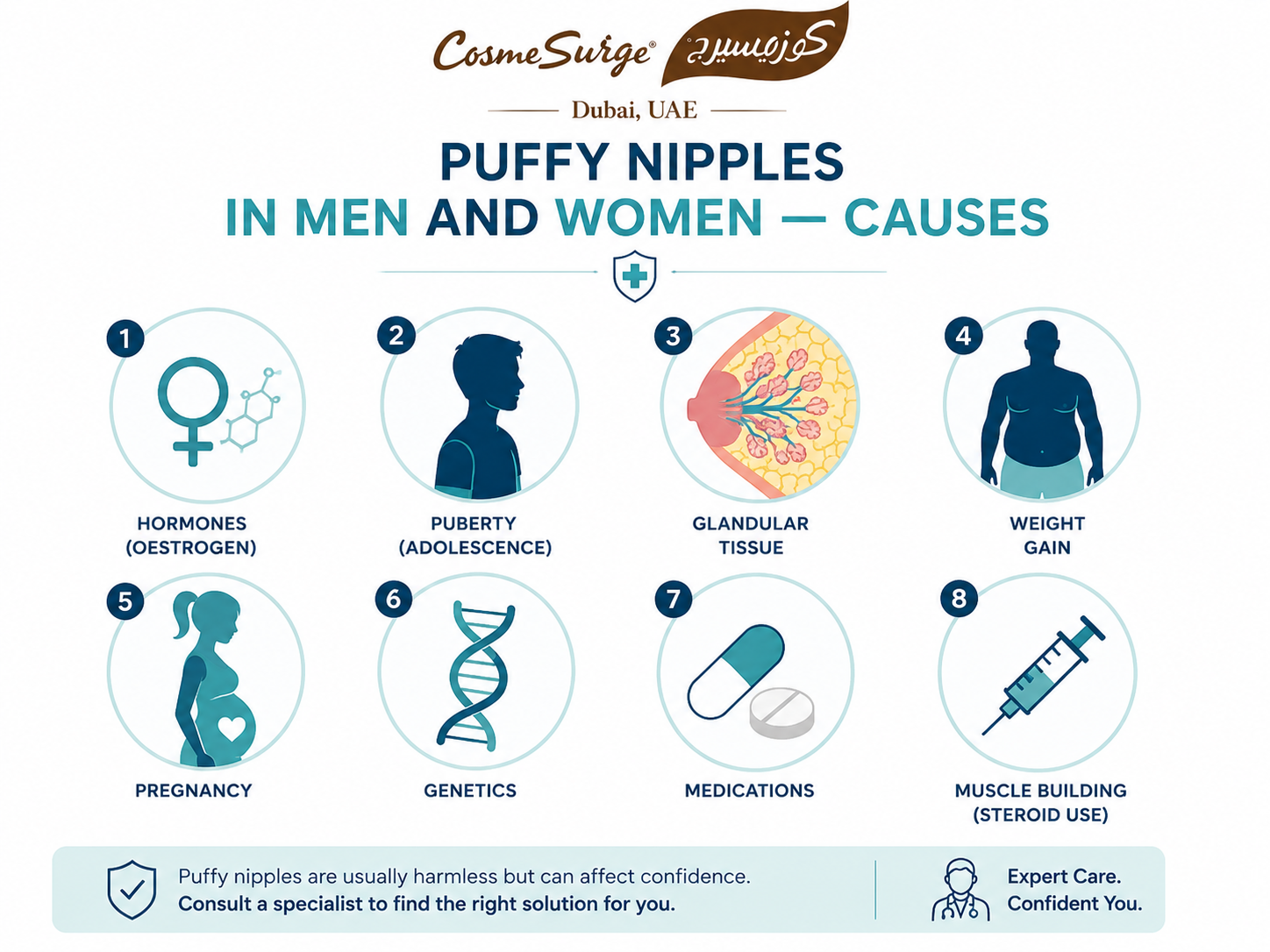
Key Takeaways Puffy nipples are a common concern in both men and women. They may result from hormonal changes, genetics, weight gain, puberty, pregnancy, or gynecomastia — and are often more manageable than many people assume. Common causes include:
In men, persistent puffy nipples are often associated with gynecomastia — the development of glandular breast tissue. Specialists at CosmeSurge provide comprehensive evaluation and treatment for patients experiencing persistent puffy nipples. |
What Are Puffy Nipples?
The nipple and the areola — the pigmented disc surrounding it — form a unit that varies considerably in size, shape, and projection between individuals. What is normal for one person may look or feel different from another, and this variation is largely driven by genetics, hormones, body composition, and life stage.
Puffy nipples refer to a condition where the nipple and areola appear raised, rounded, or dome-shaped — projecting outward from the chest wall in a way that draws attention or causes concern. The puffiness can be subtle or quite pronounced, and in some cases it fluctuates — becoming more or less visible depending on temperature, hormonal state, or body weight.
In practical terms, the puffiness can stem from one of two sources: excess fat beneath the areola and nipple, or the presence of glandular tissue — actual breast tissue — that has developed in response to hormonal signals. These two causes look similar on the surface but respond to treatment very differently. Understanding the distinction is the first step toward addressing the problem effectively.
Swollen areolas or swollen nipples can also be a temporary state rather than a structural one — the result of hormonal fluctuation, irritation, or sensitivity during specific life phases — rather than a persistent physical change.
Are Puffy Nipples Normal?
In many contexts, yes. Puffy nipples are a normal part of several common life stages and physiological processes.
Puberty
Hormonal surges during puberty cause nipple and areola changes in both boys and girls. In teenage boys, temporary breast tissue development and nipple sensitivity are extremely common and affect up to 70 percent of adolescents to some degree. In girls, the areola typically enlarges and becomes more prominent as breast tissue develops.
Pregnancy
During pregnancy, significant hormonal shifts prepare the breasts for milk production. The areola darkens, enlarges, and may appear considerably puffier or more swollen than usual. These changes are entirely normal and expected.
Breastfeeding
Continued hormonal influence during lactation, combined with the physical effects of milk production and letdown, can cause the nipple and areola to appear engorged or swollen at various points throughout the feeding cycle.
Hormonal Changes
Throughout the menstrual cycle, oestrogen and progesterone levels fluctuate. Many women notice breast fullness, nipple sensitivity, and a slightly puffier areola appearance in the days leading up to their period. This is cyclical and typically resolves after menstruation.
Aging
As the body ages and hormonal levels shift — particularly testosterone decline in men and oestrogen fluctuation in women approaching menopause — changes to the chest area, including nipple appearance, are common.
When puffy nipples are persistent, asymmetric, accompanied by tenderness, or a source of significant personal distress, a medical evaluation is appropriate to identify the cause and discuss options.
What Causes Puffy Nipples?
There is no single cause. Several distinct factors can produce the same outward appearance.
Hormonal imbalance: An elevated ratio of oestrogen to testosterone is the most common underlying driver, particularly in men. This can occur naturally or be triggered by external substances.
Puberty: The hormonal upheaval of adolescence causes temporary breast tissue development in boys and significant areolar changes in girls.
Gynecomastia: In men, the development of actual glandular breast tissue beneath the nipple is the most clinically significant cause of male puffy nipples. This is not simply fat — it is hormonally driven tissue growth.
Weight gain: Excess fat accumulation in the chest area can produce a puffy, soft nipple and areola appearance. Fat cells also convert testosterone into oestrogen, potentially adding a hormonal component.
Pregnancy and breastfeeding: In women, the dramatic hormonal changes associated with pregnancy and lactation cause significant changes to nipple and areola size and appearance.
Genetics: Nipple and areola size are partly inherited. Some individuals naturally have larger or more prominent nipple-areola complexes without any underlying pathology.
Medications: Antidepressants, antipsychotics, certain blood pressure medications, prostate treatments, and some HIV drugs can all cause or contribute to hormonal changes that affect nipple appearance.
Anabolic steroid use: Steroids suppress natural testosterone and are partially converted to oestrogen in the body, making gynecomastia — and the puffy nipple appearance that accompanies it — a common consequence in male athletes and bodybuilders.
Puffy Nipples in Men
Male puffy nipples are one of the most common concerns men raise with cosmetic and plastic surgeons. The condition tends to generate a significant amount of personal embarrassment, leading many men to avoid swimming, changing in public, or wearing fitted clothing.
In men, puffy nipples in men most commonly result from one of the following:
Gynecomastia
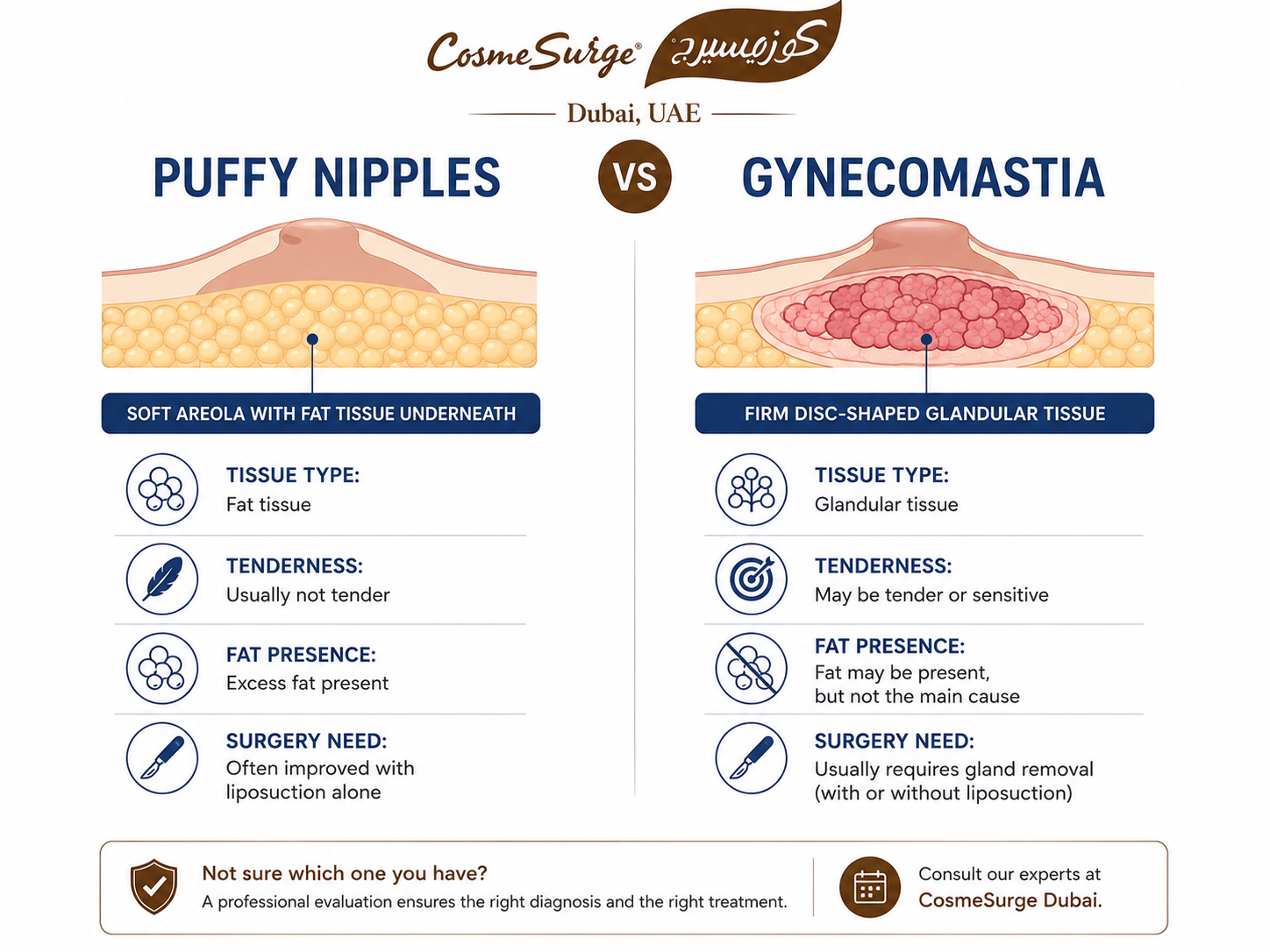
True gynecomastia involves the development of glandular breast tissue beneath the nipple, causing it to project outward. The underlying tissue is firm and disc-like, and it does not compress easily. The nipple and areola appear raised, rounded, and prominent — even in men with little body fat. This is the most important cause of puffy nipples in men to identify, because it requires specific treatment.
Hormonal Imbalance
A relative excess of oestrogen to testosterone — whether from aging, a medical condition, or an external substance — drives the nipple and areola changes. Without addressing the hormonal imbalance, the appearance is unlikely to improve on its own.
Weight Gain
Fat accumulation in the chest creates a soft puffiness that can be mistaken for gynecomastia. The key difference: in pseudogynecomastia, the tissue beneath the nipple is soft and compressible. There is no firm glandular disc. Weight loss and exercise can produce meaningful improvement in these cases.
Anabolic Steroid Use
Steroid-related puffy nipples in men typically appear quickly after starting a cycle. The conversion of exogenous testosterone into oestrogen directly stimulates glandular tissue development. Once established, this tissue usually does not resolve simply by stopping steroid use.
Why Are My Nipples Puffy?
The answer depends on who you are and what is driving the change.
For Men
If you are a man asking why your nipples look puffy or swollen, the most common explanations are weight gain, hormonal imbalance, or gynecomastia. A firm disc of tissue felt directly beneath the nipple — rather than soft, compressible fat — strongly suggests glandular tissue is present. This is especially common in men who have used anabolic steroids, men over 40, and adolescent boys going through puberty.
For Women
In women, puffy nipples are most commonly linked to the menstrual cycle, pregnancy, breastfeeding, or natural variation in nipple and areola size. If the puffiness is new, persistent, associated with discharge or pain, or affecting only one side, it is worth discussing with a healthcare provider.
For Teenagers
Puffy nipples during adolescence are very common in both sexes and are almost always hormonal and temporary. In teenage boys, this is known as pubertal gynecomastia and typically resolves within one to two years. If it persists beyond this, a clinical review is appropriate.
Puffy Nipples in Women
Puffy nipples women experience are almost always linked to hormonal processes — cyclical, reproductive, or age-related.
Menstrual Cycle
During the luteal phase — the second half of the cycle after ovulation — progesterone levels rise significantly, causing breast tissue to swell and the areola to appear fuller or puffier than usual. This typically resolves within a day or two of the period starting.
Pregnancy
As oestrogen and progesterone surge in early pregnancy, the nipple and areola enlarge, darken, and become noticeably more prominent. Montgomery glands — small raised bumps on the areola — also become more visible. These changes are functional preparations for breastfeeding.
Breastfeeding
During lactation, the nipple and areola undergo repeated cycles of engorgement and release. Milk letdown causes the nipple to project significantly. Between feeds, the areola may remain larger than its pre-pregnancy state.
Hormonal Fluctuations
Conditions affecting hormone production — such as polycystic ovary syndrome (PCOS), thyroid dysfunction, or the perimenopause — can cause changes to breast and nipple appearance. If nipple changes are unexpected or persistent, a review of hormonal health is worthwhile.
Puffy Nipples During Puberty
Puberty is the single most common cause of puffy nipples across both sexes.
Teen Boys
Between 50 and 70 percent of adolescent boys develop some degree of breast tissue during puberty — a condition called pubertal gynecomastia. The nipples become tender, the areola may enlarge and project forward, and the area beneath the nipple may feel lumpy or sensitive. In most cases this resolves within one to two years without any treatment. If it does not resolve — or if the development is significant, asymmetric, or causing genuine psychological distress — a medical review is appropriate.
Teen Girls
In girls, puberty triggers the development of breast tissue and significant enlargement of the nipple-areola complex. Breast development often starts on one side before the other, which can cause temporary asymmetry in nipple size and appearance. This is normal and usually self-correcting.
When to Seek Medical Advice
In teenagers of either sex, seek medical advice if the changes are rapid, asymmetric, associated with a hard lump, accompanied by nipple discharge, or causing significant distress. Early evaluation provides reassurance or prompt management as needed.
Puffy Nipples vs Gynecomastia
These two conditions are related but distinct. The table below clarifies the key differences:
Feature | Puffy Nipples | Gynecomastia |
Swelling location | Nipple and areola — localised puffiness | Broader breast tissue below and around the nipple |
Hormonal cause | Common but not universal | Yes — core hormonal mechanism in most cases |
Fat tissue | May be present | Often present alongside glandular tissue |
Glandular tissue | Usually minimal or absent | Yes — key distinguishing feature |
Tenderness | Often absent | Frequently present, especially at onset |
Need for surgery | Sometimes, for persistent glandular or fat cases | Frequently required for permanent correction |
The simplest way to differentiate: press gently beneath the nipple. If you feel a firm, rubber-disc-like structure that is clearly separate from the surrounding soft tissue, glandular tissue is likely present. If the tissue is uniformly soft and compressible, fat is the more likely culprit. Clinical examination or ultrasound provides a definitive answer.
How to Get Rid of Puffy Nipples
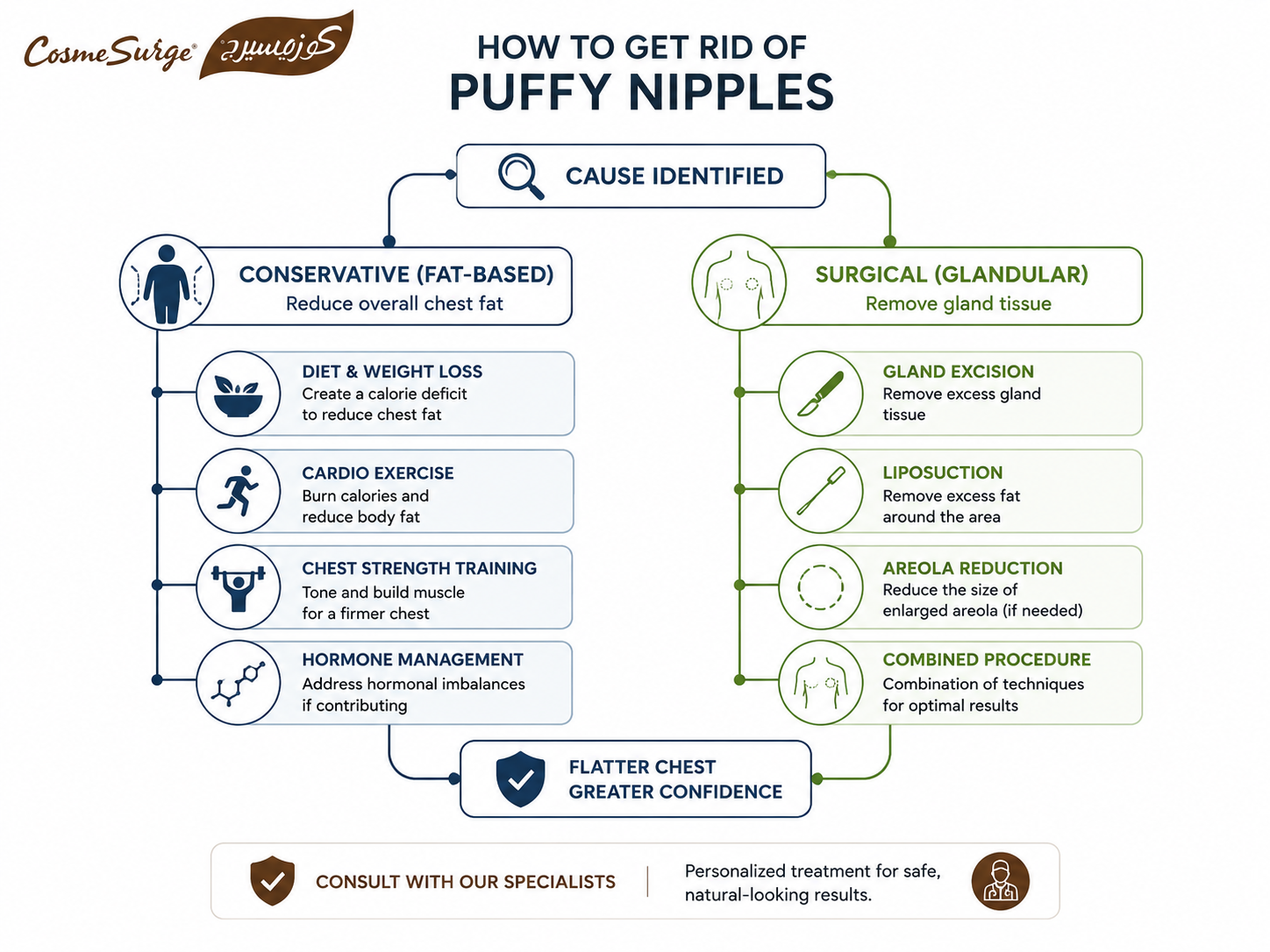
The approach depends entirely on the underlying cause.
Weight Loss
For puffy nipples caused primarily by fat accumulation, losing weight reduces the chest fat that creates the puffy appearance. Even modest reductions in overall body fat — ten to fifteen percent — can produce a noticeable difference.
Lifestyle Changes
Reducing alcohol, improving sleep, and managing chronic stress all support healthier hormone balance, which in turn can reduce hormonally driven nipple changes. Avoiding anabolic steroids removes one of the most common preventable causes of gynecomastia-related puffy nipples in men.
Exercise
Targeted chest training builds the underlying pectoral muscles, creating a firmer, more defined chest that reduces the visual prominence of any nipple puffiness. This can be particularly effective when combined with fat loss.
Treating the Underlying Cause
If a medication, medical condition, or substance is driving the hormonal imbalance, addressing that cause directly is the most logical starting point. This may mean switching a medication, treating thyroid or liver disease, or stopping steroid use.
It is important to be direct about the limits of natural approaches: how to fix puffy nipples when glandular tissue is involved almost always requires a medical or surgical solution. Glandular breast tissue does not respond to diet or exercise. If a firm disc beneath the nipple remains after weight loss and training, surgery is likely the only effective path to how to reduce puffy nipples caused by true glandular development.
Can Exercise Help Puffy Nipples?
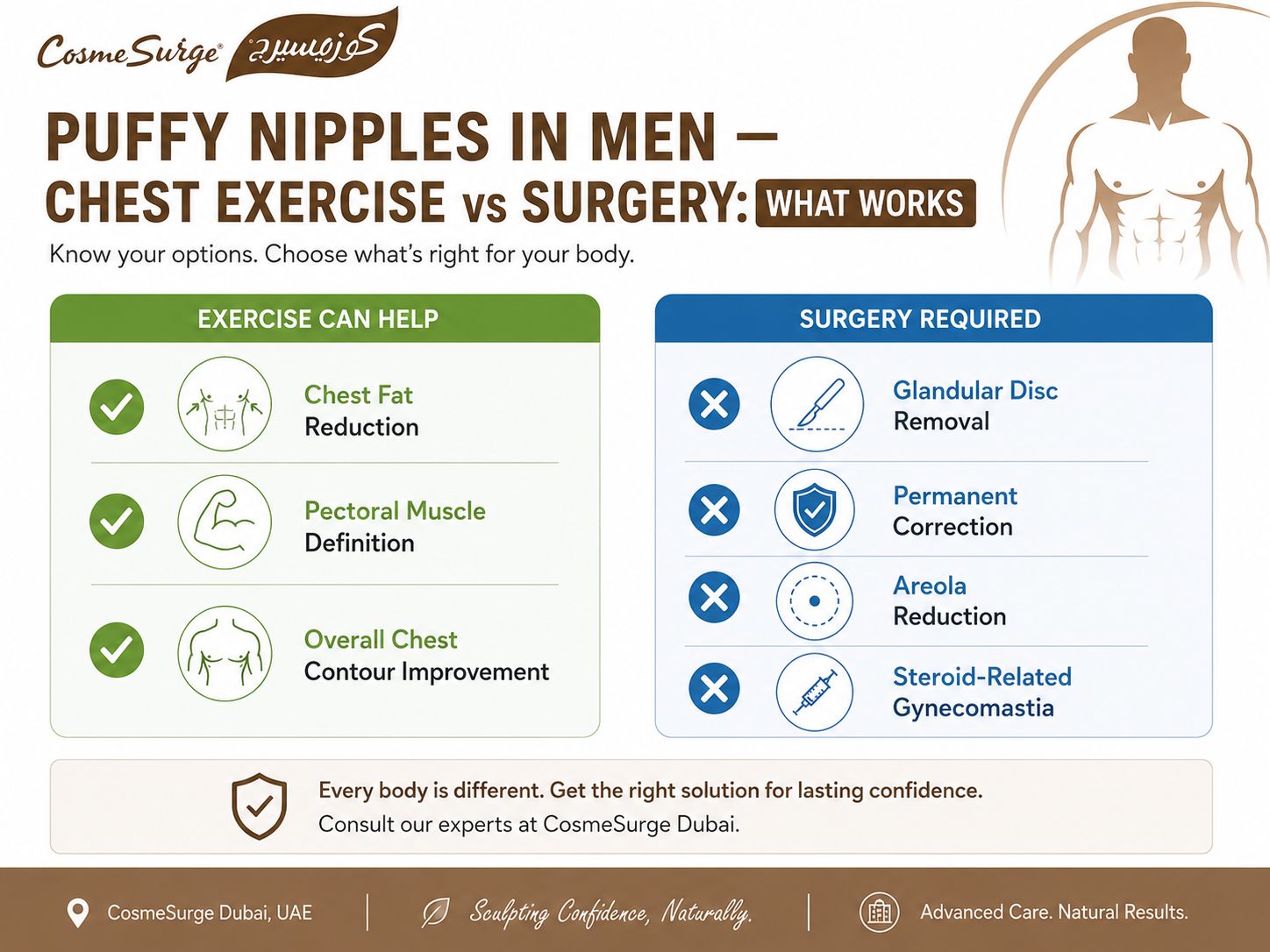
Exercise helps — to a point. For men and women whose puffy nipples are primarily caused by chest fat, a combination of cardiovascular training (for fat loss) and resistance training (for chest muscle development) can produce meaningful cosmetic improvement.
Chest Workouts
Building the pectoralis major through exercises such as bench presses, push-ups, cable crossovers, and chest flyes adds shape and definition to the chest. A well-developed chest creates a firmer, more sculpted appearance that reduces the visual contrast of nipple puffiness.
Cardio and Fat Loss
Sustained cardiovascular exercise supports the calorie deficit needed for fat reduction across the body, including the chest area. This directly addresses the fat component of puffy nipples.
The Limitation
No exercise, regardless of intensity or frequency, can remove glandular tissue. If the puffiness is caused by gynecomastia — actual breast tissue beneath the nipple — working out will improve the surrounding chest contour but will not resolve the underlying cause. Many men train intensively for years believing the problem will resolve with enough effort, only to find that the firm tissue beneath the nipple remains entirely unchanged.
When Is Surgery Necessary?
Surgery becomes the appropriate consideration when conservative approaches have been tried and have not resolved the condition.
Persistent puffy nipples: If the condition has been present for more than 12 months and has not improved with lifestyle changes, it is unlikely to resolve without intervention.
Confirmed glandular tissue: When examination or imaging confirms a glandular component beneath the nipple, exercise and diet cannot address it. Surgical excision is the only reliable solution.
Enlarged areolas: When the areola is disproportionately large — whether due to genetics, significant weight changes, or post-pregnancy changes — areola reduction surgery can resize and reshape it.
Cosmetic distress: Puffy nipples can significantly affect self-confidence, body image, and quality of life. Men who avoid physical activities or clothing choices because of the condition, and women who feel persistently self-conscious, are appropriate candidates for surgical assessment.
Asymmetry: When one nipple or areola is noticeably larger or puffier than the other, surgical correction can restore a more symmetric appearance.
Specialists at CosmeSurge offer personalised treatment plans that account for the specific cause, grade, and impact of the condition on each patient — ensuring the most appropriate approach is recommended for each individual.
Puffy Nipple Surgery
Several surgical options exist depending on what is causing the puffiness and what the patient wants to achieve.
Gynecomastia Surgery (Gland Excision)
When glandular tissue is present beneath the nipple, it must be surgically removed. A small incision is made at the edge of the areola, and the disc of glandular tissue is excised directly. This is the only way to permanently address the glandular component of enlarged nipples or gynecomastia-related puffiness. Careful technique is essential to avoid creating a contour defect beneath the nipple.
When excess fat is the primary or contributing cause, liposuction allows precise removal of the fatty tissue through small incisions. In men with a mixed fat-and-glandular presentation, liposuction is typically combined with gland excision for the most balanced result.
Areola Reduction Surgery
For patients whose concern is primarily the size or projection of the areola itself — rather than nipple puffiness caused by underlying tissue — areola reduction surgery can resize the pigmented disc through a circular incision placed at its outer edge. Scarring is placed along the areola border and generally heals well.
Combined Approach
In many cases, the best outcome comes from combining liposuction (to contour surrounding fat), gland excision (to address the firm disc of tissue), and in some patients, skin or areola reshaping. This comprehensive approach produces the most natural and lasting result.
Advanced surgical options for puffy nipple correction are available at CosmeSurge, delivered by surgeons who specialise in male and female chest procedures. Each treatment plan is developed around the patient’s anatomy, expectations, and goals.
Read – How to Get Rid of Gyno: Causes, Natural Remedies, Exercises, and Treatment Options
Recovery After Puffy Nipple Surgery
Recovery is generally well-tolerated and follows a predictable timeline for most patients.
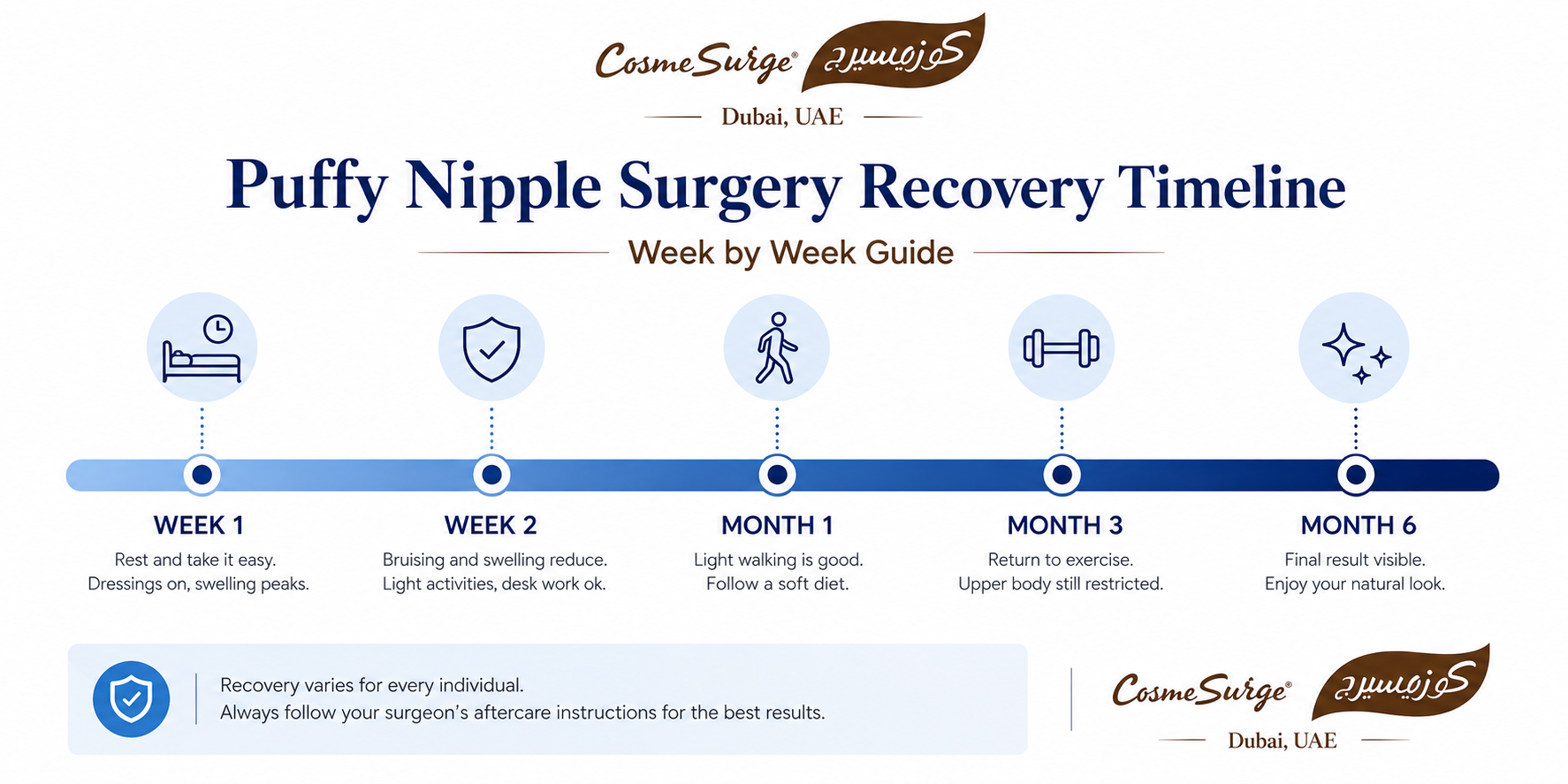
Compression garments or dressings are worn for two to six weeks, depending on the procedure. These support healing and help the skin adapt to the new contour.
Swelling and bruising are expected in the first one to three weeks. Most visible swelling resolves within six weeks, though subtle swelling may persist for several months.
Patients with desk-based roles typically return to work within five to seven days. More physical roles require two to four weeks off.
Light walking and gentle movement begin almost immediately. Upper body exercise and lifting are restricted for four to six weeks.
Final results become visible at three to six months post-surgery, once all swelling has resolved and the tissue has settled into its new position.
Scars from areola or excision incisions are placed discreetly and fade significantly over six to twelve months with appropriate scar management.
Can Puffy Nipples Return After Surgery?
If glandular tissue is fully excised, it will not regenerate on its own. However, new puffy nipple development can occur if the conditions that caused the original problem are reintroduced.
Significant weight gain can re-establish a fat component and increase oestrogen production through aromatisation
Resuming anabolic steroid use can trigger new glandular tissue development
Hormonal changes from aging, medications, or medical conditions can cause new tissue changes
In women, pregnancy following surgery will naturally cause areola and nipple changes
Addressing the root cause before surgery — through hormonal assessment, lifestyle review, and medication audit — reduces the likelihood of recurrence. Long-term maintenance of a healthy, stable body weight is the most practical step for most patients.
Prevention Tips
Maintain a stable, healthy body weight to reduce chest fat and limit oestrogen production from aromatisation
Avoid anabolic steroids — they are one of the most common preventable causes of gynecomastia and male puffy nipples
Limit alcohol consumption, which affects liver metabolism of oestrogen
Review any medications with a known association with hormonal changes with your prescribing doctor
Monitor hormonal health regularly, particularly after the age of 40 for men
Address any medical conditions affecting liver, kidney, or thyroid function that may affect hormone regulation
When Should You See a Doctor?
Not every case of puffy nipples requires medical attention, but the following situations warrant a clinical review:
Puffy nipples that have been present for more than 12 months without improvement
A firm or lumpy area felt directly beneath the nipple
Nipple discharge — clear, milky, or blood-stained — from either side
Rapid or asymmetric change in nipple or areola appearance
Pain or tenderness that is new, worsening, or unexplained
Significant psychological distress, body image concerns, or avoidance of normal activities
Any concern in a teenager that does not resolve within two years of onset
Early evaluation is always worthwhile — it either provides reassurance or opens the path to effective management before the condition becomes more established.
Myth vs Fact: Puffy Nipples
Myth: Puffy nipples always mean gynecomastia.
Fact: Puffy nipples can result from puberty, pregnancy, weight gain, hormonal fluctuations, medications, or simply genetics. Gynecomastia is one cause — but not the only one. A clinical examination is the most reliable way to determine what is actually driving the appearance.
Myth: Exercise alone can fix puffy nipples.
Fact: Exercise can reduce chest fat and improve overall chest definition, which may reduce the visual prominence of puffy nipples. However, if glandular tissue is present beneath the nipple, no amount of chest training will eliminate it. Only surgical excision can remove glandular breast tissue permanently.
Myth: Puffy nipples are only a concern for men.
Fact: Women also experience puffy nipples — often linked to the menstrual cycle, pregnancy, breastfeeding, hormonal conditions, or natural areola variation. Some women seek evaluation and treatment for persistent enlarged areolas that cause cosmetic concern, regardless of any underlying hormonal issue.
Myth: Puffy nipples in teenage boys always need treatment.
Fact: Pubertal gynecomastia is extremely common and usually resolves on its own within two years. The majority of adolescent boys require only reassurance. Treatment is considered when the condition persists beyond two years or causes significant distress.
Conclusion
Puffy nipples are a common condition affecting both men and women at various life stages, and the range of causes is broader than many people realise. From the normal hormonal fluctuations of the menstrual cycle and puberty to the structural changes of gynecomastia and weight gain, the presentation may look similar on the surface while requiring very different approaches underneath.
In many cases, identifying and addressing the underlying cause — whether hormonal, lifestyle-related, or medication-driven — is enough to produce meaningful improvement.
Frequently Asked Questions About Puffy Nipples
Here are some answers to the specific questions we often hear but didn’t cover in detail above.
Puffy nipples can be caused by hormonal imbalance, puberty, gynecomastia, weight gain, pregnancy, breastfeeding, genetics, medications, or anabolic steroid use. In men, the most clinically significant cause is gynecomastia — the development of glandular breast tissue driven by elevated oestrogen relative to testosterone. In women, cyclical hormonal changes and reproductive events are the most common drivers.
Yes, in many circumstances. Puffy nipples are a normal finding during puberty, pregnancy, and breastfeeding, and can reflect natural variation in nipple and areola size. They become a clinical concern when they are persistent, asymmetric, associated with a palpable lump or discharge, or causing genuine distress. If you are unsure, a clinical evaluation will quickly clarify whether the finding is a normal variant or worth investigating further.
Why your nipples are puffy depends on your sex, age, and specific circumstances. In men, the most common causes are weight gain, gynecomastia, and hormonal imbalance. In women, the menstrual cycle, pregnancy, breastfeeding, or hormonal conditions are the typical drivers. In teenagers of both sexes, puberty is usually responsible. A clinical examination is the most reliable way to identify the specific cause in your case.
Nipple and areola size are partly determined by genetics and partly by hormonal and physical factors including body weight, age, pregnancy history, and hormonal health. If the size has changed noticeably, or if one side is significantly larger than the other, this warrants investigation. In men, persistent enlargement is often linked to gynecomastia. In women, reproductive hormone changes are the most common explanation.
Swollen nipples or swollen areolas can result from hormonal fluctuations during the menstrual cycle, early pregnancy, hormonal conditions, skin irritation, infection, or the early development of gynecomastia in men. If the swelling is new, persistent, asymmetric, or accompanied by discharge, pain, or a palpable lump, a medical evaluation is appropriate. Most cases have a straightforward, benign explanation.
Exercise can help with puffy nipples caused primarily by chest fat, by reducing body fat and building the pectoral muscles to improve chest definition. It cannot, however, remove glandular breast tissue. If a firm disc beneath the nipple remains after consistent training and fat loss, the underlying tissue is glandular and will require surgical intervention for permanent correction.
Getting rid of puffy nipples naturally is most effective when the cause is excess fat rather than glandular tissue. Weight loss through diet and exercise, limiting alcohol, avoiding steroids, and addressing any underlying hormonal conditions are the most effective natural strategies. If glandular tissue is present — indicated by a firm area beneath the nipple — natural approaches alone are unlikely to resolve the puffiness permanently.
They can be, but not always. Puffy nipples in men that are associated with a firm, disc-like lump beneath the areola are strongly suggestive of gynecomastia. Puffy nipples caused by fat, hormonal fluctuation, or puberty may look similar but do not involve glandular tissue. A clinical examination or ultrasound is the most reliable way to confirm or rule out gynecomastia.
Surgery is the only reliably permanent solution for puffy nipples caused by glandular tissue. Once glandular breast tissue has established itself and fibrosed, it does not respond to exercise, diet, or most medications. For puffy nipples caused purely by fat, sustained weight loss can produce lasting improvement without surgery — though results depend on maintaining that weight reduction over time.
Glandular tissue that is fully excised will not regenerate on its own. However, new puffy nipples can develop if conditions that promote hormonal imbalance — such as anabolic steroid use, significant weight gain, or new medications — are introduced after surgery. Maintaining a stable lifestyle and healthy body weight after the procedure significantly reduces the risk of recurrence.
The appropriate specialist depends on the cause. Hormonal causes are typically evaluated by an endocrinologist or general practitioner. When surgery is indicated — for gynecomastia, gland excision, or areola reduction — a plastic surgeon or cosmetic surgeon with experience in chest procedures is the right referral. An integrated evaluation that considers both the hormonal picture and the surgical plan produces the best long-term outcome.
Medical Disclaimer & Review
This content is for educational purposes only and does not replace professional medical advice. Always consult a qualified healthcare provider for diagnosis and treatment.
Medically reviewed by the CosmeSurge Plastic Surgery Team, Dubai,UAE.
Related Posts

Puffy Nipples: Causes, Symptoms, and Treatment Options for Men and...Read More
Flat After Breast Implant Removal: Is It Normal and What...Read More

How to Get Rid of Gyno: Causes, Natural Remedies, Exercises,...Read More

Gaunt Face, Hollow Cheeks and Sunken Cheeks: Treatment Key Takeaways...Read More