
Key Takeaways Gynecomastia — commonly called gyno — is the enlargement of male breast tissue caused by hormonal imbalance, weight gain, medications, or anabolic steroid use. It affects men of all ages and body types, and it is far more common than most people realise. Mild cases may improve with:
However, true gynecomastia involving actual glandular breast tissue often requires surgery for permanent correction. Specialists at CosmeSurge provide comprehensive evaluation and personalised treatment options for men at every stage of the condition. |
What Is Gyno?
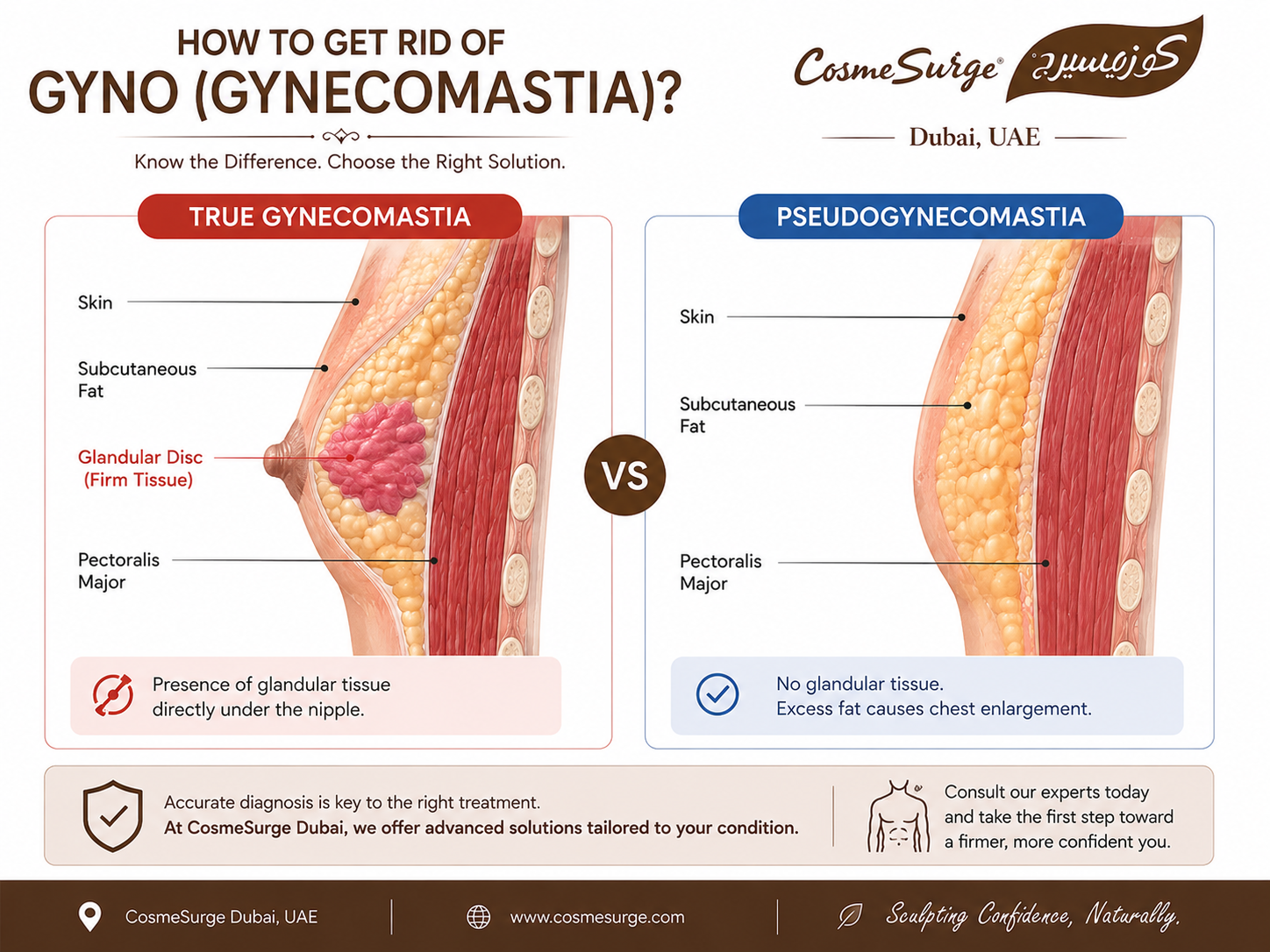
Gyno — short for gynecomastia — is the development of enlarged breast tissue in men. It is not simply excess chest fat. True gynecomastia involves the growth of actual glandular tissue beneath the nipple, driven by a hormonal imbalance between oestrogen and testosterone.
Every male body produces small amounts of oestrogen alongside testosterone. When the ratio shifts — oestrogen rises or testosterone falls — the breast tissue can begin to develop in ways it normally would not. The result is a gyno chest: a chest that appears fuller, softer, or puffier than expected, sometimes with a visible or palpable disc of firm tissue directly beneath the nipple.
It is worth distinguishing between two distinct presentations. True gynecomastia involves glandular tissue and is caused by hormonal changes. Pseudogynecomastia — sometimes called false gyno — is caused entirely by fat accumulation in the chest area without any glandular component. The distinction matters enormously because each type responds to treatment differently.
Gynecomastia can be unilateral (affecting one side) or bilateral gynecomastia (affecting both sides). It can occur at any age and in men of any body type — including lean, athletic individuals with very little body fat.
What Causes Gynecomastia?
Several different factors can trigger the hormonal imbalance that leads to male breast tissue development.
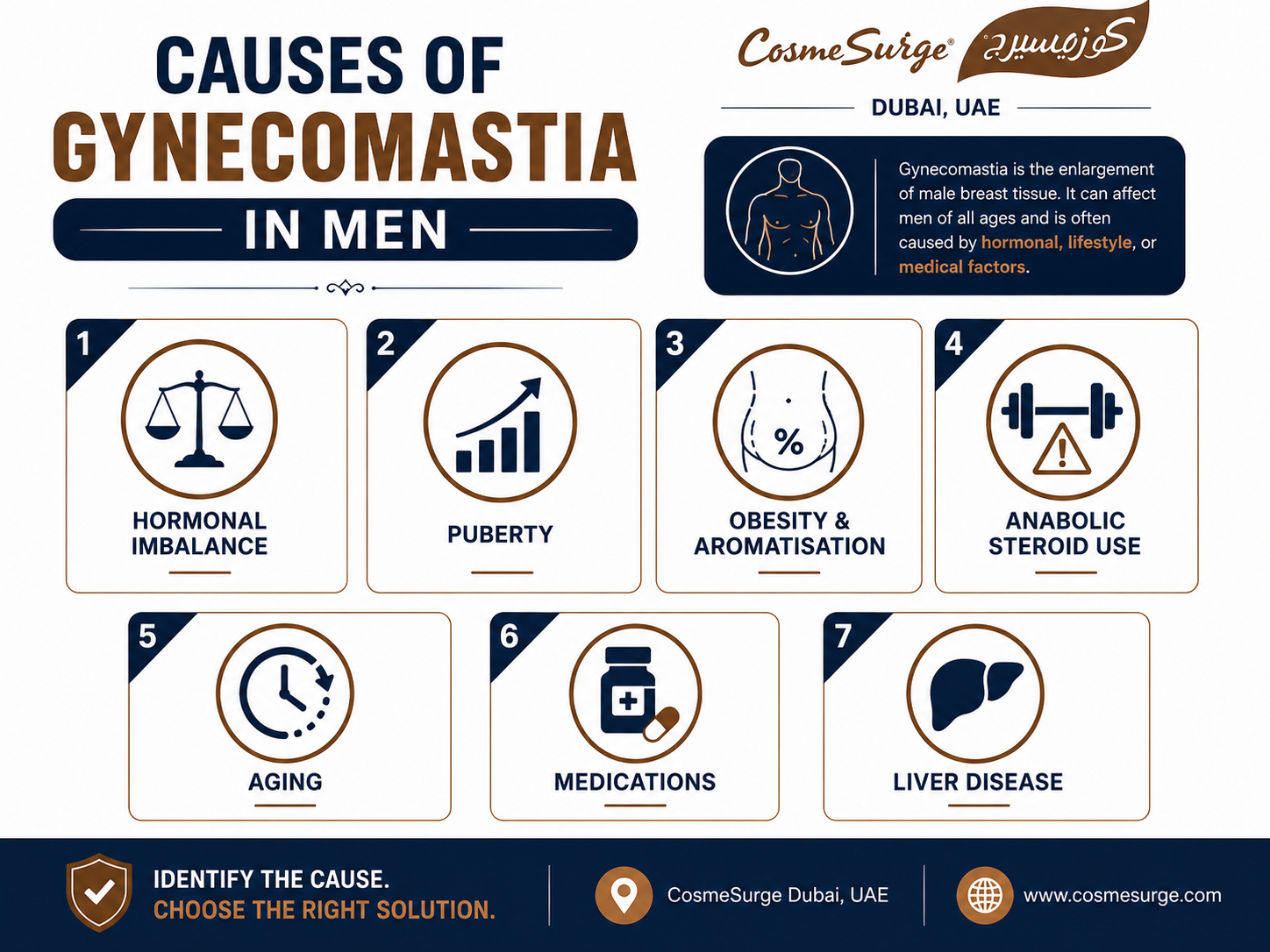
Hormonal changes: Any shift that increases oestrogen relative to testosterone can initiate glandular development. This includes natural hormonal fluctuations as well as those caused by external factors.
Puberty: Between 50 and 70 percent of adolescent boys experience some degree of gynecomastia during puberty, as testosterone and oestrogen levels fluctuate rapidly. In most cases, this resolves on its own within one to two years.
Obesity: Adipose (fat) tissue converts testosterone into oestrogen through a process called aromatisation. Men carrying excess body fat therefore produce more oestrogen, increasing the risk of glandular development. Weight gain also contributes to the false gyno appearance from fat alone.
Anabolic steroid use: Exogenous anabolic steroids suppress natural testosterone production and can be converted into oestrogen within the body. Steroid-related gynecomastia is common among bodybuilders and can develop quickly.
Aging: Testosterone levels naturally decline with age. Men over 50 are at higher risk of developing gynecomastia as this decline accelerates, particularly when combined with increased body fat.
Medications: A wide range of medications can contribute to gynecomastia, including certain antidepressants, antipsychotics, prostate cancer treatments, heart medications (particularly spironolactone and digoxin), and some HIV drugs.
Liver disease: The liver metabolises oestrogen. When liver function is impaired — through cirrhosis or chronic disease — oestrogen can accumulate in the bloodstream, promoting breast tissue growth.
Kidney disease: Kidney dysfunction can affect hormonal regulation and is associated with increased risk of gynecomastia, particularly in men receiving dialysis.
Gynecomastia Symptoms
Gynecomastia symptoms can range from barely noticeable to quite pronounced. The most common presentations include:
Enlarged breast tissue — a visible fullness or rounding of the chest, particularly around the nipple and areola
Puffy nipples — a puffed or protruding nipple appearance, even in otherwise lean men
A firm, rubbery, or disc-like lump felt directly beneath the nipple
Breast tenderness or sensitivity, particularly when pressure is applied
Asymmetry — one side may be more pronounced than the other, even in bilateral cases
Skin changes or dimpling in more advanced cases
Not all gynecomastia is painful. Many men seek evaluation primarily for cosmetic or psychological reasons rather than physical discomfort. If you notice rapid growth, significant pain, or nipple discharge, a medical evaluation is important to rule out rarer but more serious causes.
How to Get Rid of Gyno Naturally
If you are wondering how to get rid of gyno naturally, it is important to be honest about what natural approaches can and cannot achieve.
For men with pseudogynecomastia or mild hormone-related gyno that has not yet become established glandular tissue, natural strategies can be genuinely effective. For men with true, established glandular gynecomastia, natural methods may improve chest appearance but are unlikely to fully eliminate the condition.
Weight Loss
Reducing body fat lowers oestrogen production from aromatisation and reduces the false gyno component significantly. Even modest fat loss can make a visible difference to chest appearance, particularly when combined with targeted chest exercise.
Dietary Changes
No specific food eliminates gynecomastia, but a diet that reduces overall body fat is beneficial. Reducing ultra-processed foods, refined sugars, alcohol, and foods with potential oestrogenic activity (such as excess soy products) may help support healthier hormone balance. Prioritise protein, vegetables, and whole foods.
Avoiding Anabolic Steroids
If steroid use is contributing to gynecomastia, stopping the relevant substance is the first and most important step. In some cases — particularly if the glandular tissue has not yet fibrosed — this may allow partial reversal. Post-cycle therapy (PCT) is sometimes used to restore natural testosterone production, though this should be managed by a medical professional.
Limiting Alcohol
Alcohol impairs liver function and can increase oestrogen levels over time. Reducing or eliminating alcohol consumption supports hormonal balance and overall metabolic health.
Managing Medications
If a medication you are taking is contributing to gynecomastia, speak with your doctor. In some cases, an alternative can be prescribed. Never stop a prescribed medication without medical guidance.
To be clear: natural remedies for how to reduce gynecomastia are most effective for the fat component of the condition. Glandular breast tissue, once established, cannot be reduced through diet, exercise, or lifestyle changes alone.
Can Gyno Go Away on Its Own?
It depends on the cause and how long the condition has been present.
Pubertal Gynecomastia
Gynecomastia that develops during puberty often resolves on its own within six months to two years, once hormone levels stabilise. In the majority of adolescent boys, no treatment is required beyond monitoring and reassurance.
Adult Gynecomastia
In adult men, gynecomastia that has been present for more than 12 months is unlikely to resolve without intervention. Once glandular tissue has matured and become fibrous, it does not respond to lifestyle changes or medication. This is where the question of how to fix gynecomastia becomes more complex.
False Gynecomastia (Pseudogynecomastia)
Pseudogynecomastia — where the chest enlargement is caused entirely by fat — can often be improved or resolved through consistent weight loss and exercise. However, it is worth confirming which type you have before assuming diet and exercise alone will resolve the issue.
Best Exercises for Gyno
Exercise is a valuable part of managing gyno chest — not because it removes glandular tissue, but because building the underlying pectoral muscles creates a firmer, more defined chest that can significantly reduce the visual impact of the condition.
Chest Presses
Flat, incline, and decline barbell or dumbbell presses build the pectoralis major directly. A well-developed chest can make puffy or enlarged tissue far less prominent by improving overall chest shape.
Push-Ups
Push-ups are an accessible, equipment-free option for building pectoral strength. Wide-grip push-ups target the outer chest; close-grip variations engage the inner chest and triceps.
Cable Crossovers and Chest Flyes
These isolation movements target the inner and outer portions of the chest, helping to create definition and separation across the pectoral muscles.
Cardio and Full-Body Fat Loss
Consistent cardiovascular exercise — whether running, cycling, swimming, or HIIT — supports the caloric deficit needed for body fat reduction. Reducing overall body fat is the most effective natural strategy for improving chest appearance in men with a significant fat component.
Strength Training
A full-body strength training programme that builds lean muscle mass raises resting metabolic rate and supports long-term fat management. Compound movements such as rows, deadlifts, and squats have the added benefit of boosting natural testosterone production.
The important caveat: no exercise programme can remove glandular breast tissue. If the firm disc beneath the nipple remains after dedicated training and fat loss, the underlying tissue is glandular — and exercises for gynecomastia self-care will not eliminate it. This is the point at which gynecomastia treatment options should be explored with a specialist.
Gynecomastia Treatment Without Surgery
Not every case requires an operating theatre. There are several non-surgical approaches worth considering, depending on the cause and duration of the condition.
Observation and Monitoring
For recent-onset gynecomastia — particularly in adolescents or men who have recently started a new medication — watchful waiting is often appropriate. If the cause is identified and addressed, early-stage glandular tissue can sometimes regress on its own.
Treating the Underlying Cause
This is the most important non-surgical approach. Stopping steroid use, switching medications, managing liver or kidney disease, or addressing thyroid dysfunction can all reduce or halt gynecomastia development, especially when the condition is caught early.
Hormonal Therapy
In selected cases, medications that block oestrogen receptors (such as tamoxifen) or reduce oestrogen production (such as aromatase inhibitors) have been used off-label to treat gynecomastia. These approaches tend to be most effective in the early, active phase — before glandular tissue has fibrosed. They are not a standard first-line treatment and should only be used under medical supervision.
Lifestyle Modifications
Weight loss, exercise, alcohol reduction, and avoidance of oestrogenic substances collectively support male breast reduction without surgery — particularly for men with a significant pseudogynecomastia component.
Experts at CosmeSurge evaluate each patient thoroughly to determine whether conservative management is appropriate or whether surgical intervention is likely to produce better long-term results.
Pseudogynecomastia vs True Gynecomastia: Key Differences
Understanding which type of gyno you have is the most important factor in determining the right treatment approach.
Feature | Pseudogynecomastia | True Gynecomastia |
Tissue type | Fat only | Glandular breast tissue |
Fat tissue present | Yes | May also be present |
Glandular tissue | No | Yes |
Exercise response | Good — fat can be reduced | Limited — gland unaffected |
Need for surgery | Rare — diet and exercise may resolve | Common for permanent correction |
Tenderness / sensitivity | Usually absent | Often present under nipple |
Common in bodybuilders | Uncommon | Yes — steroid-related |
A clinical examination — and in some cases an ultrasound — is the most reliable way to differentiate between the two. Self-assessment can be misleading, particularly in men with moderate body fat.

When Is Surgery Necessary?
Surgery is the most reliable option for how to get rid of gyno when glandular tissue is present and established. The following situations often point toward surgical management:
Persistent glandular tissue: When a firm disc beneath the nipple remains after dedicated fat loss and lifestyle changes, it is almost certainly glandular — and will not resolve without surgery.
Duration of more than 12 months: Long-standing gynecomastia involves fibrosed glandular tissue that is extremely unlikely to respond to medical therapy.
Pain or physical discomfort: Persistent tenderness, sensitivity, or discomfort affecting daily activities is a reasonable indication for intervention.
Psychological impact: Gynecomastia has a well-documented effect on self-esteem, body image, and quality of life. Men who avoid physical activity, intimate situations, or social environments because of the condition are appropriate candidates for surgical assessment.
Grade III or IV gynecomastia: Severe breast enlargement with significant skin excess requires surgical correction — no conservative approach will be adequate.
Specialists at CosmeSurge offer personalised treatment plans that take into account the grade of gynecomastia, the patient’s overall health, and their specific goals — ensuring the most appropriate approach is recommended.
Gynecomastia Surgery
For men with true gynecomastia or significant pseudogynecomastia that has not responded to conservative management, surgery offers a permanent and reliable solution. It is the most effective answer to how to remove gyno when glandular tissue is involved.
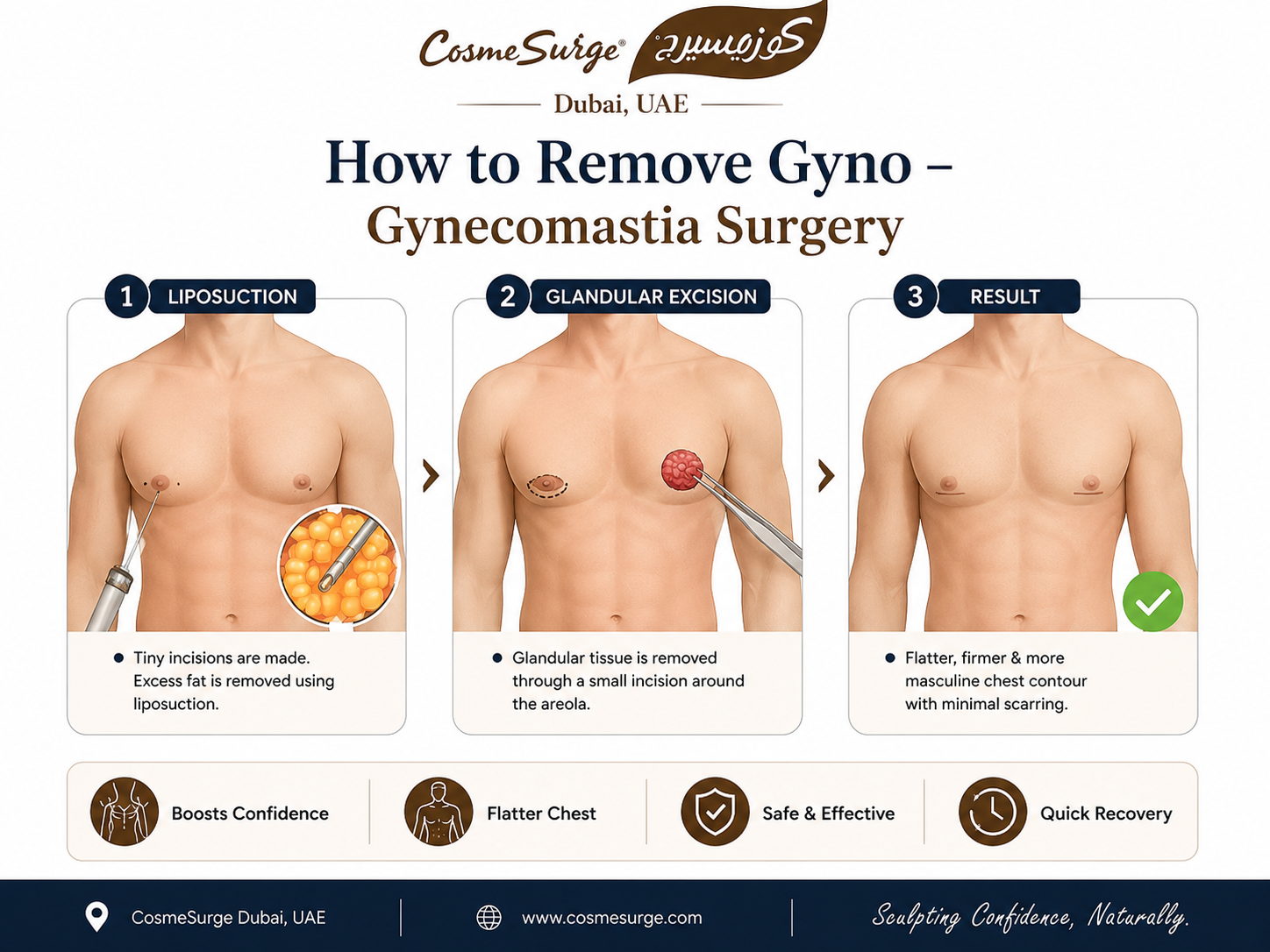
For cases where fat is the primary component, liposuction alone can dramatically reshape the chest. A small cannula is used to remove fatty tissue through tiny incisions. Recovery is generally swift, and scarring is minimal.
Glandular Excision
When firm glandular tissue is present beneath the nipple, it must be removed surgically — liposuction cannot address it. A small incision is made at the edge of the areola, and the glandular disc is excised directly. This component requires precise technique to avoid creating a contour defect (a “dented” or over-corrected appearance beneath the nipple).
Combination Approach
Most gynecomastia surgeries involve a combination of liposuction (to contour the surrounding chest fat) and direct glandular excision. This produces the most balanced, natural-looking result. In cases of severe gynecomastia with significant skin excess, skin resection may also be necessary.
Advanced gynecomastia surgery is available at CosmeSurge, performed by experienced surgeons who specialise in male chest contouring. Each procedure is tailored to the patient’s anatomy and aesthetic goals.
Recovery After Gynecomastia Surgery
Recovery is generally straightforward for most men, though it requires patience and adherence to the post-operative guidance provided.
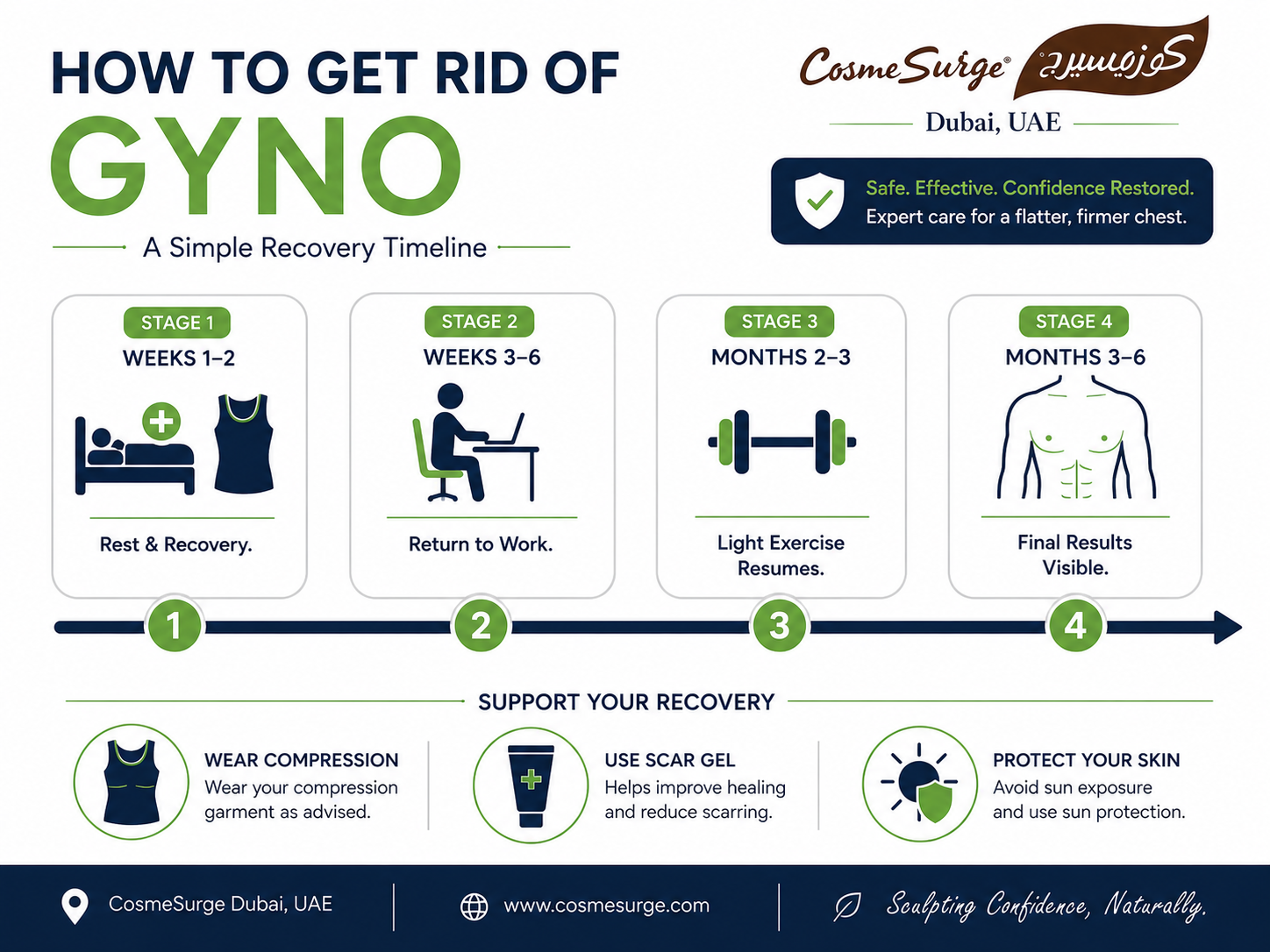
Compression garments: A compression vest is typically worn for four to six weeks after surgery. It reduces swelling, supports the healing tissues, and helps the skin conform to the new chest contour.
Swelling and bruising: Expected in the first two to four weeks. Most visible swelling resolves within six weeks, though subtle swelling can persist for several months. Final results are typically visible at three to six months post-surgery.
Return to work: Most men with desk-based roles return to work within five to seven days. Physical roles requiring lifting or upper body activity require a longer absence of two to four weeks.
Exercise restrictions: Light walking can begin immediately. Upper body exercise is usually restricted for four to six weeks. Full gym training — including chest exercises — typically resumes after six to eight weeks.
Scarring: Scars from the areolar incision fade significantly over six to twelve months and are usually well concealed. Proper scar management (sun avoidance, silicone gel) supports the best outcome.
Can Gyno Come Back After Treatment?
If the glandular tissue is fully excised during surgery, it will not grow back on its own. However, certain factors can cause gynecomastia to recur or new tissue to develop.
Significant weight gain that increases oestrogen production through aromatisation
Resumption of anabolic steroid use
Hormonal imbalances that were not identified or treated before surgery
Certain medications introduced after surgery
Men who address the underlying cause of their gynecomastia before surgery, maintain a stable weight, and avoid steroids after surgery have the best long-term outcomes. A thorough pre-operative evaluation — as provided at CosmeSurge — helps identify and manage risk factors for recurrence before the procedure takes place.
How to Prevent Gynecomastia
Maintain a healthy body weight — excess fat drives oestrogen production
Avoid anabolic steroids and performance-enhancing drugs
Limit alcohol consumption, which impairs oestrogen metabolism in the liver
Review any medications known to cause gynecomastia with your doctor
Have hormonal health checked regularly, particularly after age 40
Address weight fluctuations early, before glandular changes can become established
Myth vs Fact: Gynecomastia
Myth: Exercise alone can remove true gynecomastia.
Fact: Exercise can reduce fat and improve chest definition, but glandular breast tissue does not respond to training. Once established, it almost always requires surgical excision for permanent removal.
Myth: Only overweight men develop gyno.
Fact: Gynecomastia affects men of all body types, including lean athletes and bodybuilders. The condition is caused by hormonal imbalance, not weight alone — steroid use is a particularly common cause in physically fit men.
Myth: Gyno always goes away on its own.
Fact: Pubertal gynecomastia often resolves without treatment. Adult gynecomastia that has been present for more than a year is unlikely to resolve spontaneously and typically requires medical or surgical intervention.
Myth: Creams and supplements can cure gynecomastia.
Fact: No topical cream or over-the-counter supplement has been proven to reduce glandular breast tissue. Products marketed as gynecomastia cures are not backed by clinical evidence.
Conclusion
The question of how to get rid of gyno does not have a single universal answer. For men with pseudogynecomastia — chest enlargement driven by fat rather than glandular tissue — consistent weight loss, targeted exercise, and lifestyle adjustments can produce significant and lasting improvement.
For men with true gynecomastia, the situation is more nuanced. Natural strategies can improve chest appearance and address contributing factors, but they cannot remove established glandular tissue. Once the gland has matured and fibrosed, surgery is the most effective and reliable path to a permanently flatter, more masculine chest.
The most important first step is an accurate diagnosis — knowing whether you are dealing with fat, glandular tissue, or a combination of both determines everything that follows. Self-assessment has its limits, and acting on the wrong assumption wastes time and effort.
At CosmeSurge, specialists provide comprehensive diagnosis and individualised treatment planning for men at every stage of gynecomastia — from early conservative management through to advanced surgical correction when appropriate. Whether your concern is cosmetic, functional, or both, a thorough evaluation is the foundation of effective care.
If persistent chest enlargement, puffy nipples, or tenderness are affecting your confidence or quality of life, consulting the experts at CosmeSurge is a practical and worthwhile step toward finding the right solution.
Frequently Asked Questions About How To Get Rid Of Gyno
Here are some answers to the specific questions we often hear but didn’t cover in detail above.
Getting rid of gyno naturally is possible for cases involving primarily fat (pseudogynecomastia) through weight loss, exercise, dietary improvements, and avoiding contributing factors such as steroids and alcohol. However, true gynecomastia involving glandular tissue cannot be eliminated through natural methods alone. If a firm disc of tissue remains beneath the nipple after fat loss, surgical evaluation is likely needed.
Pubertal gynecomastia resolves on its own in the majority of adolescent boys within one to two years. Adult gynecomastia that has been present for more than 12 months is unlikely to self-resolve, particularly when glandular tissue has matured and fibrosed. Early-onset gynecomastia in adults linked to an identifiable and reversible cause — such as a medication — may improve when that cause is addressed.
Exercise helps with gyno by reducing body fat and building chest muscle, which improves the overall appearance of the chest and can reduce the visual prominence of enlarged tissue. However, exercise does not remove glandular tissue. If the underlying cause is true gynecomastia, chest training will improve the surrounding contour but will not eliminate the condition.
Weight loss can cure pseudogynecomastia — the type caused by fat alone — and can significantly improve chest appearance in men with a mixed presentation. It cannot cure true gynecomastia involving glandular tissue. However, weight loss is recommended before surgical consultation, as it makes results more predictable and reduces surgical risk.
The most reliable home indicator is a firm, rubbery disc of tissue that can be felt directly beneath the nipple, even after body fat loss. Fat is soft and distributed across the chest; glandular tissue is firm and centred under the areola. A clinical examination or ultrasound will confirm the diagnosis. If in doubt, seek a formal evaluation rather than self-diagnosing.
For established true gynecomastia, surgery is the only reliably permanent solution. Glandular tissue does not respond to exercise, diet, or most medications once it has fibrosed. Hormonal therapy can be effective in very early stages, but the window of opportunity is narrow. For the large majority of adult men with symptomatic gynecomastia, surgical excision is the most effective and durable option.
Most men return to desk-based work within five to seven days of gynecomastia surgery. Compression garments are worn for four to six weeks. Light exercise can resume within two weeks; upper body training is usually cleared at six to eight weeks. Swelling continues to settle over three to six months, after which the full result becomes visible.
If glandular tissue is fully removed, it will not regenerate on its own. However, gynecomastia can recur if new contributing factors arise — including anabolic steroid use, significant weight gain, hormonal imbalance, or certain medications. Addressing the root cause before surgery and maintaining a stable weight and lifestyle after surgery significantly reduces recurrence risk.
Yes. Anabolic steroid use is one of the most common causes of gynecomastia in adult men. Exogenous steroids suppress natural testosterone production and are partially converted to oestrogen within the body, directly triggering glandular breast tissue development. Steroid-related gynecomastia can develop rapidly and often requires surgical treatment, as the glandular component does not resolve simply by stopping use.
Gynecomastia is typically first evaluated by an endocrinologist or general practitioner to identify and treat any underlying hormonal cause. When surgery is indicated, a plastic surgeon or cosmetic surgeon experienced in male chest procedures performs the excision. An integrated approach — ensuring the hormonal picture is assessed alongside the surgical plan — produces the best long-term outcomes.
The cost of gynecomastia surgery varies depending on the grade of the condition, whether liposuction alone or combined excision is required, the surgical facility, and the operating surgeon’s experience. A detailed cost breakdown is provided following formal consultation and clinical assessment. Contact CosmeSurge directly for accurate pricing tailored to your specific presentation.
Medical Disclaimer & Review
This content is for educational purposes only and does not replace professional medical advice. Always consult a qualified healthcare provider for diagnosis and treatment.
Medically reviewed by the CosmeSurge Plastic Surgery Team, Dubai,UAE.
Related Posts

Puffy Nipples: Causes, Symptoms, and Treatment Options for Men and...Read More

Flat After Breast Implant Removal: Is It Normal and What...Read More

How to Get Rid of Gyno: Causes, Natural Remedies, Exercises,...Read More

Gaunt Face, Hollow Cheeks and Sunken Cheeks: Treatment Key Takeaways...Read More