
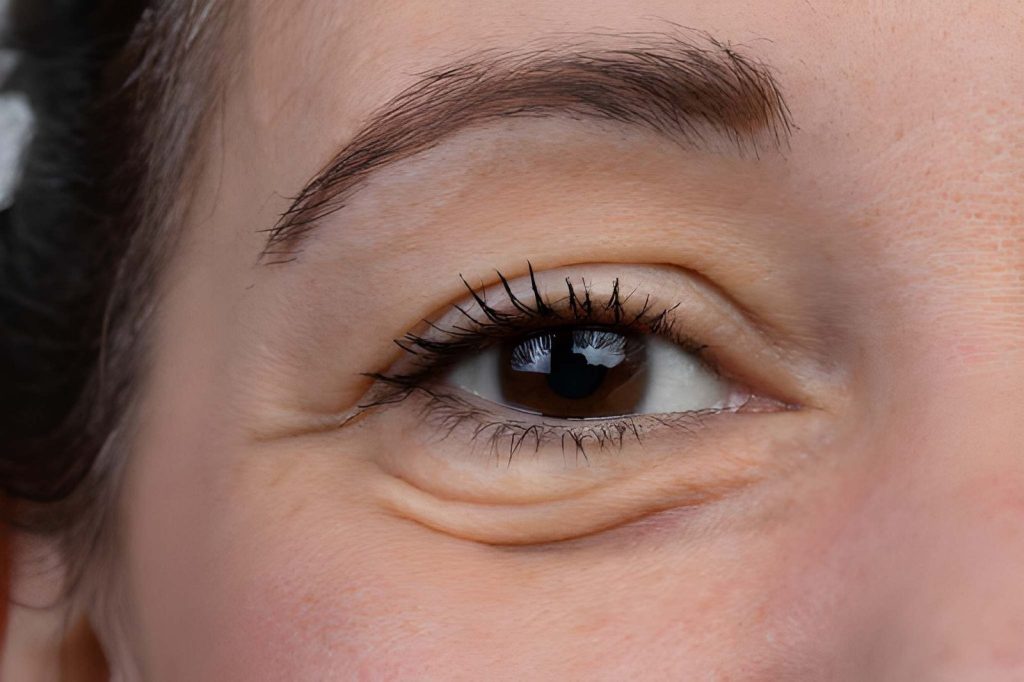
The skin around our eyes is among the most delicate on the entire body. It is significantly thinner than the skin on your forehead or cheeks—roughly 0.5mm thick compared to the 2mm thickness elsewhere. It also lacks a robust concentration of sebaceous glands, meaning it dries out and loses elasticity faster than the rest of the face. Many of us wake up, look in the mirror, and wonder exactly how to get rid of eye bags that seem to have appeared overnight, or perhaps have been lingering for years. While they are usually a cosmetic concern rather than a medical emergency, the puffiness and shadows can make a person look tired or older than they feel. Understanding this common concern requires looking beneath the surface—at the anatomy of the face, the lifestyle choices we make, and the clinical options available today.
The Complex Anatomy of the Under-Eye Area
To understand how to get rid of eye bags, one must first look at what is happening behind the skin. The eye sits in a protective socket (the orbit), cushioned by specialized orbital fat pads. These pads are divided into three distinct sections: the medial, central, and lateral fat pads. In a youthful face, these pads are held firmly in place by a thin, fibrous membrane called the orbital septum.
As we age, or due to genetic predisposition, several anatomical shifts occur:
Septal Laxity: The fibrous wall loses its tension, allowing the fat pads to bulge forward. This is officially known as “fat herniation.”
Orbicularis Oculi Changes: This circular muscle around the eye helps support the lids. Over time, it can become hyper-prominent (creating a muscular ridge) or sag, contributing to a “baggy” appearance.
The Tear Trough Deformity: Often, what looks like a bag is actually an optical illusion created by a loss of volume in the mid-face. As the “malar” (cheek) fat descends due to gravity, it creates a deep groove or “trough” that makes the fat above it look like it is protruding more than it actually is.
Bone Resorption: Believe it or not, the bone of the eye socket actually widens and recedes as we age, providing less structural support for the soft tissues above it.
Identifying the Root Cause: Why Me?
The question of why these bags form doesn’t have a single answer. Identifying your specific root cause is the first step in knowing how to get rid of eye bags effectively.
Genetics and Heritage
Sometimes, the architecture of your face is simply a blueprint you inherited. Genetic eye bags often appear as early as your late teens. If your parents have prominent lower lids, your bags are likely structural (related to fat pads) rather than lifestyle-based. No amount of sleep can “cure” a genetic fat pad; it requires a structural solution.
Fluid Retention (Periorbital Edema)
Unlike structural bags, fluid-based puffiness is transient. It fluctuates based on your body’s internal chemistry. Factors like high salt intake (which causes water to move into the tissues through osmosis), seasonal allergies, or hormonal shifts cause the body to hold onto water in the periorbital area. This is why many people find their eyes look significantly worse in the morning—fluid pools there while you lie flat.
Lifestyle and Environmental Stressors
Venous Congestion: Lack of sleep leads to poor circulation. When blood doesn’t flow efficiently away from the eye, it pools in the veins under the thin skin, creating a dark, swollen appearance.
The Breakdown of Proteins: Smoking and chronic sun exposure generate free radicals. These molecules destroy collagen and elastin, the “scaffolding” of your skin. Without this support, the skin sags, and the fat pads have nothing to hold them back.
Comparing the Options: A Diagnostic Guide for Patients
Feature | Fluid Retention (Puffiness) | Fat Herniation (Bags) | Tear Trough (Hollows) |
Main Cause | Salt, Allergies, Dehydration | Genetics, Aging, Weak Septum | Volume Loss in Cheeks |
Daily Timing | Worse in the morning; improves | Constant throughout the day | Visible in overhead lighting |
Physical Test | Skin feels “squishy”; moves | Does not change with pressure | Shadow fades with a flashlight |
Clinical Approach | Lymphatic drainage / Diet | Blepharoplasty / Laser | Dermal Fillers |
How to Get Rid of Eye Bags Naturally: The At-Home Approach
For those with mild puffiness or fluid-related issues, natural interventions can offer significant temporary relief. These methods work primarily through two mechanisms: vasoconstriction and lymphatic stimulation.
The Science of Cold and Caffeine
Cold is a natural vasoconstrictor. When you apply a chilled compress or even a refrigerated spoon to the area for five to ten minutes, you are forcing the blood vessels to narrow. This reduces the volume of fluid in the area.
Tea bags are a classic remedy because of their unique chemical makeup. Green and black teas contain caffeine and tannins.
Caffeine: Acts as a mild diuretic to pull fluid out of cells and a vasoconstrictor to tighten vessels.
Tannins: These are natural astringents that can slightly shrink the skin’s surface tissues.
Chilled tea bags act as a dual-action treatment that calms the skin and provides immediate “de-puffing.”
Manual Lymphatic Drainage (MLD)
The under-eye area relies on the lymphatic system to clear out waste and fluid, but this system doesn’t have a “pump” like the heart. It relies on movement. Using a clean jade roller or a gentle fingertip massage—moving from the inner corner of the eye toward the temples—can manually push stagnant fluid into the lymph nodes for drainage.
The Potassium-Sodium Balance
If you’ve had a salty meal, your sodium levels are high, causing your cells to hold onto water. To counteract this, increase your potassium intake. Foods like bananas, avocados, and leafy greens help your kidneys flush out excess sodium, which can visibly reduce under-eye swelling within 24 hours.
Medical and Clinical Options for Eye Bag Removal
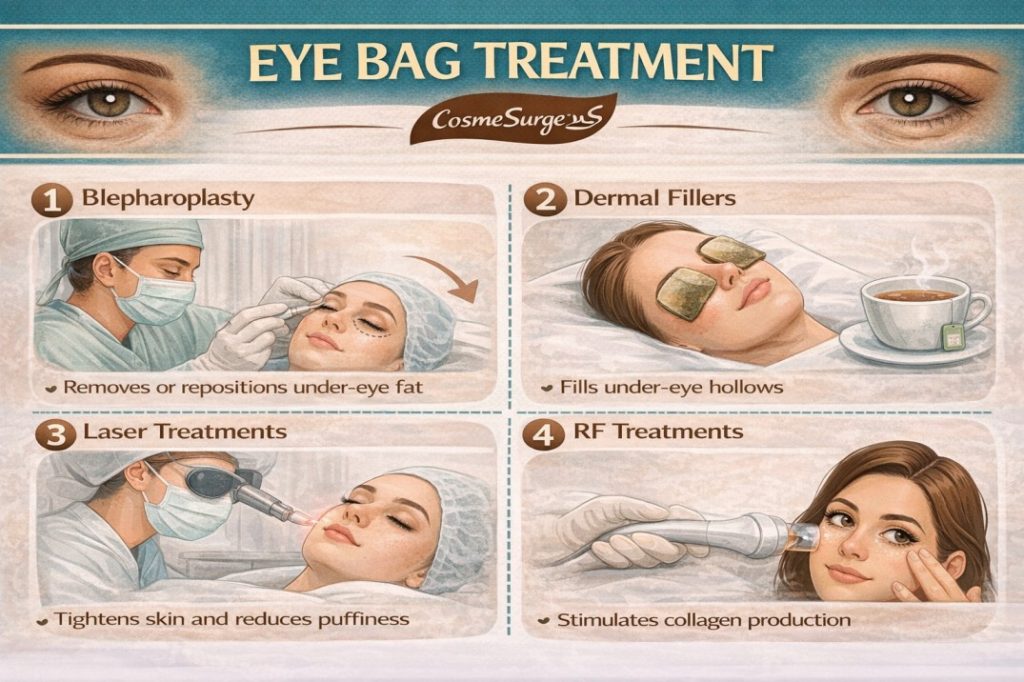
When home remedies no longer provide the desired results, or when the bags are structural, medical intervention is the most viable path. At CosmeSurge Hospital, Dubai, UAE, specialists look at the face as a whole rather than just focusing on the eyes.
Dermal Fillers: Filling the Gap
In many cases, the “bag” is an optical illusion. If you have a deep hollow (tear trough) beneath the eye, it creates a shadow. By injecting a hyaluronic acid-based gel into that hollow, a specialist can create a smooth, level plane from the lower lid to the cheek. The bag doesn’t actually go away, but it becomes invisible to the eye because the shadow is gone.
Fractional CO2 Lasers and Radiofrequency (RF)
If the issue is primarily “crepey” or thin skin, lasers can be used to induce controlled micro-injuries. This triggers the body’s natural wound-healing response, leading to a surge in new collagen and elastin. This thickens the skin of the lower lid, providing better “containment” for the fat pads beneath.
Lower Blepharoplasty: The Definitive Solution
For patients seeking a long-term answer on how to get rid of eye bags, a lower blepharoplasty is the clinical standard.
Transconjunctival Approach: The incision is made inside the lower eyelid, leaving zero external scarring. The surgeon can then remove or, more commonly, “reposition” the fat.
Fat Repositioning: Modern surgeons often move the protruding fat into the hollow areas of the cheek. This “kills two birds with one stone” by removing the bag and filling the hollow at the same time.
The Clinical Journey: What Happens at CosmeSurge Hospital?
When you seek professional help at a facility like CosmeSurge Hospital, Dubai, UAE, you aren’t just getting a procedure; you are getting a clinical diagnosis.
The Dynamic Evaluation: The specialist will ask you to look up, down, and smile. This helps them see how the fat pads move and whether the “bag” is caused by muscle or fat.
The Snap Test: They will gently pull the skin of your lower lid to see how quickly it snaps back. This determines if you need skin tightening or just fat removal.
The Procedure: Non-surgical treatments like fillers are performed in a few minutes with zero downtime. Surgical options are performed under local anesthesia with sedation or general anesthesia, taking about 1–2 hours.
Day-by-Day Recovery:
Day 1-3: Expect some swelling and “tightness.” Cold compresses are your best friend here.
Day 5-7: Any bruising usually begins to turn yellow and can be easily covered with tinted moisturizer.
Day 14: Most patients feel comfortable returning to all social activities with a refreshed, “well-rested” look.
The Science of Topical Ingredients: What to Look For
If you are browsing for eye creams, ignore the marketing “miracle” claims and look for these clinically backed ingredients:
Retinoids: The only ingredient proven to significantly increase collagen production over time.
Vitamin C (L-Ascorbic Acid): A powerful antioxidant that brightens the skin and protects against the UV damage that leads to sagging.
Vitamin K: Often used in clinics to help with bruising, it can also help reduce the appearance of dark, “vascular” eye bags by improving local circulation.
Peptides: Specifically “Argireline” or “Matrixyl,” which can help firm the skin and provide a temporary tightening effect.
Prevention: Protecting the Orbital Area
While we cannot stop the clock, we can slow the degradation of the tissues.
Medical-Grade SPF: UV damage is responsible for 80% of visible aging. Use a mineral-based SPF (Zinc or Titanium) around the eyes as it is less likely to sting.
Silk Pillowcases: They reduce the friction and “tugging” on the delicate eye skin during the night.
Manage Allergies: If you are a chronic “eye rubber,” you are physically stretching the skin. Treating your hay fever or dust allergies is a vital part of preventing long-term eye bags.
CosmeSurge Conclusion: A Rested, Refreshed Future
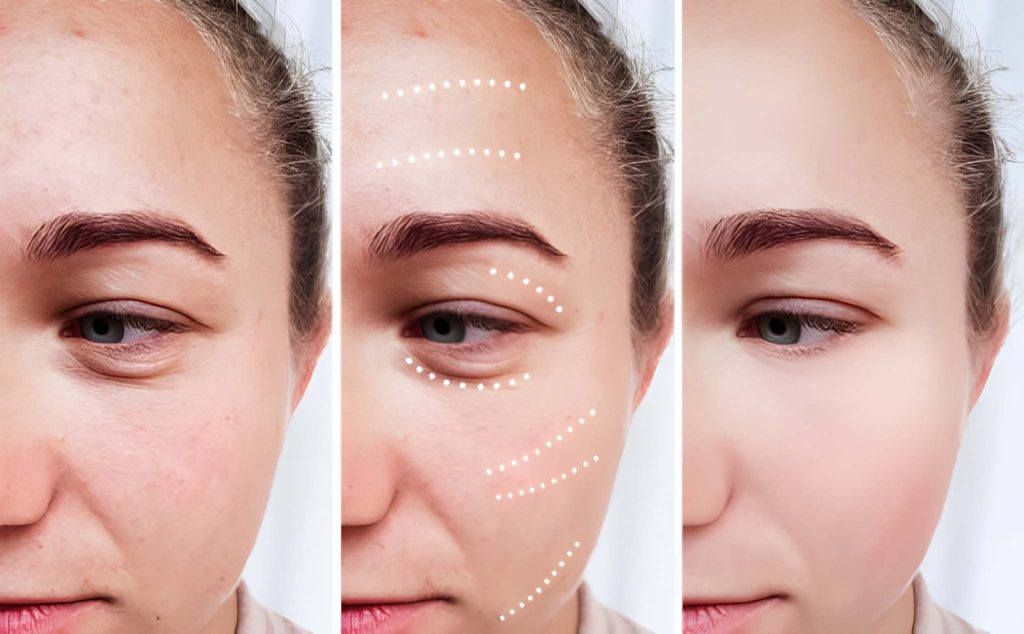
Deciding how to get rid of eye bags is about more than just vanity; it’s about looking as energetic as you feel. For some, the solution is found in a lifestyle shift—less salt, more water, and better allergy management. For others, modern medical technology offers safe, effective ways to restore the smooth contours of youth. By understanding the anatomy of your face and the clinical options available, you can choose a path that is both ethical and effective. Whether you start with a cold compress tonight or a consultation at CosmeSurge Hospital, Dubai, UAE, tomorrow, a brighter, more refreshed appearance is within reach.
Frequently Asked Questions
Here are some answers to the specific questions we often hear but didn’t cover in detail above.
Only if they were caused by acute fatigue. Sleep helps with venous congestion (darkness), but it cannot move a fat pad that has herniated.
There is no set age. It depends on when the bags start to affect your confidence. Many patients in Dubai seek treatment in their late 20s for genetic concerns.
Yes. When you are dehydrated, your body goes into “survival mode” and holds onto every drop of fluid, often storing it in the loose tissues under the eyes.
Yes, structural bags caused by aging or genetics are permanent unless treated with clinical intervention.
This is usually a sign of “vascular” bags, where the skin is so thin that the underlying blood vessels are visible. Vitamin K and certain lasers can help.
It helps with the color and skin quality (thickness), but it won’t remove the physical protrusion of fat.
If you have a “hollow” below the bag, fillers are likely. If the bag is very large and hangs over the cheek, surgery is usually more effective.
When performed by a qualified specialist at an accredited facility like CosmeSurge Hospital, it is a very common and highly safe procedure.
While it might help with muscle tone, it can’t fix herniated fat or stretched skin. In fact, excessive pulling on the eye skin can sometimes make matters worse.
They work exactly like a cold spoon—the cold reduces swelling. The cucumber itself has no “magic” ingredient that tea bags don’t have.
Yes. Losing fat in the cheeks can remove the support for the lower eye area, making existing bags look more prominent.
Because there is very little movement in that area, fillers in the tear trough can last anywhere from 9 to 18 months.
No. Creams can hydrate and brighten, but they cannot physically relocate fat pads.
Festoons (malar bags) are lower on the cheek and are often harder to treat than standard eye bags. They usually require specialized laser or surgical approaches.
Iron deficiency (anemia) can make the skin look very pale, which makes the blue-toned vessels beneath the eyes look like dark, heavy bags.
Medical Disclaimer & Review
Content on the CosmeSurge website is for informational and educational purposes only and does not replace professional medical advice, diagnosis, or treatment. Always consult a qualified healthcare professional for medical concerns and never delay seeking advice based on this content. In emergencies, contact your doctor or local emergency services immediately.
Medically reviewed by a qualified specialist at CosmeSurge Hospital, Dubai, UAE.