
When you run your fingers across your face and feel those small, stubborn, sandpaper-like bumps under the surface, it is easy to feel overwhelmed by the sheer volume of products on the market. These bumps, known clinically as closed comedones, are a common source of frustration because they don’t behave like typical inflammatory acne. They don’t usually “pop,” they don’t always respond to traditional spot treatments, and they can linger for months. Developing an effective closed comedones skincare routine is not about finding a single “hero” product; rather, it is about understanding the delicate chemistry of your skin and gently correcting the way your pores shed dead cells and oil.
In a region like the UAE, where the environmental load—heat, humidity, and fine dust—can settle on the skin and mix with sebum, these clogs are particularly common. At CosmeSurge Hospital, Dubai, UAE, we often guide patients away from aggressive scrubbing and toward a more thoughtful, ingredient-led approach. The goal is to clear the congestion without compromising the skin’s protective barrier.
The Foundation: Why a Specialized Routine Matters for Closed Comedones
A closed comedone is essentially a microscopic “plug” made of dead skin cells and sebum trapped inside a hair follicle. Unlike a blackhead (an open comedone), where the pore is open to the air, a closed comedone is sealed shut by a layer of skin cells. Because of this seal, your typical “wash-off” treatments often aren’t enough to reach the root of the problem.
A successful routine for managing this condition needs to focus on three specific physiological goals:
-
Regulating Sebum: Controlling the “glue” that holds the clog together.
-
Exfoliation: Removing the surface cells that seal the pore shut.
-
Cell Turnover: Ensuring that new skin cells move through the follicle without getting stuck.
Step 1: Cleansing Without Stripping
The first mistake many people make when they notice a bumpy skin texture is reaching for the harshest, most “squeaky clean” cleanser they can find. If you strip away too much oil, your skin responds by producing more oil to compensate, which can lead to a vicious cycle of further congestion.
The Double Cleanse Method
In our clinical experience in Dubai, we find that a double cleanse in the evening is often a game-changer for those with comedonal tendencies.
-
The First Step: A lightweight, non-comedogenic oil or micellar water. This dissolves the day’s sunscreen and makeup—products that are often designed to be water-resistant and can easily become trapped in the pore.
-
The Second Step: A gentle, water-based cleanser. For those specifically targeting clogs, a cleanser for closed comedones containing Salicylic Acid can be beneficial. Because Salicylic Acid is oil-soluble, it can begin to penetrate the sebum while you wash, though it is usually only on the skin for a short time.
Step 2: The Core Actives (The "Engine" of the Routine)
This is the part of the closed comedones skincare routine where the real work happens. You generally need a combination of ingredients that address both the surface of the skin and the inside of the pore.
Salicylic Acid (BHA)
This is arguably the most famous ingredient for congested skin. Salicylic acid is a Beta Hydroxy Acid that can cut through the oil that holds a comedone together. By dissolving this “glue,” it helps the trapped material move to the surface. It is often most effective when used as a leave-on liquid exfoliant rather than just a wash.
Topical Retinoids: Adapalene and Tretinoin
If Salicylic acid is the cleaner, retinoids are the trainers. They “train” your skin cells to behave properly. Retinoids increase cell turnover, ensuring that dead cells are shed before they have a chance to clump together.
-
Adapalene for closed comedones: Often available in lower strengths, this is highly effective for comedonal acne with slightly less irritation than higher-strength tretinoin.
-
Tretinoin for closed comedones: This is a more potent clinical option. It requires a slow introduction—the “low and slow” method—to allow the skin to adjust without excessive peeling.
Azelaic Acid
Often overlooked, Azelaic acid is a powerhouse for textured skin. It is keratolytic, meaning it helps break down the outer layer of the skin, and it also has anti-inflammatory properties. This is particularly useful if your closed comedones frequently turn into red, inflamed pimples.
Step 3: Supporting Ingredients (The "Stabilizers")
Active ingredients can be taxing on the skin. To keep the skin barrier healthy while you treat the clogs, you need ingredients that soothe and hydrate without adding to the congestion.
-
Niacinamide: This helps regulate oil production and strengthens the skin’s ceramide barrier. It doesn’t clear comedones directly, but it makes the skin more resilient to the treatments that do.
-
Hyaluronic Acid: Since many anti-acne ingredients can be drying, a lightweight, oil-free hyaluronic acid serum can provide necessary moisture without clogging the pores.
Balancing the Routine: AM vs. PM
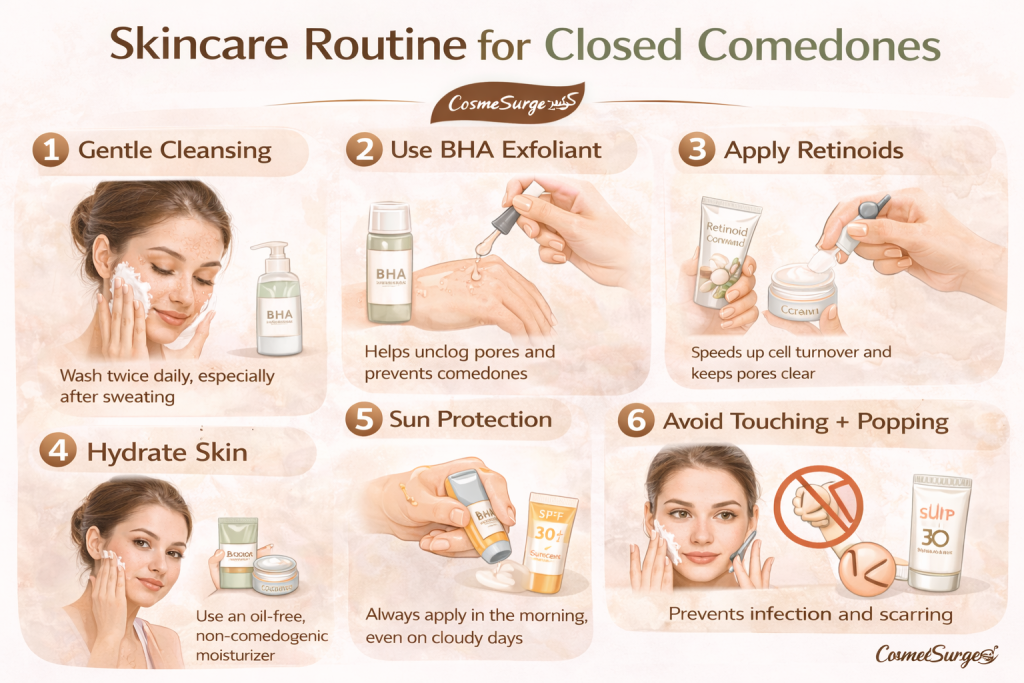
A common question we hear during consultations at CosmeSurge Hospital, Dubai, UAE, is how to fit all these ingredients into a single day. You should never use every active at once.
Typical Morning (AM)
-
Gentle Cleanse: Just enough to remove nighttime oils.
-
Antioxidant/Niacinamide: To protect the skin from environmental stress.
-
Oil-Free Moisturizer: Even oily skin needs hydration to shed cells properly.
-
Sunscreen: Essential. Many people skip this because they fear clogs, but UV damage thickens the skin’s outer layer, making comedones worse. Look for “fluid” or “gel” textures labeled non-comedogenic.
Typical Evening (PM)
-
Double Cleanse: To remove the day’s environmental load.
-
Treatment: This is where you would use your Salicylic acid (2-3 times a week) or your Retinoid (alternating nights). Never use both on the same night when starting out.
-
Barrier Support: A simple, fragrance-free moisturizer to seal in the treatment and prevent water loss.
Clinical Realities: What to Expect
When you start a targeted closed comedones skincare routine, the most important thing to pack is patience.
The Purging Phase
As ingredients like Adapalene or Tretinoin speed up cell turnover, the clogs that were deep under the surface move up simultaneously. This often results in a “purge”—a period where it looks like you have more bumps than when you started. This is not a failure of the products; it is the skin clearing its “backlog.” This phase can last 4 to 6 weeks.
When to Seek Professional Help
If you have followed a consistent routine for 12 weeks and see no change, or if your skin is becoming excessively red, peeling, or painful, a clinical evaluation is necessary. In our experience at CosmeSurge Hospital, Dubai, UAE, some comedones are simply too deep for topical products alone and may require professional clinical extractions or specialized chemical peels to “kickstart” the clearing process.
Final Thoughts: Restore Balance with the Right Approach
Managing textured skin is truly about learning to listen to what your skin is telling you. A closed comedones skincare routine should not feel like a constant battle — it should feel like a reset. By using appropriate chemical exfoliants to gently dissolve clogged pores and retinoids to support healthy skin cell turnover, you are simply helping your skin function more efficiently.
It is important to remember that there are no miracle products that work overnight. Real, lasting improvement comes from consistency, patience, and a gentle approach. Over-exfoliating or trying too many active ingredients at once can weaken your skin barrier and worsen texture.
If you are unsure about which ingredients suit your skin type or if your closed comedones are persistent, seeking professional guidance can make a significant difference. At CosmeSurge Hospital, experienced dermatology professionals can assess your skin condition and create a personalized treatment plan tailored to your concerns.
Whether you are refining your home routine or considering clinical treatments, always prioritize the health of your skin barrier. When your skin is well-hydrated, balanced, and supported, it becomes naturally better at keeping pores clear and maintaining a smoother, healthier complexion.
Frequently Asked Questions (FAQs)
Here are some answers to the specific questions we often hear but didn’t cover in detail above.
The “best” cleanser depends on your skin type, but generally, a pH-balanced, non-foaming gel cleanser is a safe bet. If your skin is very oily, one with 2% Salicylic Acid can help, but for many, a simple, gentle cleanser is better so they can save the “active” power for leave-on serums.
Using them in the same session is often too irritating for the skin barrier. It is better to “cycle” them—using Glycolic acid one night and your Retinol the next—to get the benefits of both surface exfoliation and deep cell turnover.
It helps indirectly by balancing the oiliness of your skin and reducing the irritation caused by other acne treatments. It won’t “dissolve” a comedone, but it makes your skin a much better environment for healing.
If you are using a retinoid or an acid, you are likely experiencing a “purge.” The clogs that were already there are just surfacing faster. If the skin is burning or stinging, however, you may be over-exfoliating.
For most people with textured skin, 2 to 3 times a week with a chemical exfoliant (like Salicylic or Glycolic acid) is the sweet spot. Over-exfoliating can damage the barrier, leading to more inflammation and clogs.
Benzoyl Peroxide is excellent for killing bacteria in inflammatory acne (red pimples). While it can help slightly, it isn’t as effective for closed comedones as Salicylic acid or Retinoids, which focus on the “plug” itself.
No. Dehydrated skin cells don’t shed properly; they stick together and form more clogs. Use a lightweight, water-based gel moisturizer instead of a heavy cream.
In modern skincare, many “toners” are actually liquid exfoliants containing acids. If your toner contains Salicylic or Glycolic acid, it is an active treatment step, not just a refreshing water.
Yes, especially if they are high in oleic acid or are comedogenic (like coconut oil). If you are prone to clogs, it is generally safer to stick to oil-free serums.
If you are using Retinoids or Acids, your skin is significantly more sensitive to light. Even light through windows can contribute to sensitivity and pigment issues. Sunscreen is non-negotiable in this routine.
Physical scrubs can often irritate the surface without reaching the blockage. This can lead to a “thickening” of the skin (hyperkeratosis), which actually makes it harder for the clogs to come out.
Clay masks (Kaolin or Bentonite) can help soak up excess surface oil, which may prevent future clogs. They are a nice “supplement” to a routine but usually aren’t strong enough to clear deep comedones on their own.
The chin is a highly hormonal area. Androgens can signal the oil glands there to produce more sebum, leading to frequent congestion in the lower face.
In the UAE summer, you might find you need a more lightweight moisturizer and perhaps a more consistent double-cleanse to remove sweat and heavy sunblock.
If the bumps are hard, “fixed,” and haven’t moved after 3 months of a solid closed comedones skincare routine, it’s time to consult a specialist for professional removal.
Medical Disclaimer & Review
Content on the CosmeSurge website is for informational and educational purposes only and does not replace professional medical advice, diagnosis, or treatment. Always consult a qualified healthcare professional for medical concerns and never delay seeking advice based on this content. In emergencies, contact your doctor or local emergency services immediately.
Medically reviewed by the CosmeSurge Dermatology Team, Dubai, UAE.