
|
Key Takeaways Although diastasis recti is commonly associated with pregnancy, men can and do develop abdominal muscle separation. The condition is underdiagnosed in male patients, but it is more common than most people assume. Most Common Causes in Men:
Specialists at CosmeSurge diagnose and treat abdominal muscle separation in both men and women, offering personalised care based on the severity of the condition. |
What Is Diastasis Recti in Men?
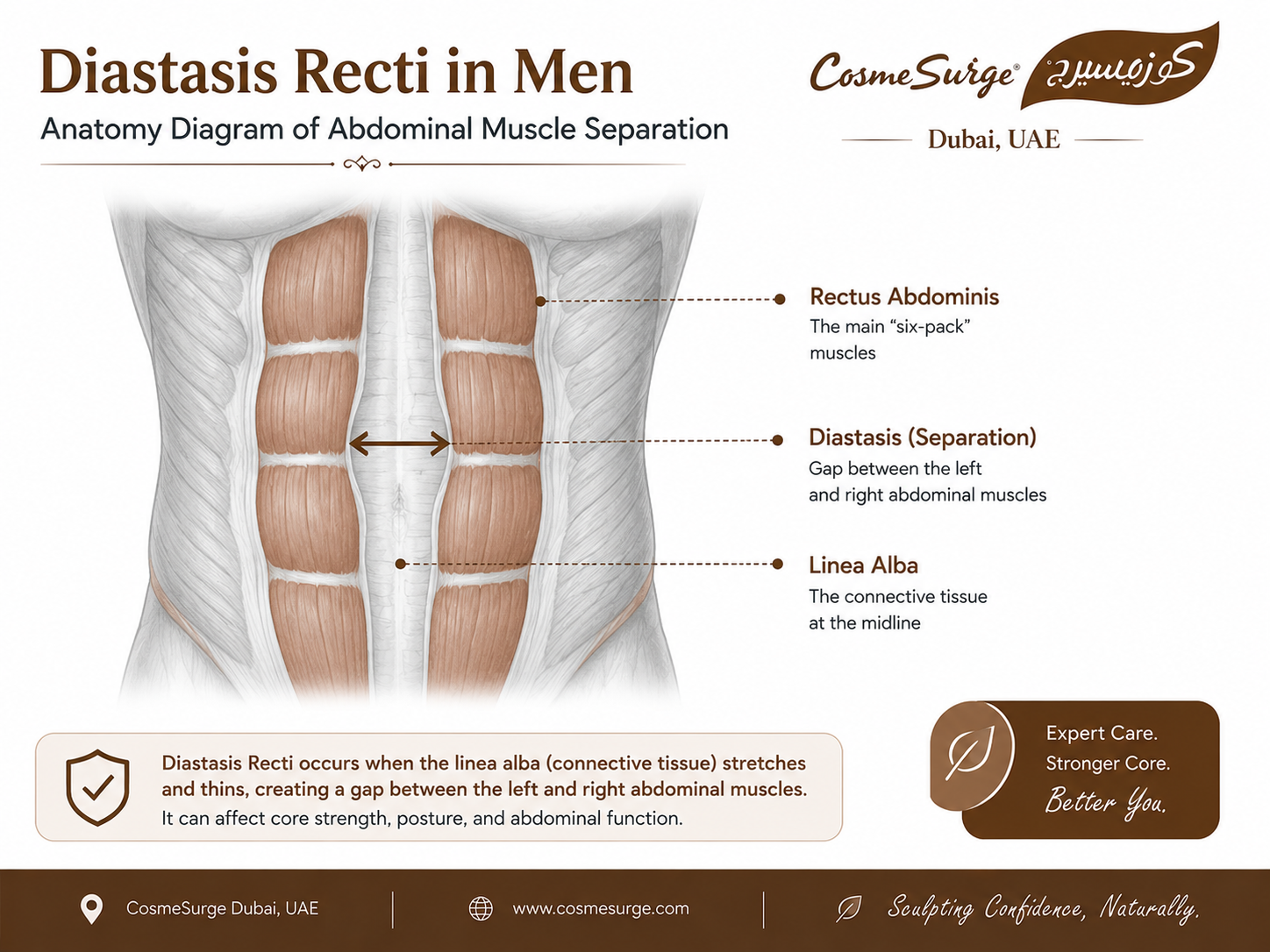
The human abdomen is built around a pair of long, parallel muscles called the rectus abdominis — the muscles most people recognise as the “six-pack.” These muscles run vertically on either side of the midline, held together by a tough band of connective tissue called the linea alba.
Under normal circumstances, the linea alba keeps these muscles close together, providing structural support for the trunk and internal organs. When the linea alba becomes overstretched or weakened, the two muscle bellies begin to drift apart. This separation is known as diastasis recti — also referred to medically as rectus diastasis, or divarication of recti in males.
In men, a separation of more than 2 to 2.5 centimetres at the level of the belly button is generally considered clinically significant. However, even smaller separations can produce symptoms when the connective tissue loses its tension and structural integrity.
Diastasis Recti vs Hernia — An Important Distinction
These two conditions are often confused because both involve the abdominal wall and can produce a visible bulge. They are, however, fundamentally different.
A hernia involves an actual hole or defect in the abdominal wall through which tissue — usually a portion of intestine or abdominal fat — can protrude. This can lead to serious complications, including strangulation of the herniated tissue, which is a medical emergency.
Diastasis recti, on the other hand, is a separation of the muscles at the midline. The connective tissue stretches and thins, but there is no actual hole. Organs remain inside the abdominal cavity, although they may push forward through the widened gap, creating the characteristic midline bulge. The distinction matters because the treatment approaches differ considerably.
Can Men Get Diastasis Recti?
Yes — absolutely. Men can get diastasis recti, and it is more common than most people assume.
The condition receives far more attention in the context of pregnancy, where rapid abdominal expansion stretches the linea alba. But the same mechanical forces — sustained pressure from within the abdomen pushing outward against weakened or thinned connective tissue — can develop in men for several other reasons.
Studies suggest that a meaningful proportion of men with abdominal obesity or a history of heavy lifting carry some degree of abdominal separation without ever receiving a formal diagnosis. The condition is underrecognised in male patients, partly because clinical awareness has traditionally been focused on postpartum women.
What Causes Diastasis Recti in Men?
Several factors can stretch or weaken the linea alba over time. The most common diastasis recti causes in men include:
-
Obesity: Excess abdominal fat places constant outward pressure on the abdominal wall. Over months and years, this stretches the linea alba and allows the rectus abdominis muscles to separate progressively.
-
Heavy weightlifting: Exercises such as deadlifts, squats, and overhead pressing — particularly when performed with poor core bracing technique — generate very high intra-abdominal pressure. Repeated spikes in this pressure without adequate deep core stability can widen the midline gap over time.
-
Bodybuilding and intense training: Paradoxically, men who train intensively can develop abdominal muscle separation if their programmes focus heavily on exercises that create large pressure surges without proportional deep core strengthening.
-
Rapid weight gain followed by weight loss: Significant fluctuations in body weight stretch the skin and connective tissue. When weight is lost quickly, the weakened linea alba may not recover its original tension.
-
Aging: Connective tissue naturally loses elasticity and tensile strength with age. Older men are at higher risk of abdominal separation, even without obvious mechanical triggers.
-
Chronic constipation: Habitual straining during bowel movements repeatedly increases intra-abdominal pressure, which can contribute to linea alba stretching over time.
-
Chronic cough: Persistent coughing due to asthma, smoking, or respiratory conditions creates repetitive pressure surges against the abdominal wall.
-
Previous abdominal surgery: Surgical incisions through the abdominal wall can weaken surrounding tissue and alter the structural integrity of the midline.
Risk Factors for Diastasis Recti in Men
Some men are more likely to develop separated abdominal muscles than others. Key risk factors include:
-
A BMI in the overweight or obese range
-
A history of competitive lifting or high-intensity strength training
-
Age over 40, due to reduced connective tissue elasticity
-
A sedentary lifestyle combined with a large abdominal circumference
-
Connective tissue conditions such as Marfan syndrome or Ehlers-Danlos syndrome
-
A personal history of abdominal surgery or significant abdominal trauma
-
Frequent and forceful Valsalva manoeuvres — bearing down with a held breath
Male Diastasis Recti Symptoms
Diastasis recti in men does not always cause obvious pain. Many men live with the condition for years before seeking evaluation. A range of symptoms can develop as the separation worsens.
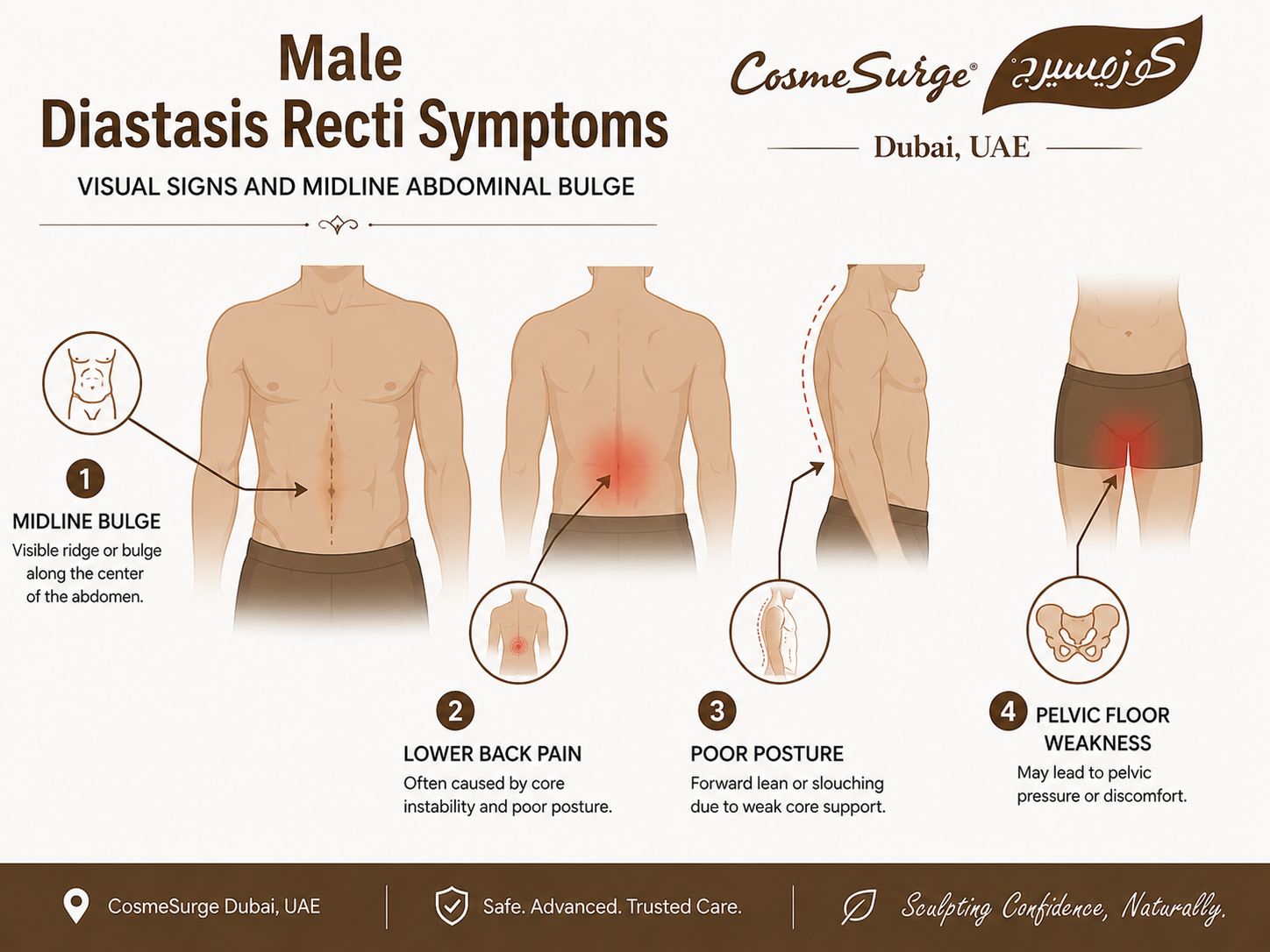
Abdominal Bulge
The most visible sign is a vertical ridge or bulge running down the midline of the abdomen. It becomes more prominent when the abdominal muscles are engaged — during a sit-up attempt, coughing, or straining — and may flatten when lying relaxed.
Upper Diastasis Recti Bulge
In some men, the separation is more pronounced above the belly button, producing a dome-shaped protrusion in the upper abdomen. This upper diastasis recti bulge is particularly common in men with central obesity.
Core Weakness
The linea alba plays an active role in force transmission across the trunk. When it is weakened and overstretched, the ability to generate and transfer force through the core decreases. Men may notice difficulty with tasks requiring core stability — lifting, carrying, or even prolonged standing.
Poor Posture
As core stability weakens, the body compensates, often leading to forward pelvic tilt, increased lumbar lordosis, and rounded shoulders. These postural changes can develop gradually and go unnoticed until they begin contributing to discomfort.
Lower Back Pain
One of the most common complaints associated with weak abdominal wall symptoms is persistent lower back pain. Without a functional core, the lumbar spine carries a disproportionate share of the mechanical load during daily activity.
Bloating and Digestive Discomfort
Some men report a sense of abdominal fullness, bloating, or pressure — particularly after meals. The reduced containment of abdominal contents may contribute to these sensations.
Symptoms Checklist
-
Visible midline bulge, especially during physical exertion or coughing
-
Feeling of abdominal weakness or instability
-
Difficulty engaging or activating the core
-
Persistent lower back pain not explained by injury
-
Postural changes — increased forward lean or lumbar curve
-
Pelvic floor discomfort or dysfunction
-
Abdominal bloating or a sense of pressure after eating
What Does Diastasis Recti Look Like in Men?
The visual appearance varies depending on the degree of separation, body composition, and which part of the midline is most affected.
Typically, a man with diastasis recti will notice a vertical ridge or channel running down the centre of the abdomen when lying on his back and slowly lifting his head or shoulders off the floor. In men with less body fat, this groove can be quite obvious. In men with more abdominal fat, the outward bulge may be the more prominent feature.
Some men develop the separation primarily above the belly button, resulting in a characteristic dome-shaped upper abdominal appearance. Others experience separation below, which can alter the appearance of the lower abdomen.
Men searching for male diastasis recti pictures online will find a wide range — the condition does not present identically in every person, and body composition significantly affects how visible the separation is.
How to Check for Diastasis Recti at Home
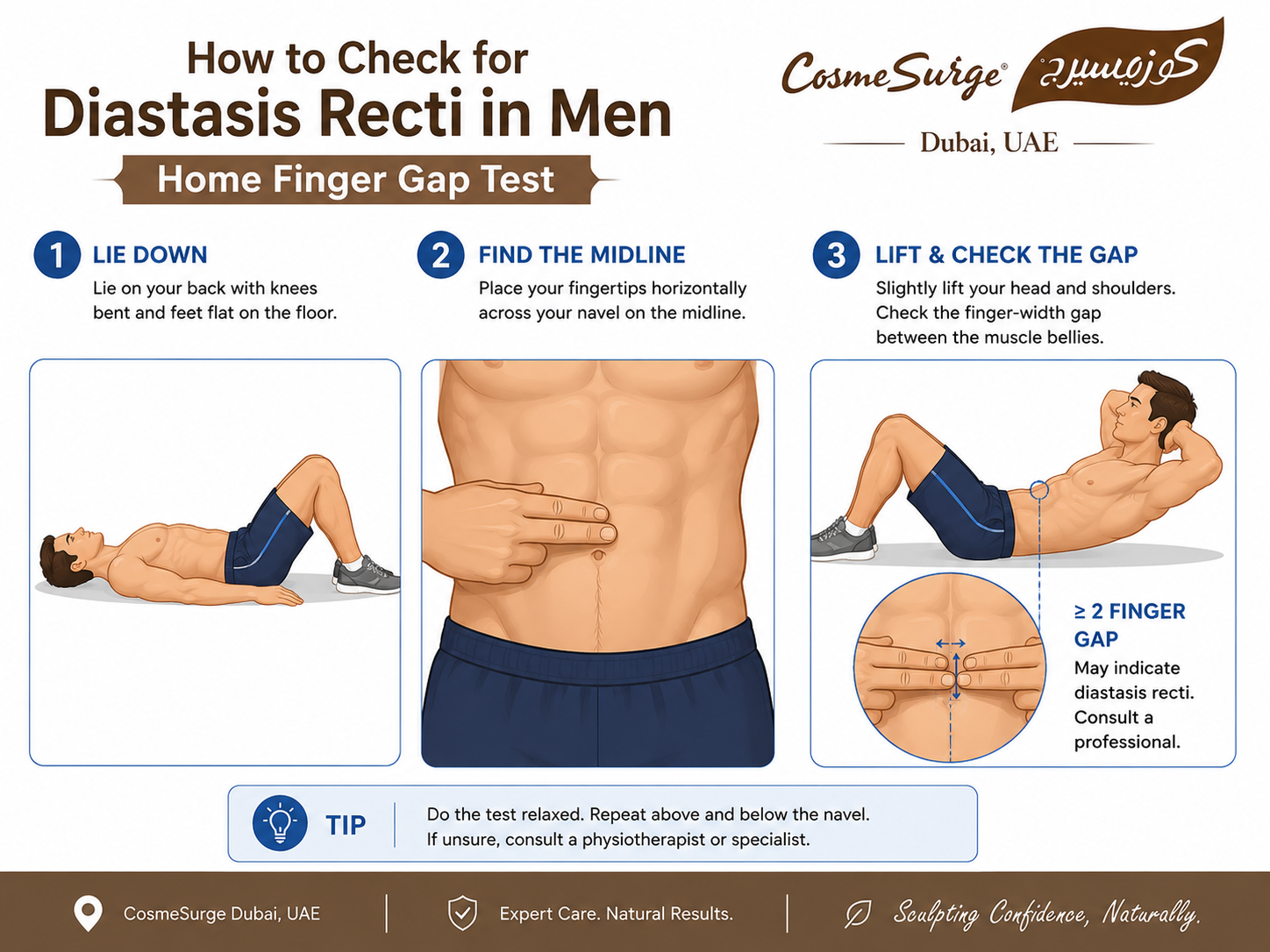
A simple finger test can give a preliminary indication of whether abdominal separation may be present. This is a screening tool, not a diagnostic one — accurate assessment requires clinical or ultrasound evaluation.
The Finger Test
-
Lie on your back with knees bent and feet flat on the floor.
-
Place your fingertips horizontally across the midline, just above or below the belly button.
-
Slowly lift your head and shoulders off the floor as if beginning a crunch.
-
Feel for a gap or soft channel between the two muscle bellies.
-
Count how many finger-widths fit into the gap.
If you can fit two or more finger-widths into the gap, or if the gap feels particularly soft and unsupported, this warrants a clinical assessment. A separation that feels firm typically indicates better linea alba tension — even if a gap is present.
If you suspect you have separated abdominal muscles, seek a formal evaluation rather than relying solely on self-assessment. Ultrasound imaging provides an accurate measurement of the gap width and linea alba quality.
Diastasis Recti vs Hernia in Men
The table below outlines the key differences between diastasis recti and an abdominal hernia:
|
Feature |
Diastasis Recti |
Hernia |
|
Pain |
Usually mild or absent; may cause discomfort |
Often causes localised pain, especially with exertion |
|
Bulge |
Soft, vertical midline ridge |
Firm, often rounded protrusion at a specific site |
|
Risk Level |
Generally not dangerous |
Can become dangerous if tissue becomes trapped |
|
Need for Surgery |
Often managed conservatively |
Frequently requires surgical repair |
|
Tissue Trapped |
No — organs remain inside the cavity |
Yes — intestine or fat can protrude through the defect |
If you are unsure whether your symptoms indicate diastasis recti or a hernia, a medical evaluation is the safest approach. Both conditions affect the abdominal wall but carry different risks and require different management.
Can Weightlifting and Bodybuilding Cause Diastasis Recti?
This question comes up frequently among gym-goers and competitive athletes. The short answer is yes — heavy training can contribute to diastasis recti in men, particularly when high-load, high-pressure exercises are performed without adequate core bracing technique.
Bodybuilders and Athletes
Movements such as deadlifts, heavy squats, overhead pressing, and barbell rows create significant spikes in intra-abdominal pressure. When performed correctly — with a proper brace that engages the deep core, including the transverse abdominis and pelvic floor — this pressure is well distributed and manageable.
However, when athletes repeatedly perform these movements using a breath-holding, trunk-loading strategy that drives pressure outward rather than creating circumferential stiffness, the linea alba bears the brunt of that pressure over time. Repeated insult to the connective tissue eventually leads to stretching and separation.
Bodybuilders are also at risk from the cumulative effects of very high training volumes. In some cases, the use of anabolic steroids can affect connective tissue integrity and slow recovery between sessions.
This does not mean men should avoid heavy lifting. It means that proper bracing technique, appropriate load progression, and dedicated deep core training are essential components of a well-rounded programme — particularly for men who lift heavy on a regular basis.
Best Exercises for Diastasis Recti in Men
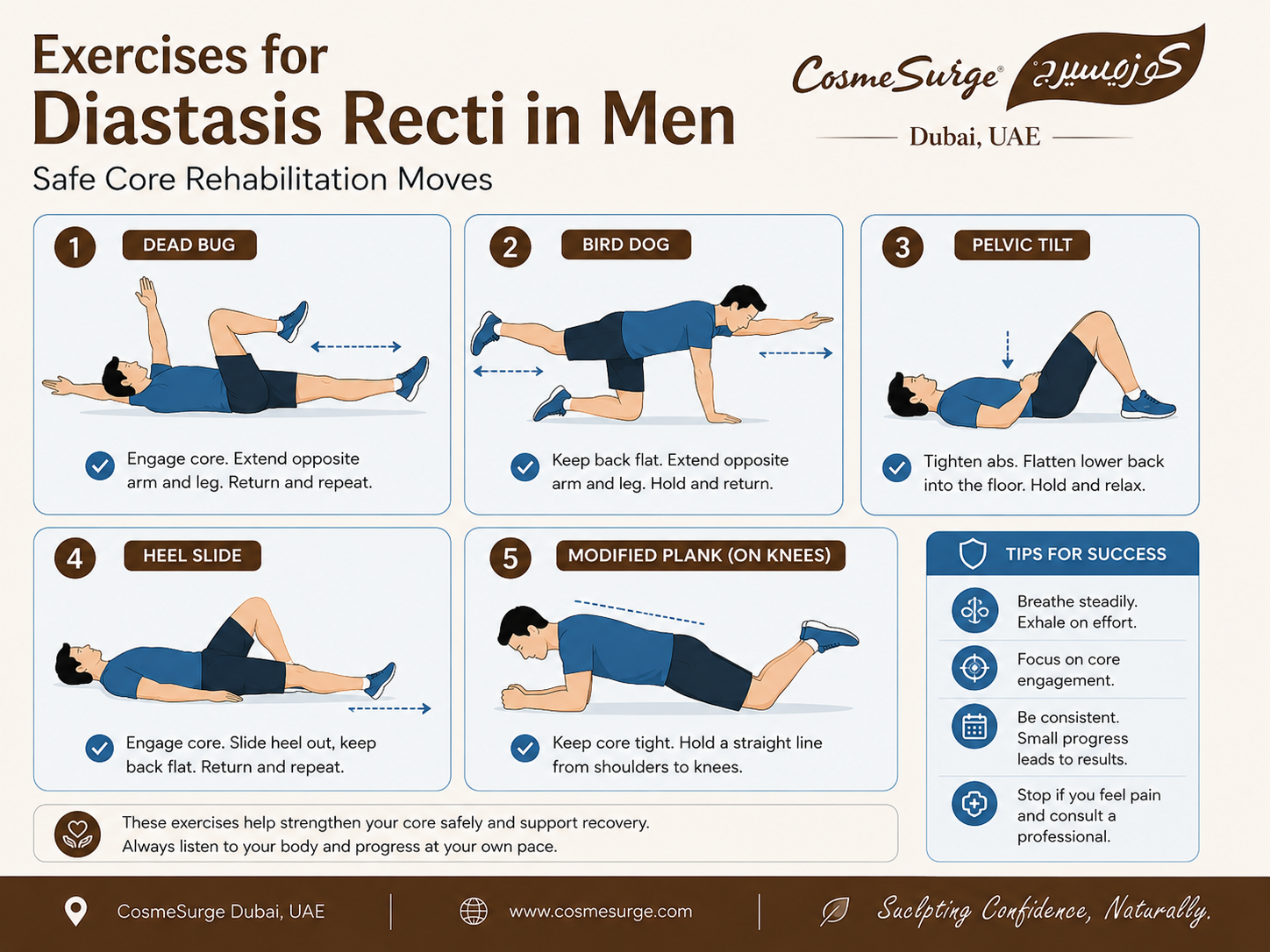
Rehabilitation should focus on restoring tension and function to the linea alba and deep core muscles — not on aggressive abdominal training that adds stress to the midline. The exercises below are well-suited for male diastasis recti repair exercises and should be performed under physiotherapy guidance when possible.
Dead Bug
Lie on your back, arms extended toward the ceiling, hips and knees at 90 degrees. Slowly lower one arm overhead while extending the opposite leg — without letting your lower back arch off the floor. Return and alternate. This challenges core stability without creating harmful midline pressure.
Bird Dog
On hands and knees, extend one arm and the opposite leg simultaneously, maintaining a flat back throughout. Hold briefly, return, and alternate sides. Bird dog trains trunk stability and coordination with low spinal loading.
Pelvic Tilts
Lie on your back with knees bent. Gently flatten your lower back against the floor by engaging your deep abdominal muscles, hold for a few seconds, then release. This is a gentle entry point for activating the transverse abdominis — the deepest layer of the core.
Heel Slides
From the same starting position, slowly slide one heel along the floor until the leg is nearly straight, then return. The challenge is to maintain a neutral spine and controlled breathing throughout, without allowing the lower back to arch away from the floor.
Modified Planks
Rather than a standard plank, begin from the knees. Focus on engaging the deep core — breathing normally, not holding the breath — and avoid allowing the abdomen to sag downward. As strength improves, a full plank can be attempted.
These diastasis recti exercises for men should be incorporated gradually, with attention to breath control and core activation quality. A qualified physiotherapist can monitor technique and progress the programme at the right pace.
Exercises Men with Diastasis Recti Should Avoid
Certain exercises significantly increase intra-abdominal pressure or place direct mechanical stress on the midline separation, potentially making the condition worse before it improves.
-
Sit-ups and crunches — These create a strong outward force through the midline and should be avoided until the separation has been adequately rehabilitated.
-
Double leg raises — Lifting both legs simultaneously while lying flat dramatically increases lumbar loading and midline pressure.
-
Heavy compound lifts in early rehabilitation — Deadlifts, heavy squats, and similar movements should be modified or temporarily avoided until core function is restored.
-
Twisting and rotational exercises — Russian twists and oblique crunches exert shear forces across the midline that can worsen the separation.
-
Sustained Valsalva manoeuvres — Any exercise involving breath-holding under heavy load should be approached with caution during rehabilitation.
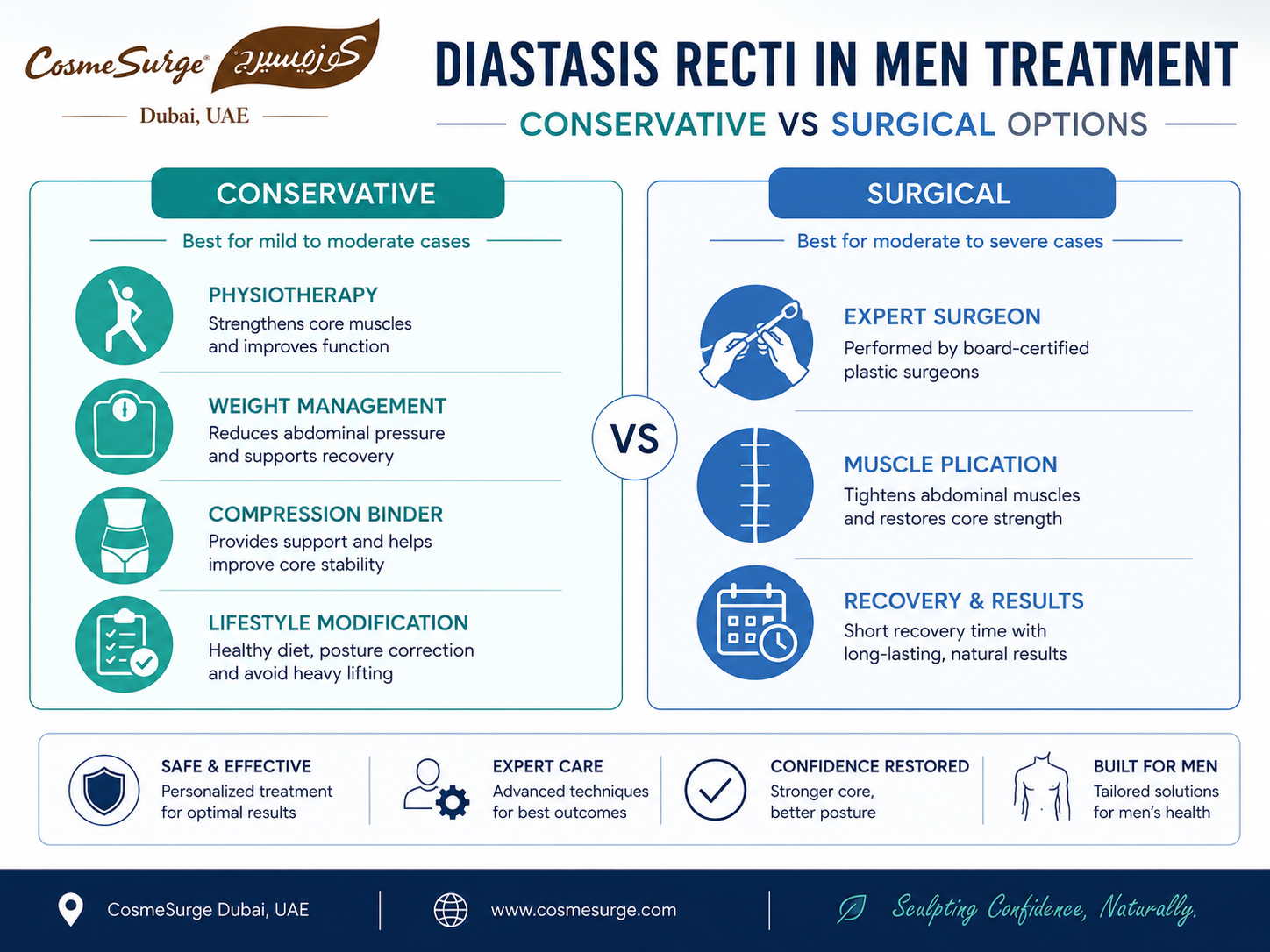
Non-Surgical Treatment for Diastasis Recti in Men
Many men with mild to moderate abdominal muscle separation respond well to conservative management without needing surgery.
Physical Therapy
A physiotherapist specialising in core rehabilitation can design a progressive exercise programme targeting the deep core — specifically the transverse abdominis, multifidus, pelvic floor, and diaphragm. This is generally the cornerstone of non-surgical diastasis recti treatment for men.
Weight Management
In men where obesity is a contributing factor, meaningful weight loss reduces the intra-abdominal pressure driving the separation. Even moderate weight reduction can produce noticeable functional improvement and reduce strain on the linea alba.
Abdominal Support Garments
Compression garments or abdominal binders can provide external support during the rehabilitation period. They are not a long-term solution but can reduce discomfort and improve postural awareness in the early stages of treatment.
Lifestyle Modifications
Addressing chronic cough, constipation, and poor lifting mechanics reduces the ongoing forces straining the midline. These changes should accompany — not replace — structured rehabilitation.
Specialists at CosmeSurge create personalised treatment plans based on the severity and specific presentation of each patient’s condition, ensuring that the approach is appropriate for the individual rather than one-size-fits-all.
When Is Surgery Necessary for Diastasis Recti in Men?
Surgery is not required for the majority of men with this condition. However, it becomes a genuine consideration in certain circumstances.
Surgical Indications
-
A large or persistent gap that has not responded to an adequate trial of conservative treatment
-
Significant functional weakness affecting daily activities, occupation, or athletic participation
-
Associated umbilical or epigastric hernia requiring repair
-
Cosmetic distress causing a meaningful impact on quality of life
-
Chronic pain directly attributable to the abdominal wall defect
The surgical procedure most commonly performed is abdominoplasty with plication — or, in some cases, a laparoscopic or minimally invasive repair. The surgeon sutures the separated edges of the rectus abdominis back toward the midline, restoring tension to the linea alba and improving core stability.
Advanced surgical options for male diastasis recti repair surgery are available at CosmeSurge for patients who are suitable candidates. The specialist team evaluates each case individually and discusses the most appropriate approach, including realistic expectations for recovery and outcome.
Recovery After Diastasis Recti Surgery
Recovery follows a structured timeline that varies depending on the extent of the repair and the individual’s overall health.
-
Weeks 1–2: Activity is significantly restricted. Lifting is avoided entirely, and the abdominal wall is protected from any strain. Pain and swelling are expected and managed with prescribed medication.
-
Weeks 3–6: Light activity gradually resumes. Most men can return to sedentary work by week four. More physically demanding roles require a longer absence.
-
Months 2–3: Core rehabilitation begins in earnest under physiotherapy supervision, focusing on progressive deep core reactivation.
-
Months 3–6: Full return to gym-based exercise, including resistance training, typically becomes possible — depending on how well rehabilitation progresses and the complexity of the repair.
Physiotherapy is an essential part of the recovery process. Men who skip rehabilitation after surgery are at higher risk of poor outcomes and recurrence.
Can Diastasis Recti Return After Treatment?
Yes — recurrence is possible, particularly if the underlying causes are not addressed after treatment, whether conservative or surgical.
Men who return to heavy lifting with poor technique, regain significant abdominal weight, or skip the rehabilitation phase after surgical repair face a real risk of the separation returning. Surgery corrects the structural defect — it does not eliminate the risk of future separation if the contributing habits are resumed.
Successful long-term outcomes depend on ongoing commitment to deep core conditioning, attention to lifting mechanics, and maintaining a healthy body weight. Fixing male diastasis recti is not a one-time event — it requires sustained attention to how the core is loaded day to day.
Prevention Tips for Men
-
Learn and consistently use proper bracing technique before loading heavy lifts
-
Strengthen the deep core regularly — not just the superficial rectus abdominis
-
Maintain a healthy body weight to reduce chronic pressure on the abdominal wall
-
Address chronic cough or constipation with appropriate medical management
-
Avoid dramatic weight fluctuations — gradual, sustainable changes are healthier for connective tissue
-
Progress training loads gradually; avoid overloading the abdominal wall before it is ready
-
Include diaphragmatic breathing and pelvic floor work in training programmes
When Should You See a Doctor?
If you notice any of the following, a medical evaluation is worth pursuing promptly:
-
A visible or palpable ridge or bulge along the midline of the abdomen
-
Persistent lower back pain that does not respond to standard management
-
Significant core weakness affecting your ability to exercise, lift, or carry
-
A worsening abdominal bulge during physical exertion
-
Any symptoms that may suggest a hernia — particularly a firm, painful, or irreducible lump
Early assessment leads to earlier intervention, which generally means better outcomes. The longer a significant separation is left untreated, the more the surrounding muscles compensate in ways that become difficult to reverse.
Myth vs Fact: Diastasis Recti in Men
Myth: Only women get diastasis recti.
Fact: Men can develop abdominal muscle separation due to obesity, heavy lifting, aging, or significant weight fluctuations. It is underdiagnosed in men, but it is far from rare.
Myth: Every case requires surgery.
Fact: Many cases of diastasis recti in men improve substantially with weight management, physical therapy, and targeted core strengthening. Surgery is reserved for severe, functionally limiting, or hernia-associated cases.
Myth: Sit-ups will close the gap.
Fact: Traditional crunches and sit-ups create outward pressure through the midline and can make the separation worse. Rehabilitation focuses on deep core activation, not superficial abdominal exercises.
Myth: If it doesn’t hurt, it’s not a problem.
Fact: Many men with diastasis recti experience little or no pain in the early stages. However, untreated separation can progress, contribute to back pain and postural problems, and become harder to manage over time.
Conclusion
Diastasis recti is not a condition that belongs exclusively to postpartum women. Men develop abdominal muscle separation because of obesity, heavy lifting, weight fluctuations, aging, and chronic physical strain. The problem is that awareness remains low — many men live with the condition for years without a diagnosis, and by the time they seek help, functional deficits can be well established.
The good news is that early diagnosis and appropriate management make a real difference. Whether the pathway involves targeted physiotherapy, weight management, or surgical repair, most men can meaningfully improve core strength, reduce back pain, and restore postural stability when they receive the right care.
At CosmeSurge, experienced specialists provide comprehensive evaluation and individualised treatment options for men presenting with abdominal muscle separation — from conservative rehabilitation programmes through to advanced surgical repair when appropriate. The approach is always tailored to the patient, not a generic protocol.
If you have noticed persistent abdominal bulging, unexplained core weakness, or discomfort that has not resolved on its own, consulting the experts at CosmeSurge is a worthwhile step. An early assessment can clarify exactly what is happening and open the path to effective, evidence-based treatment.
Frequently Asked Questions About Diastasis Recti in Men
Here are some answers to the specific questions we often hear but didn’t cover in detail above.
Yes. Men can get diastasis recti. The condition develops when the linea alba — the connective tissue joining the two halves of the rectus abdominis — becomes overstretched and weakens. While commonly associated with pregnancy, men develop the condition due to obesity, heavy lifting, chronic straining, aging, and rapid weight changes.
The most common causes include abdominal obesity, heavy resistance training with poor core bracing, rapid weight gain or loss, chronic coughing or constipation, aging, and previous abdominal surgery. Any factor that repeatedly increases intra-abdominal pressure beyond what the linea alba can safely manage contributes to the separation.
Symptoms include a visible midline abdominal bulge — especially noticeable during exertion — core weakness, lower back pain, poor posture, and in some cases bloating or digestive discomfort. Many men do not experience significant pain, which means the condition can go unrecognised for a long time.
A simple home test involves lying on your back, placing fingertips horizontally across the midline, and slowly lifting your head. If you feel a gap of two or more finger-widths, this warrants a clinical assessment. Formal diagnosis is made through physical examination and often confirmed with ultrasound imaging for accurate gap measurement.
The diastasis recti bulge in men typically appears as a vertical ridge running down the centre of the abdomen. It becomes more prominent during physical effort and may flatten when lying relaxed. Some men present with a dome-shaped upper abdominal bulge; others notice lower midline changes. Appearance varies considerably between individuals.
The most effective exercises for diastasis recti in men focus on deep core activation. These include dead bugs, bird dogs, pelvic tilts, heel slides, and modified planks. The goal is to restore tension in the linea alba and improve core stability without generating excessive midline pressure.
Men with diastasis recti should avoid sit-ups, standard crunches, double leg raises, heavy compound lifts in the early stages of rehabilitation, and twisting exercises that create rotational shear across the midline. These movements can worsen the separation and delay recovery.
Yes. Obesity is one of the primary causes of diastasis recti in men. Excess abdominal fat creates constant outward pressure on the abdominal wall. Over time, this stretches and weakens the linea alba, allowing the rectus abdominis muscles to separate progressively.
Yes. Bodybuilders and strength athletes are at risk, particularly when training involves consistently high intra-abdominal pressure without adequate deep core training. Deadlifts, squats, and overhead pressing — performed with improper bracing — are common contributing factors in this population. Proper technique and progressive programming significantly reduce the risk.
Surgery is not necessary for all men with diastasis recti. Many cases improve with physiotherapy, weight loss, and targeted exercise. Surgery is considered when the separation is large, functionally limiting, associated with a hernia, or when conservative management over an adequate trial period has been unsuccessful.
Yes — recurrence is possible if the contributing factors, such as poor lifting technique, abdominal weight gain, or inadequate rehabilitation, are not addressed after the procedure. Successful long-term outcomes depend on ongoing deep core training, appropriate lifestyle changes, and adherence to post-operative physiotherapy guidance.
Diastasis recti in men is typically managed by a combination of specialists. A physiotherapist leads conservative rehabilitation. If surgery is required, a plastic surgeon or general surgeon with abdominal wall expertise performs the repair. Specialist evaluation — including ultrasound assessment — is the appropriate first step for any man with suspected abdominal muscle separation.
Medical Disclaimer & Review
This content is for educational purposes only and does not replace professional medical advice. Always consult a qualified healthcare provider for diagnosis and treatment.
Medically reviewed by the CosmeSurge Plastic Surgery Team, Dubai,UAE.